

Every side-effect article on Zepbound paraphrases one table and throws away its best column. The label's Table 1 gives the rate of each common effect at each of the three maintenance doses, against placebo. That is the answer to the question people are actually asking, which is not "does it cause nausea" but "how likely, and does a lower dose help". Here is the table, then what it means, then the rare things, then the comparison to semaglutide.
The label's table, in full
Pooled from the two placebo-controlled weight trials, SURMOUNT-1 and SURMOUNT-2, reported as the percentage of people who had each effect at any point over 72 weeks.1
| Side effect | Placebo | 5 mg | 10 mg | 15 mg |
|---|---|---|---|---|
| Nausea | 8% | 25% | 29% | 28% |
| Diarrhoea | 8% | 19% | 21% | 23% |
| Vomiting | 2% | 8% | 11% | 13% |
| Constipation | 5% | 17% | 14% | 11% |
| Abdominal pain | 5% | 9% | 9% | 10% |
| Indigestion | 4% | 9% | 9% | 10% |
| Injection site reactions | 2% | 6% | 8% | 8% |
| Fatigue | 3% | 5% | 6% | 7% |
| Hypersensitivity reactions | 3% | 5% | 5% | 5% |
| Belching | 1% | 4% | 5% | 5% |
| Hair loss | 1% | 5% | 4% | 5% |
| Acid reflux | 2% | 4% | 4% | 5% |
| Flatulence | 2% | 3% | 3% | 4% |
| Bloating | 2% | 3% | 3% | 4% |
| Dizziness | 2% | 4% | 5% | 4% |
| Low blood pressure | 0% | 1% | 1% | 2% |
Three things to read off it. Nausea, diarrhoea and vomiting climb with dose; constipation runs the other way, highest at 5 mg. Everything in the table is more likely than on placebo, but only the top four rows are common in the ordinary sense of the word. And the placebo column is not zero: 8% of people on a saline injection reported nausea, which is the background rate of stomachs.
How many people it drives off the drug
This is the number that matters more than any single row. Across both trials, "4.8%, 6.3%, and 6.7% of patients treated with 5 mg, 10 mg, and 15 mg of ZEPBOUND, respectively, permanently discontinued treatment as a result of adverse reactions compared to 3.4% of patients treated with placebo."2 Subtract the placebo rate and Zepbound's side effects drove out somewhere between 1 and 3 people in 100 beyond what the trial itself drove out. SURMOUNT-1 alone reported 4.3%, 7.1% and 6.2% against 2.6% on placebo.5
The label is also specific about when: "the majority of patients who discontinued ZEPBOUND due to adverse reactions did so during the first few months of treatment due to gastrointestinal adverse reactions", and "the majority of nausea, vomiting, and/or diarrhea events occurred during dose escalation and decreased over time".2 Any gut effect at all was reported by 56% of people at every dose, against 30% on placebo.2
Put together, the label's picture is this. About half of people get some stomach trouble, mostly in the weeks after a dose step, and mostly mild and fading. About one in fifteen finds it bad enough to stop, and nearly all of them stop early. If you are past month three at a stable dose, the odds of the gut effects ending your treatment have already mostly played out.
What "severe" means, and how often
The label separates severe gastrointestinal reactions from the ordinary kind: "5 mg 1.7%, 10 mg 2.5%, 15 mg 3.1%" against 1% on placebo.3 The practical danger in severe vomiting or diarrhoea is dehydration. That is why the label carries a warning about acute kidney injury from volume depletion. Zepbound does not harm kidneys directly; days of fluid loss can. Drink, and if you cannot keep fluids down, that is the moment to call rather than wait.
The rare things the label warns about
The warnings section lists ten items.34 The ones with trial rates:
| Warning | What the label reports |
|---|---|
| Gallbladder disease | Gallstones 1.1% vs 1% placebo; gallbladder inflammation 0.7% vs 0.2%. Rapid weight loss by any method raises gallstone risk. |
| Acute pancreatitis | Observed with the whole GLP-1 class. In tirzepatide's diabetes trials, 0.23 patients per 100 years of exposure vs 0.11 on comparators. Persistent severe abdominal pain, sometimes radiating to the back, is the symptom to act on. |
| Hypoglycaemia | Associated with Zepbound "in adults without type 2 diabetes mellitus", and a real risk when combined with insulin or sulfonylureas. |
| Thyroid C-cell tumours | The boxed warning, from preclinical studies at clinically relevant exposures; "it is unknown whether ZEPBOUND causes thyroid C-cell tumors ... in humans". Contraindicated with a personal or family history of medullary thyroid carcinoma or MEN 2. |
| Hypersensitivity | 5% at every dose vs 3% placebo in the table; serious reactions including anaphylaxis are on the label. |
| Aspiration under anaesthesia | The drug slows stomach emptying. Tell the anaesthetist you take it before any procedure. |
| Diabetic retinopathy | A warning for people with type 2 diabetes and existing eye disease, because fast glucose improvement can transiently worsen it. |
The thyroid warning is the one people find and worry about. It is a class warning carried by every GLP-1 drug, it comes from preclinical studies, and the label's own words are that human relevance "has not been determined". What it does mean in practice is a screening question: if anyone in your family had medullary thyroid cancer, this drug is not for you.
Hair loss
It is in the table at 4 to 5% versus 1%, and the label is unusually direct about the cause: "hair loss adverse reactions in ZEPBOUND-treated patients were associated with weight reduction".4 It is the shedding that follows any rapid weight loss, and it landed almost entirely on women: 7.1% of women on Zepbound against 0.5% of men.4 Nobody in the trials stopped the drug over it. The hair loss guide covers timing and what tends to reverse it.
Zepbound vs Ozempic, table to table
The comparison everyone wants and the labels make awkward, because Ozempic's table comes from diabetes trials at lower doses, over shorter periods, with a different placebo group. With that said, here are both labels' rows for the same four effects.16
| Ozempic 1 mg | Zepbound 15 mg | |
|---|---|---|
| Nausea | 20.3% | 28% |
| Vomiting | 9.2% | 13% |
| Diarrhoea | 8.8% | 23% |
| Constipation | 3.1% | 11% |
Zepbound's numbers are higher across the board, and the fair reading is that the trials were not alike enough to call that a drug difference. Wegovy's own weight-trial label, which is the closer comparison, is in Wegovy side effects. In the one head-to-head trial that measured both molecules in the same people for weight, gut effects were similar and tirzepatide lost more weight; that trial is in tirzepatide vs semaglutide.
What reduces them
The label's one instruction is the escalation schedule: four weeks at 2.5 mg, then 2.5 mg steps "after at least 4 weeks on the current dose", specifically "to reduce the risk of gastrointestinal adverse reactions".2 If a maintenance dose is not tolerated, the label says to "consider a lower maintenance dosage".2 The dosage chart sets out the whole ladder. Smaller meals, less fat, and not lying down after eating are the practical measures; the side-effect guide has the specifics for each of the three big ones.
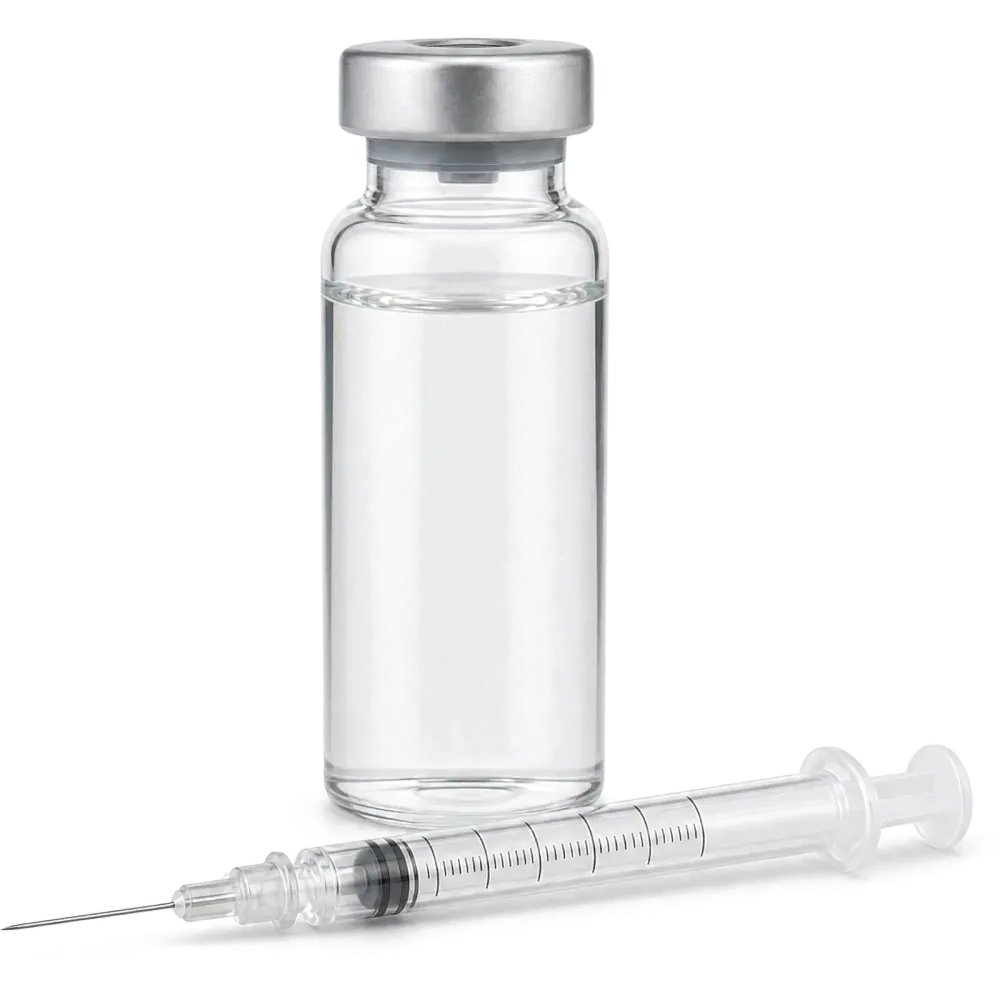
One thing that does not reduce them is the pharmacy. Compounded tirzepatide is the same molecule and carries the same effects; what differs is that a vial and syringe move dosing to you, and FDA has logged hospitalisations from measurement errors. That is set out in compounded tirzepatide.
The honest summary
About half of people on Zepbound get some stomach trouble, one in four gets nausea, and one in fifteen stops because of it, nearly always in the first months. The rare warnings are real and mostly a matter of knowing the symptom to act on: severe abdominal pain, inability to keep fluids down, a family history of medullary thyroid cancer before you start. Everything else on the label is a percentage point or two above placebo.


