

Hair shedding on a GLP-1 is real, the labels now count it, and the two that report it link it to weight reduction. It is what a body does after losing weight quickly, and it happens after bariatric surgery, serious illness and aggressive dieting too.
General information, not medical advice. Hair loss has many causes, some of which have nothing to do with weight or GLP-1s and some of which are worth investigating. If it is significant or it worries you, see a clinician rather than a website.
What the labels say
More than they used to, and the detail fits the weight-loss explanation.
Ozempic, dosed for type 2 diabetes, does not list hair loss among the common reactions from its trials. Those are all gastrointestinal:1
The most common adverse reactions reported in ≥5% of patients treated with OZEMPIC are: nausea, vomiting, diarrhea, abdominal pain and constipation.
It does list alopecia among reactions reported after approval, a list the label says comes from voluntary reports, where "it is not always possible to reliably estimate their frequency or establish a causal relationship to drug exposure."1
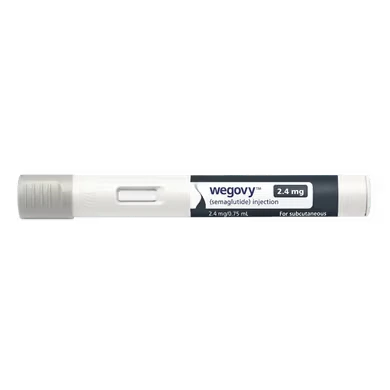
Wegovy, the same molecule at weight-loss doses, counts it in its trials and names the link:2
Hair loss adverse reactions in WEGOVY injection-treated patients were associated with weight reduction. In a pool of studies 2, 3, and 4, hair loss was reported in 3.3% of patients treated with WEGOVY 2.4 mg (4% female, 0.9% male) and in 1% of patients treated with placebo (2% female, 0 male).
In the trials of the 7.2 mg dose, hair loss was reported by 5.8% on 7.2 mg (8.4% of women, 0.2% of men), 3.3% on 2.4 mg and 1.0% on placebo, and hair loss is now on the label's list of the most common reactions.2 Zepbound's label uses the same words, "associated with weight reduction", and reports hair loss in 7.1% of women against 0.5% of men.3
So it is a documented side effect, more common at higher doses and in women, and the two labels that report it both describe it as associated with weight reduction. That is the mechanism below, not a separate one.
The mechanism that is documented
Hair grows in cycles, and at any moment most of your follicles are growing while a minority are resting and shedding. A significant physiological stress, and rapid weight loss is one, can push an unusually large share of follicles into the resting phase at once. Months later they shed together, and what you notice is not slow thinning but a sudden alarming amount of hair in the shower.
The delay is the confusing part. The shedding often starts two to four months after the trigger, so people connect it to whatever they were doing that week rather than to the weight they lost in spring.
That pattern is well recognised after bariatric surgery and after crash dieting, both of which involve exactly the same trigger and no GLP-1 at all. It is generally temporary, because the follicles are resting rather than gone.
The two things you influence
How fast you are losing. The same lever as with facial volume, and the same conversation with a prescriber: dose, how quickly you climb, and whether a slower rate suits your goal. On brand pricing a slower climb costs nothing extra, which is worth knowing before you decide to tough it out.
Whether you are eating enough. These drugs work partly by making you want less food, which is the point, and it makes undereating easy to do without noticing. Protein and micronutrient intake is the thing dietitians raise first here, and "am I actually eating enough" is a reasonable and specific question to bring to a clinician or a registered dietitian.
No protein target or supplement is going in this article. Anyone confidently giving you a number on a page like this one is guessing, and the honest answer depends on your body and what else is going on with you.
What does not help
The same thing we said about facial volume, because the same industry sells into both: there is no shampoo, supplement or oil with credible evidence of preventing shedding driven by rapid weight loss. Pages ranking for this term that end in a product recommendation are selling one.
Where this touches cost, honestly
Only in one place, and we would rather say so than manufacture a reason to link.
The thing that makes shedding more likely is losing fast, and the thing that makes people lose fast in bursts is losing, stopping because the plan got expensive, and starting again. Steady beats stop-start for hair the same way it does for skin. A program you can still afford in month twelve is the version of this that does not repeat.
The short version
Real, counted in the labels, tied there to weight reduction, probably temporary, and worth checking with a clinician if it is significant, because plenty of other things cause hair loss and some of them are treatable.