





Almost everything people mean by "Ozempic side effects" is gastrointestinal, and almost all of it is front-loaded. Nausea, vomiting, diarrhoea and constipation, concentrated in the first weeks and again for a few days after every dose increase. That pattern is the reason the drug is climbed slowly instead of started at the dose that does the work.
This is general information, not medical advice. Whether this drug suits you, at what dose, and what to do about a side effect are decisions for the clinician who prescribed it. If something frightens you, contact them rather than a website.
What the manufacturer actually lists
The FDA prescribing information opens with a boxed warning, and its list of the most common side effects is short enough to read in full:1
WARNING: RISK OF THYROID C-CELL TUMORS
The most common adverse reactions reported in ≥5% of patients treated with OZEMPIC are: nausea, vomiting, diarrhea, abdominal pain and constipation.
Two things matter more than the nausea, and get less attention.
The boxed warning. A boxed warning is the strongest one the FDA applies. It does not mean the drug is unsafe for you; it means there is a specific risk your prescriber has to weigh against your history. Bring your family history of thyroid cancer to that conversation without being asked.
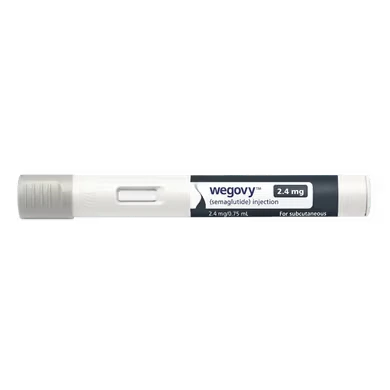
Do not stack GLP-1s. This is worth saying plainly because the market makes it easy to do by accident. Somebody on Ozempic through insurance who buys compounded semaglutide online to bridge a gap is on two GLP-1s. Somebody switching from semaglutide to tirzepatide without a gap is briefly on two. Tell each prescriber about the other. Ozempic's own label does not carry this line, but the label for Wegovy, the same molecule, does: "Concomitant use of WEGOVY (semaglutide) tablets or WEGOVY (semaglutide) injection with other semaglutide-containing products or with any other GLP-1 receptor agonist is not recommended."3
Ozempic is a diabetes drug, and that changes this page
Ozempic is approved for type 2 diabetes.2 Wegovy is the same molecule approved for weight management. If you are taking Ozempic to lose weight, you are taking it off-label, which is legal, common, and a decision that belongs to a licensed clinician rather than to a comparison site.
It matters here for one practical reason: the doses differ. Ozempic tops out lower than Wegovy does, and dose is the main driver of how rough the gastrointestinal effects get. Side-effect accounts you read from someone on 2.4 mg of Wegovy are not describing the same exposure as someone on 1 mg of Ozempic.
If you are on this drug for weight rather than blood sugar, the Wegovy side-effect picture is the closer match to what you will experience at the top of the ladder. We wrote the Wegovy side-effect picture separately.
Hair loss, muscle loss, and the ones that are not on the label
Three effects get discussed constantly and none of them is a listed adverse reaction: hair shedding, loss of muscle along with fat, and facial volume loss. They have a cause in common, and it is not the drug reaching for your hair or your face. It is losing weight quickly, which does all three and does them after bariatric surgery and crash dieting too.
That is not a reason to dismiss them. It is a reason to aim the question at the right thing, which is the rate of loss and whether you are eating enough while your appetite is suppressed. We wrote out the hair one and the facial one in full.
Why the timing is the whole story
The manufacturer's schedule holds a patient at each strength for several weeks before stepping up. Every step tends to bring a fresh few days of the same symptoms, then a settling.
Read that as a calendar as much as a price list. You are not judging this drug in week two. You are judging it somewhere past the point where the dose stops moving.
The side effect that costs money
Here is the part that belongs on a price tracker rather than a health site.
The most common reason people abandon a GLP-1 is not a dramatic reaction. It is a rough fortnight during titration, at a moment when they have already paid for a plan. What happens next depends entirely on terms they agreed to before they knew any of this: whether the program lets them hold a dose, pause a month, or get anything back.
Those terms vary far more between sellers than the prices do, and almost nobody checks them while comparing. Three questions, all answerable before you pay:
- Can I stay at this dose? Some programs escalate on a schedule by default. If you want to sit at a strength for an extra month, you need to know that is allowed.
- Can I pause? A month off is common and reasonable. A plan that cannot be paused turns a bad fortnight into a cancelled subscription.
- What happens to a prepaid multi-month plan if I stop? The cheapest prices on our board are usually the longest commitments. That is the trade, and it should be a knowing one.
Every membership fee in that ranking is one we verified on the seller's own page, and where a seller has not published one we could check, the row says so instead of assuming there is none. The plan terms are on each seller's page, linked from every row.
What to do about the nausea itself
We will not be telling you. Not out of caution for its own sake: the answer is genuinely specific to you, and the person who prescribed the drug has your history, knows what else you take, and can change the dose. That is the whole answer.
What we will say is that "push through it" is not the only option and is not always the right one, and that a slower climb is a normal, unremarkable thing for a clinician to agree to. On the brand, it also does not cost anything extra, because the manufacturer's self-pay price is flat across the standard dose range.
The honest summary
Expect gastrointestinal symptoms early and after each step up. Take the boxed warning to your prescriber rather than to a search engine. Do not run two GLP-1s at once. And before you pay anyone, find out what happens if the third week is bad, because that is the scenario that actually ends most people's course.