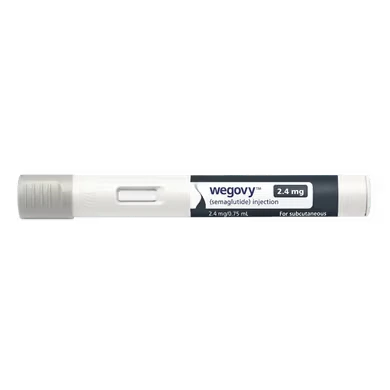



Wegovy is semaglutide, so its side effects are semaglutide's side effects: nausea, vomiting, diarrhoea and constipation, worst in the first weeks and for a few days after each dose increase. If you have read about Ozempic side effects, you have read about the same molecule.
What is different is where you are going. Ozempic is dosed for blood sugar and tops out lower. Wegovy is dosed for weight management and climbs to 2.4 mg, with a 7.2 mg high-dose strength above that. Dose is the main thing that decides how pronounced the gastrointestinal effects get, so a Wegovy patient's experience at the top of the ladder is not the same exposure as an Ozempic patient's.
This is general information, not medical advice. Your dose, your schedule, and what to do about any symptom belong to the clinician who prescribed it. If something worries you, contact them, not a website.
What the manufacturer lists
Quoted from the FDA prescribing information, which opens with a boxed warning:1
WARNING: RISK OF THYROID C-CELL TUMORS
Concomitant use of WEGOVY (semaglutide) tablets or WEGOVY (semaglutide) injection with other semaglutide-containing products or with any other GLP-1 receptor agonist is not recommended.
Most common adverse reactions (incidence ≥5%) in adults or pediatric patients aged 12 years and older are: nausea, diarrhea, vomiting, constipation, abdominal pain, dysesthesia, headache, fatigue, dyspepsia, dizziness, abdominal distension, eructation, hypoglycemia in patients with type 2 diabetes, flatulence, gastroenteritis, gastroesophageal reflux disease, and hair loss.
The boxed warning is the strongest one the FDA applies. It is not a statement that the drug is unsafe for you, it is a specific risk your prescriber weighs against your history, and a family history of thyroid cancer is something to volunteer rather than wait to be asked about.
The concomitant-use line matters more than it sounds. Do not stack GLP-1s. It is easy to do by accident: bridging an insurance gap with a compounded vial, or switching molecules without leaving a gap, both put two GLP-1s in you at once.
The climb, and what each step costs
Every step up tends to bring a fresh few days of symptoms before settling. Here is the ladder with the money attached, which is the version nobody else publishes. If you want it as a chart on its own, that is here:
Look at the middle column. Novo's self-pay price is the same at 0.25 mg as it is at 2.4 mg.2 That is worth knowing on a bad week, because it means asking your prescriber to hold you at a strength for an extra month, or to climb more slowly, does not cost a brand patient a penny more.
On the brand, going slower is free. The bill is the same whether you reach the top of the ladder in four months or eight.
That is not universally true off-brand. Some compounded sellers price by strength, so the advertised number is the starting-dose number and the bill climbs as you do. If you are on a compounded program and considering a slower titration, check which kind you are on first.
The high dose is a different question
Wegovy now has a 7.2 mg strength above the standard range, and it is the one place the manufacturer's flat pricing stops: it is $50 a month above every other pen dose.2 The label's own trial table shows what the extra dose adds. Nausea was reported by 39% on 7.2 mg against 35% on 2.4 mg and 13% on placebo, and vomiting by 22% against 16% and 6%. The biggest jump is dysesthesia, a grouping the label says includes burning sensation, paresthesia, sensitive skin and pain of skin: 22% on 7.2 mg against 6% on 2.4 mg and 0% on placebo.1 Whether it is right for anybody is entirely a prescriber's call. We mention it only because people find the 7.2 mg number while researching side effects and assume it is the normal destination. It is not.
What actually ends most courses
Not a dramatic reaction. A rough fortnight during titration, at a point where the plan is already paid for.
What happens then is decided by terms agreed before any of this was known: whether the program lets you hold a dose, pause a month, or recover anything from a prepaid plan. Those terms differ between sellers far more than the prices do, and they are the part nobody compares.
Every membership fee there was verified on the seller's own page. Where a seller has not published one we could check, the row says so rather than assuming zero. Plan terms are on each seller's page, one click from every row.
The honest summary
Same drug as Ozempic, further up the ladder, which is why the accounts sound worse. Expect the symptoms early and after each step. Take the boxed warning to a clinician. And if a week is bad, remember that on the brand a slower climb is free, and that whether it is free on your program is a question with a checkable answer.