

Getting Zepbound is three questions in a fixed order, and people get stuck because they ask them out of sequence. Do you qualify. Who will write it. How will it be paid for. The third question is where all the money is, and it has four different answers depending on what you have.
1. Do you qualify
The label is specific. Zepbound is indicated "to reduce excess body weight and maintain weight reduction long term in adults with obesity or adults with overweight in the presence of at least one weight-related comorbid condition", and separately for moderate to severe obstructive sleep apnoea in adults with obesity.1 The label does not print BMI numbers in that sentence, but the trials that earned the approval did, and they are what prescribers and insurers use: a BMI of 30 or more, or 27 or more with a weight-related complication.2
| You are | Label position |
|---|---|
| BMI 30 or above | within the indication |
| BMI 27 to 29.9 with a weight-related condition (high blood pressure, type 2 diabetes, high cholesterol, sleep apnoea, and others) | within the indication |
| Obesity with moderate to severe sleep apnoea | within the indication, a separate one |
| BMI under 27 | outside the label; a prescriber can still write it off-label, and no insurer will cover it |
The sleep apnoea indication is worth knowing about even if weight is your goal. It is a medical diagnosis rather than a weight threshold, some plans that exclude "weight-loss drugs" cover Zepbound for OSA, and it is the one route where the prescription does not have to say obesity.
Zepbound is not indicated for type 2 diabetes. If diabetes is the reason, the same molecule is Mounjaro, and the Mounjaro guide is the one you want.
2. Who writes it
Any licensed prescriber: a physician, nurse practitioner or physician assistant, in person or by telehealth. There is no specialist requirement. The three realistic routes:
Your own doctor. Cheapest if you have one and a plan that covers visits, and the best route if you will need prior authorisation, because your doctor's office is the one that files it. The friction is that some primary-care practices still decline to prescribe GLP-1s for weight, and that a visit can take weeks to get.
An online telehealth program. Fastest, usually same-week, with a prescriber who does this all day. Programs like Ro, Sesame and Found dispense branded Zepbound alongside their own memberships; we price those in what each program charges. Some will file prior authorisation with your insurer; most will not, and will steer you to cash.
LillyDirect. Lilly's own front door pairs an online consultation with its self-pay pharmacy. If you already know you will be paying cash, this removes a step.
3. How it gets paid for
This is the whole difficulty. Zepbound has four prices and you get one of them.
Route A: a commercial plan that covers it
If your employer or marketplace plan covers Zepbound for weight loss, Lilly's savings card takes the copay down: "you may be eligible to pay as low as $25 for a one- or three-month supply".3 Government plans are excluded, as with every manufacturer card. Nearly every plan that covers it requires prior authorisation, meaning your prescriber has to document the BMI and the comorbidity before the pharmacy will fill it.
Whether your plan covers it is plan-specific and not knowable from the insurer's name. Here is where eight insurers stand, in their own documents:
Which one fits you
The lowest price, full stop
cheapest all-in program we track at $69/mo
chosen from 22 qualifying programs · full breakdown · is it legit?
Tirzepatide specifically
cheapest verified tirzepatide at $85/mo
chosen from 16 qualifying programs · full breakdown · is it legit?
A pill, not an injection
cheapest oral option at $147/mo
chosen from 4 qualifying programs · full breakdown · is it legit?
FDA-approved brand medication
cheapest branded drug we track at $208/mo, which is the only route that is FDA-approved
chosen from 2 qualifying programs · full breakdown · is it legit?
Your plan billed for you
cheapest program that will bill your insurance, from $158/mo
chosen from 4 qualifying programs · full breakdown · is it legit?
No membership fee at all
$69/mo with nothing added on top
chosen from 19 qualifying programs · full breakdown · is it legit?
The strongest review record
4.8 out of 5 across 5,340 published reviews, from $199/mo
chosen from 9 qualifying programs · full breakdown · is it legit?
Third-party certification you can check
LegitScript certified and verifiable independently, from $75/mo
chosen from 2 qualifying programs · full breakdown · is it legit?
Every row is computed from today’s verified prices. Nobody picks the winners, and no program can pay to appear here.
The coverage guide sets out the order to ask in: formulary first, then prior authorisation criteria, then the card.
Route B: your plan refuses
Two kinds of no. A plan that lists Zepbound but denied your prior authorisation can be appealed, and often is won on documentation. A plan that excludes weight-loss drugs entirely cannot be appealed into covering it; the appeal route there is your employer's benefits team, not the insurer. Which kind of no it was decides what you do next. While you wait, Route C or D is the bridge.
Route C: pay Lilly directly
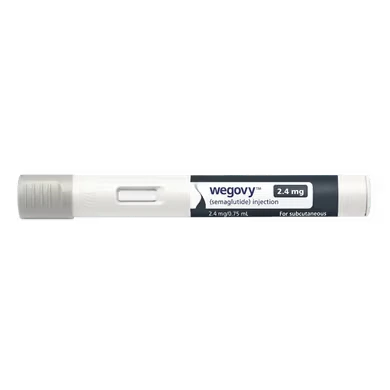
Lilly sells Zepbound to cash patients as a vial or KwikPen, at $299 for 2.5 mg, $399 for 5 mg, $499 for 7.5 mg and $699 for 10 mg and above.3 The vial and the KwikPen are both $449 from 7.5 mg as long as each refill lands within 45 days of the last.5 The prescription is the same; the pharmacy is Lilly's. Two things to hold in mind: 2.5 mg "is the starting dose and is not an approved maintenance dose",4 so the $299 lasts one month, and the doses that produced Zepbound's trial results are the $699 tier. Zepbound without insurance prices the full year.
Route D: compounded tirzepatide
Zepbound's molecule is also sold compounded, through telehealth programs and licensed pharmacies, at a fraction of Lilly's price and without FDA approval of the finished product. It is a real trade and it is set out plainly in is compounded semaglutide safe, which applies equally to tirzepatide. What it costs today, verified on each seller's own page:
4. The first month
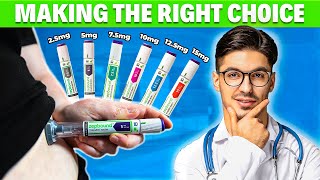
Whichever route, the drug arrives as four weekly doses and you start at 2.5 mg for four weeks, then climb in 2.5 mg steps every four weeks as tolerated, to whichever of 5, 7.5, 10, 12.5 or 15 mg you settle at.4 The gut effects cluster around each step and ease within it; the side-effect guide has the label's percentages and the labels' one piece of advice, which is to climb slowly.
The honest summary
Qualifying is the easy part: a BMI of 30, or 27 with a condition, and any prescriber can write it in a week. Paying is the hard part, and it is entirely determined by what your plan says about weight-loss drugs. Covered, it is $25. Refused, it is $299 to $699 direct from Lilly, or $85 and up for the same molecule without FDA review. Find out which of those you are before you book the appointment, because the appointment is the same either way and the bill is not.