



These drugs work by slowing your stomach, and everything on this page is a consequence of that. Food sits longer, so you feel full, which is the point, and also queasy, which is not. The gut moves differently, so some people are constipated and some have the opposite. The labels for Wegovy and Zepbound put percentages on each of these from trials of thousands of people, and those numbers are more useful than any forum thread, so here they are.
The numbers, drug by drug
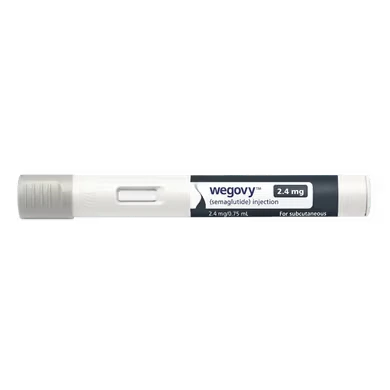
Wegovy's label reports adverse reactions from 2,116 adults on 2.4 mg for up to 68 weeks against 1,261 on placebo:1
| Wegovy 2.4 mg | On the drug | On placebo |
|---|---|---|
| Nausea | 44% | 16% |
| Diarrhoea | 30% | 16% |
| Vomiting | 24% | 6% |
| Constipation | 24% | 11% |
| Abdominal pain | 20% | 10% |
| Headache | 14% | 10% |
| Fatigue | 11% | 5% |
| Indigestion | 9% | 3% |
| Bloating | 7% | 5% |
| Belching | 7% | <1% |
| Reflux | 5% | 3% |
Zepbound's label reports the same from 2,519 adults for up to 72 weeks, split by dose:3
| Zepbound | 5 mg | 10 mg | 15 mg | Placebo |
|---|---|---|---|---|
| Nausea | 25% | 29% | 28% | 8% |
| Diarrhoea | 19% | 21% | 23% | 8% |
| Vomiting | 8% | 11% | 13% | 2% |
| Constipation | 17% | 14% | 11% | 5% |
| Abdominal pain | 9% | 9% | 10% | 5% |
| Indigestion | 9% | 9% | 10% | 4% |
| Fatigue | 5% | 6% | 7% | 3% |
Constipation
The one people search for most, and the one that behaves differently from the rest. On Wegovy it affects about one in four, against one in nine on placebo.1 On Zepbound it runs the other way from the other symptoms: 17% at 5 mg falling to 11% at 15 mg.3 It is the only gut effect that gets less common as the dose rises, which suggests it belongs to the early weeks rather than to the drug's full effect.
The mechanism is the drug doing its job. Slower gastric emptying and slower transit through the bowel means less water in the stool by the time it arrives. Neither label prescribes a treatment, and this site does not give medical advice, but both labels are explicit that the gut effects are dose-related and that a slower climb reduces them. Wegovy's dosing section: "Follow the dosage escalation in Table 1 to reduce the risk of gastrointestinal adverse reactions."2 If constipation is what is stopping you, the label's own lever is time on the current dose before the next step.
Nausea
The most common effect on every GLP-1 and the one most likely to arrive in the first days after a dose increase. Wegovy's rate is 44%, Zepbound's 25% to 29%.13 It is also the effect most likely to make people stop: the Wegovy label lists nausea among the most common reasons for the 6.8% who discontinued for adverse reactions, against 3.2% on placebo.2
The pattern in the trials, and the reason the labels are built around a four-week climb, is that nausea peaks with each step and settles within it. Both labels' escalation schedules exist for this reason. A person who is still nauseous at week four of a step is the person the label is telling to wait before the next one.
Diarrhoea
Almost as common as nausea on both drugs: 30% on Wegovy, 19% to 23% on Zepbound.13 It is the symptom that most often coexists with the opposite one. The labels' footnotes make clear they are counting broadly; Zepbound's diarrhoea row "includes diarrhea, frequent bowel movements".3 The clinical concern behind persistent diarrhoea is not the symptom but its consequence. Both labels connect it to something serious: dehydration leading to kidney injury.
Fatigue
Lower rates than the gut effects, 11% on Wegovy and 5% to 7% on Zepbound, but still double placebo.13 The labels count it broadly (Zepbound's row "includes asthenia, fatigue, lethargy, malaise"3) and do not explain it. The plausible contributors are the ones you would expect from eating much less: fewer calories, less water, and sometimes low blood sugar in people also on diabetes medication, which both labels flag separately. Fatigue that persists past the dose climb is the version worth raising with the prescriber rather than waiting out.
The ones that are not ordinary side effects
Both labels separate the common gut effects above from a short list of serious conditions that can look the same at first. That distinction is the most important thing on this page.
Pancreatitis. Wegovy's label: "Acute pancreatitis, including fatal and non-fatal hemorrhagic or necrotizing pancreatitis, has been observed in patients treated with GLP-1 receptor agonists".5 The sign the labels describe is severe, persistent stomach pain, sometimes radiating to the back, with or without vomiting. That is not the nausea in the table above.
Gallbladder disease. Both labels report more gallstones and gallbladder inflammation on the drug than on placebo; Zepbound's numbers are 1.1% against 1% for stones and 0.7% against 0.2% for cholecystitis.4 Wegovy's label notes the excess holds "even after accounting for the degree of weight loss".5 Pain in the upper right abdomen, fever, or yellowing of the skin are the signs the labels name.
Kidney injury from dehydration. This is where the ordinary symptoms become serious. Both labels report acute kidney injury after the drug was launched, and both say the same thing about it: "The majority of the reported events occurred in patients who experienced gastrointestinal adverse reactions".5 Vomiting and diarrhoea that stop you keeping fluids down are the mechanism. That is why persistent versions of the ordinary symptoms are worth a call.
The rule the labels imply: nausea, loose stools, constipation and tiredness that come with a dose step and ease within it are the drug working. Severe or persistent abdominal pain, pain with fever or jaundice, or vomiting and diarrhoea you cannot keep ahead of with fluids are not. Those are the ones with a name in the warnings section.
Does compounded change any of this
No, and it is worth being precise about why. The percentages above come from trials of the branded products. A compounded semaglutide or tirzepatide is the same molecule at the same dose, so expect the same effects at roughly the same rates. What compounding changes is the oversight of the finished product, not its pharmacology. We set that out in what compounding does and does not change. If you are choosing a seller, check them for the things that actually differ.
The honest summary
Between a quarter and a half of people on these drugs get some version of the four gut effects. They cluster around dose increases, and the labels' answer is to climb slower rather than to add anything. About one person in fifteen stops because of them. The numbers are large enough that expecting them is realistic and small enough that most people get through the climb. The exception is pain that is severe or will not go away, which has its own section in both labels for a reason.