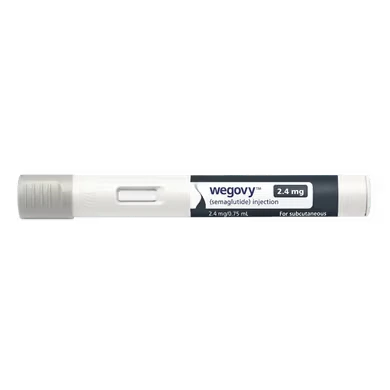

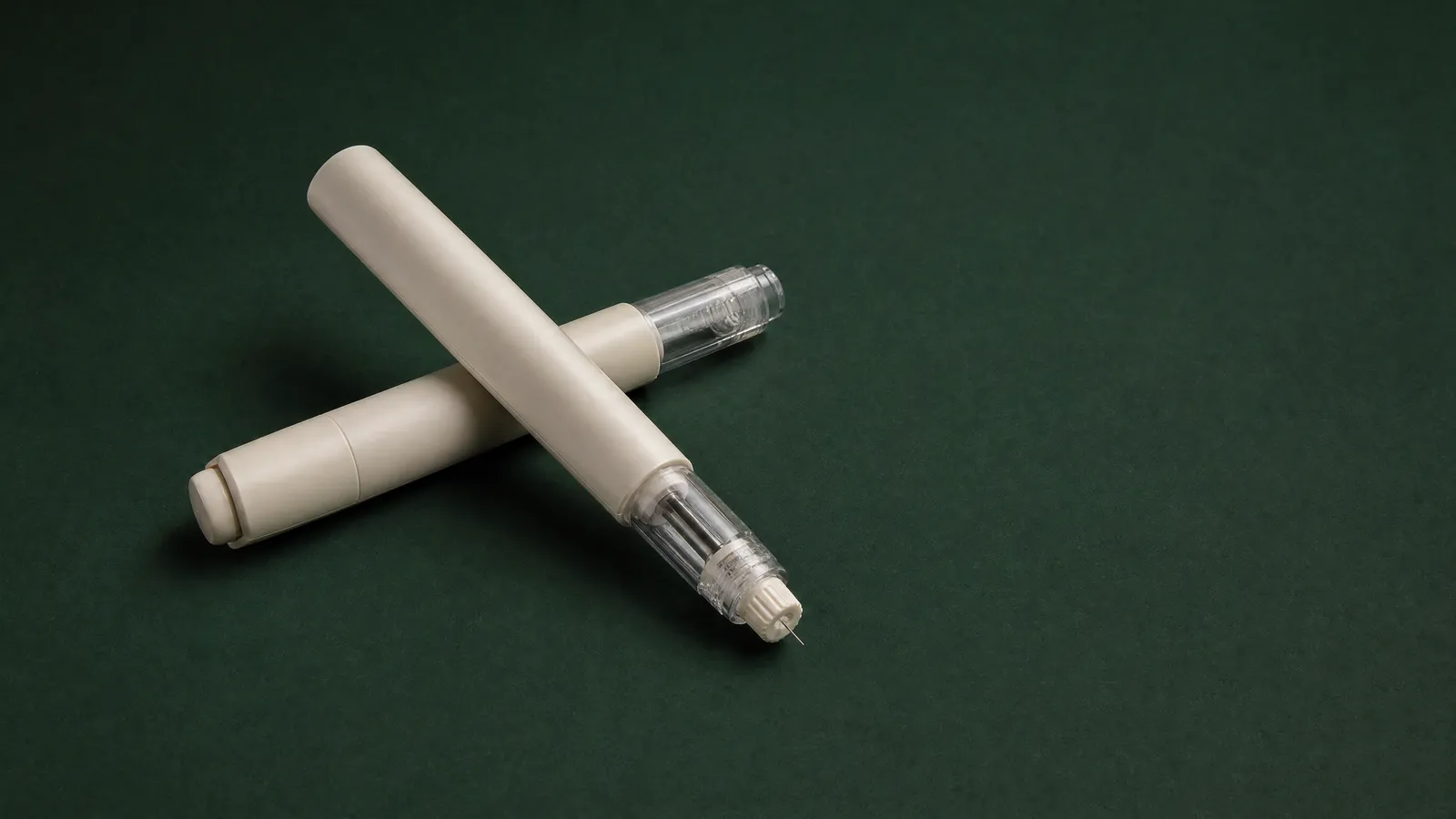
These are the two boxes a weight-loss prescription actually comes in. Zepbound is Lilly's tirzepatide, Wegovy is Novo Nordisk's semaglutide, and everything else with those molecules in it (Mounjaro, Ozempic, the compounded vials) is either a diabetes product or not FDA-approved. So this is the comparison that matters at the pharmacy counter, and it has three parts: which works better, which you can get, and which you can afford.
Which works better
This one is settled. The two molecules were run against each other in SURMOUNT-5, a 72-week trial of 751 adults with obesity, each pushed to the highest dose they could tolerate. Tirzepatide, Zepbound's molecule, reduced body weight by 20.2%. Semaglutide, Wegovy's, by 13.7%.1 The people on tirzepatide were also more likely to cross every threshold the trial measured, from 10% loss up to 25%.
The trial used the molecules, not the branded boxes as such, and it excluded people with type 2 diabetes. But Zepbound and Wegovy are those molecules at those doses, so the result transfers. If effect size were the only question, this article would be one paragraph long. We go through the molecule-level evidence in more depth in tirzepatide vs semaglutide.
Where the two boxes differ beyond the molecule
Three things separate the products that the trial does not capture.
Wegovy has a heart indication. Its label lists, alongside weight, a use "to reduce the risk of major adverse cardiovascular events" in adults with established heart disease.4 Zepbound's label is obesity, weight maintenance and obstructive sleep apnoea.5 For someone whose doctor is weighing heart risk, that difference can decide the prescription regardless of which drug loses more weight, and it is also a lever with insurers, who treat a cardiovascular indication differently from a weight one.
Wegovy has a tablet. Novo now sells semaglutide as a once-daily pill, which its own site calls "the first FDA-approved semaglutide pill for weight loss".6 Zepbound is injection only. If needles are the reason someone will not start, that ends the comparison before it begins. We cover the Wegovy pill and every GLP-1 tablet separately.
Zepbound has more rungs. It climbs through six doses to 15 mg, with 2.5 mg a starting dose only.5 Wegovy climbs through five to 2.4 mg, with a 7.2 mg HD pen above that. More steps means finer control over what a person tolerates, which is part of why Zepbound's gut side effects are manageable despite the stronger effect.
What each costs, cash
Both makers now publish prices for people paying without insurance, and they have chosen opposite shapes. Lilly's climbs with the dose:2
| Zepbound self-pay, vial or KwikPen | Per month |
|---|---|
| 2.5 mg | $299 |
| 5 mg | $399 |
| 7.5 mg | $499 ($449 with on-time refills) |
| 10, 12.5, 15 mg | $699 ($449 with on-time refills) |
The $449 is Lilly's refill offer on the single-dose vial or the KwikPen at 7.5 mg and above, kept while each refill is within 45 days of the last.7
Novo's is flat for the pen and tiered for the tablet:3
| Wegovy self-pay | Per month |
|---|---|
| Tablet 1.5 mg | $149 |
| Tablet 4 mg | $199 |
| Tablet 9 mg, 25 mg | $299 |
| Pen, any dose 0.25 to 2.4 mg | $349 (new patients: $199 for two fills, through 31 Dec 2026) |
| HD pen 7.2 mg | $399 |
The trial's own doses are the expensive end of Zepbound and the flat middle of Wegovy. The 20.2% came from 10 to 15 mg, which is Lilly's $449 tier with on-time refills, $699 regular. The 13.7% came from 1.7 to 2.4 mg, which is Novo's $349 pen. Both makers sell a 28-day month,28 so a year of weekly doses is 13 fills. A year on the doses that produced those results is roughly $5,800 for Zepbound with every refill on time, or $9,100 at the regular price, against $4,500 for Wegovy, cash.
Against those, Lilly puts Zepbound's list price at $499 to $1,086.37 per fill,2 which is what a pharmacy would bill an uninsured patient without the direct programme. The self-pay prices exist to stop that from happening, and they only apply if you buy through the maker.
What each costs through a plan
This is where the two boxes converge. Both makers run a savings card for commercially insured patients whose plan covers the drug, and both bring the copay to as low as $25 a month. Lilly's terms: "you may be eligible to pay as low as $25 for a one- or three-month supply", government beneficiaries excluded.2 Novo's Wegovy card is structured the same way. At $25 a month the price difference vanishes and only the trial result is left.
The catch is the word covers. Plans decide drug by drug, and for weight loss they decide differently from diabetes. Here is what the eight insurers we hold documents for say about each, as of our last read:
Which one fits you
The lowest price, full stop
cheapest all-in program we track at $69/mo
chosen from 22 qualifying programs · full breakdown · is it legit?
Tirzepatide specifically
cheapest verified tirzepatide at $85/mo
chosen from 16 qualifying programs · full breakdown · is it legit?
A pill, not an injection
cheapest oral option at $147/mo
chosen from 4 qualifying programs · full breakdown · is it legit?
FDA-approved brand medication
cheapest branded drug we track at $208/mo, which is the only route that is FDA-approved
chosen from 2 qualifying programs · full breakdown · is it legit?
Your plan billed for you
cheapest program that will bill your insurance, from $158/mo
chosen from 4 qualifying programs · full breakdown · is it legit?
No membership fee at all
$69/mo with nothing added on top
chosen from 19 qualifying programs · full breakdown · is it legit?
The strongest review record
4.8 out of 5 across 5,340 published reviews, from $199/mo
chosen from 9 qualifying programs · full breakdown · is it legit?
Third-party certification you can check
LegitScript certified and verifiable independently, from $75/mo
chosen from 2 qualifying programs · full breakdown · is it legit?
Every row is computed from today’s verified prices. Nobody picks the winners, and no program can pay to appear here.
The pattern across them is that Wegovy and Zepbound are usually treated alike, both plan-dependent, both behind prior authorisation, with TRICARE the clear exception that covers both and Humana the one that covers neither. If your plan is on that list, the linked sheet quotes the insurer's own document. If it is not, the order to ask in is the same for either drug.
The cheaper route both brands compete with
Every price above is for the branded, FDA-approved product. Both molecules are also sold compounded by licensed pharmacies through telehealth programs, at a fraction of the price and without FDA approval of the finished product. That is a real trade-off, set out in how to check a seller, and it is the route most cash payers actually take. The board, verified on each seller's page today:
Compounded tirzepatide from $85 a month is less than half of Zepbound's cheapest self-pay tier, and compounded semaglutide on the semaglutide board starts lower still. Whether that is worth the loss of FDA review is a judgement each person makes; the numbers are here so it is made with the real gap in view.
Choosing between them
- Covered by a commercial plan, either drug, $25 card: Zepbound. The stronger result at the same price.
- Covered for Wegovy only: Wegovy at $25 beats Zepbound at $299 to $699 for almost everyone. Take the one that is covered.
- Paying cash, budget matters: the Wegovy tablet at $149 is the cheapest branded entry to either molecule, and Wegovy's flat $349 pen undercuts Zepbound at every dose above 2.5 mg.
- Paying cash, results matter most: Zepbound, with eyes open that the dose that produced 20.2% is $449 a month on the vial or KwikPen refilled on time, $699 otherwise.
- Established heart disease: Wegovy carries the cardiovascular indication. Ask your prescriber what that means for you.
- Will not inject: Wegovy. It is the only one with a pill.
The honest summary
Zepbound is the stronger drug and Wegovy is the more flexible product: a tablet, a heart indication, a flat cash price. With coverage, choose Zepbound. Without it, the question is whether six and a half points of body weight are worth roughly double the cash price, and that is a question about your budget rather than about the drugs.


