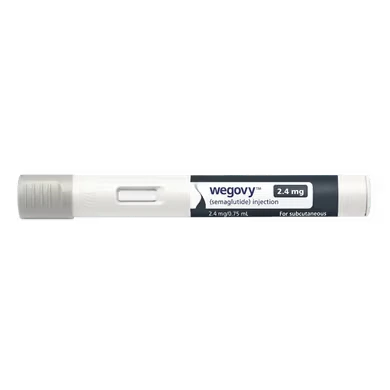

There is not one Zepbound savings card. There are two programs, and the one you get depends on whether your insurance covers Zepbound at all.
The Zepbound coupon, the Zepbound savings card and the Zepbound copay card are all the same thing, and almost every page about it quotes the $25 and stops. The $25 belongs to one of the two programs, and if you are on the other one your number is $499. That is the difference worth understanding before you get to a pharmacy counter.
If your plan covers Zepbound
Lilly's terms, quoted:1
...insurance that covers Zepbound single-dose pen ... to pay as little as $25 for a 1-month, 2-month, or 3-month prescription fill ... Card savings are subject to a maximum monthly savings of up to $100 per 1-month prescription, $200 per 2-month prescription, or $300 per 3-month prescription fill and a separate maximum annual savings of up to $1,300 per calendar year.
Lilly, Zepbound coverage and savings
Same shape as Novo’s cards: a $25 headline and a cap underneath it. The cap is what decides your actual number.
| Your copay | Card takes off | You pay |
|---|---|---|
| $75 | $50 | $25 |
| $125 | $100 | $25 |
| $250 | $100 | $150 |
| $500 | $100 | $400 |
The card reduces your copay by up to $100 a month, and by no more than $1,300 across a calendar year. It does not set your price to $25. You reach $25 only if your copay is about $125 or less.
If your plan does not cover Zepbound
This is the program nobody explains, and it is a different thing wearing the same name:2
...insurance that does not cover Zepbound single-dose pen ... to pay as low as $499 for your 1-month prescription fill ... up to a maximum of 13 prescription fills per calendar year.
Lilly
The two numbers Lilly's savings programme can produce for the same drug. Which one applies to you is decided by your insurer, not by the card.
The same not-covered card has a KwikPen version, priced by dose instead:4
(1) Pay as low as $299 for your 1-month prescription fill of Zepbound 2.5 mg single-patient-use KwikPen ... (2) Pay as low as $399 for your 1-month prescription fill of Zepbound 5 mg single-patient-use KwikPen ... (3) Pay as low as $449 for your 1-month prescription fill of Zepbound 7.5 mg single-patient-use KwikPen ... or (4) Pay as low as $449 for your 1-month prescription fill of Zepbound 10 mg, 12.5 mg, or 15 mg single-patient-use KwikPen
Lilly
The $449 from 7.5 mg is subject to Lilly's purchase offer terms, and this version allows up to 11 fills a year rather than 13.4 So if you searched for the Zepbound coupon expecting $25 and your plan excludes weight-management drugs, the honest answer is that your number is $499 a month on the single-dose pen or $299 to $449 by dose on the KwikPen, not $25.
The self-pay route, which is separate again
Lilly also sells Zepbound direct, in a vial and a KwikPen, priced by dose rather than by your insurance:3
Lilly's own summary of the range: "doses of 2.5mg, 5mg, 7.5mg, 10mg, 12.5mg and 15mg, with direct-to-patient pricing of $299, $399, $499, $699, $699 and $699 respectively."3 Against a list price the same page puts at $499 to $1,086.37 per fill.
Who cannot use the card at all
Lilly is explicit:3
Governmental beneficiaries excluded.
Lilly
That means Medicare and Medicaid. It is not a Lilly quirk; manufacturer copay cards generally cannot be combined with government prescription coverage, and Novo's cards say the same thing. If you are on Medicare, no amount of trying will make this card work, and the question worth asking is a coverage question instead.
Which route is actually cheapest for you
Four possible answers, and they are far apart:
| Your situation | Roughly |
|---|---|
| Commercial plan that covers Zepbound | $25 to your copay minus $100 |
| Commercial plan that does not cover it | $499/mo single-dose pen; $299 to $449 by dose on the KwikPen |
| Paying cash, Lilly direct | $299 to $699 by dose ($449 on the vial or KwikPen from 7.5 mg with refills within 45 days5) |
| Medicare or Medicaid | Card excluded; depends on your plan |
And then there is the compounded market, which is a different product with a different regulatory status and is where most cash buyers actually land:
Every figure there is the all-in monthly cost including any membership fee we could verify, read off the seller's own page and dated. We earn a commission on some of those and none on Lilly's card, so to be direct about it: if the card gets you to $25, take the card. It beats everything we rank.
Before you assume anything
- Find out whether your plan covers Zepbound specifically, not tirzepatide generally, and not Mounjaro. Weight-management and diabetes indications are treated differently by most formularies even when the molecule is identical.
- Read what your insurer publishes. We keep the major insurers' own coverage statements with quotes and dates.
- Then compare. If your post-card number is above the cash market, the cash market is cheaper for you. If it is below, it is not.
