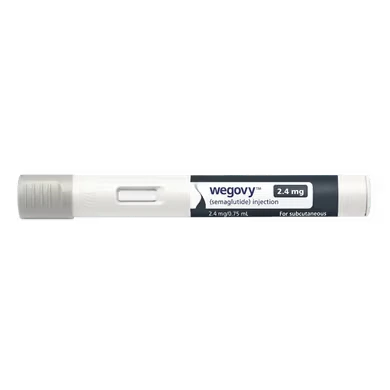

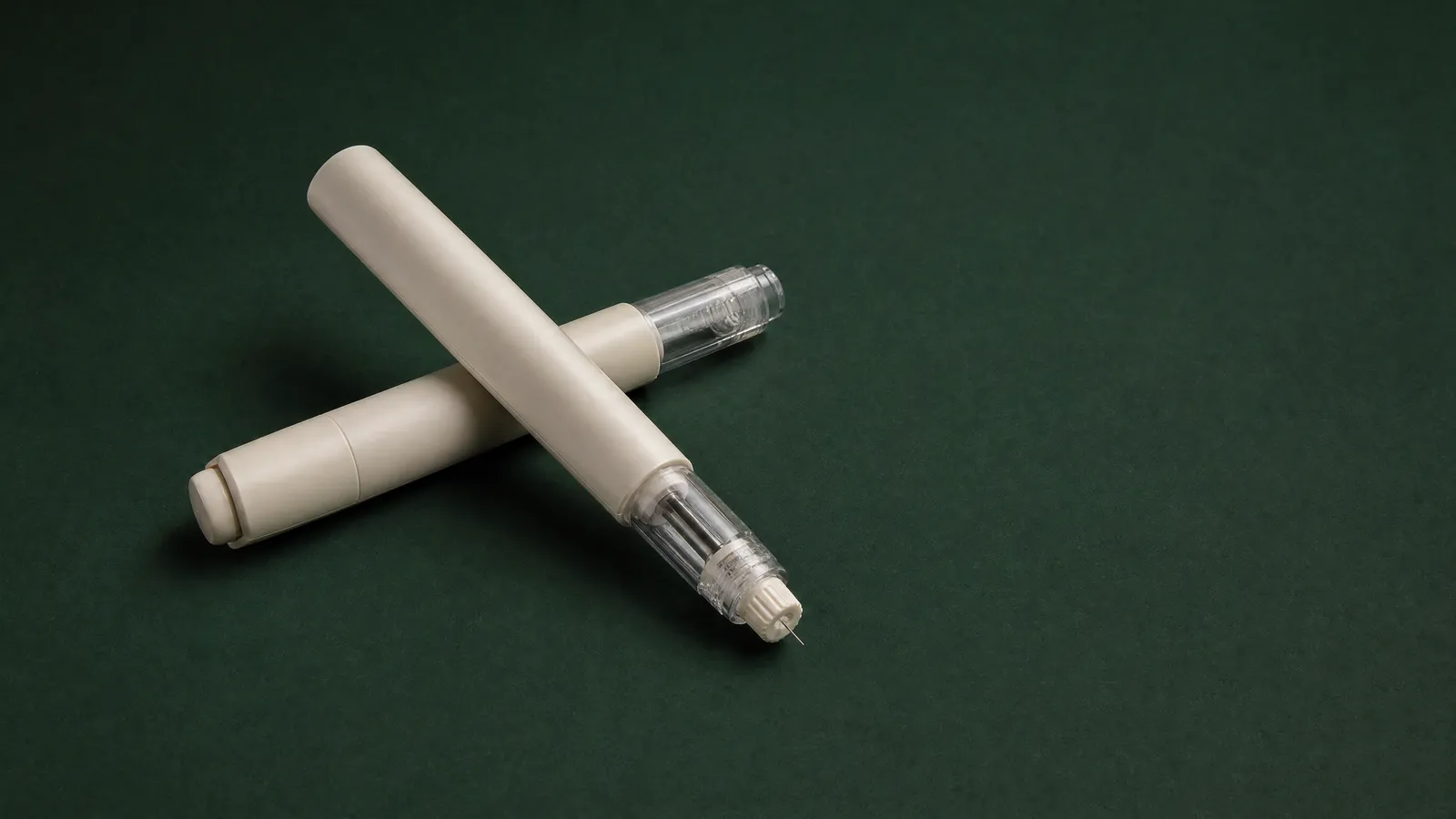
They are not two brands of the same drug. Mounjaro is tirzepatide. Ozempic is semaglutide. Different molecules, made by different companies, doing related but not identical things.
Both are approved for type 2 diabetes. If your question is really about weight loss, you are asking about their siblings, which is the first thing worth straightening out.
Four brands, two molecules
| Molecule | Diabetes brand | Weight brand | Maker |
|---|---|---|---|
| Semaglutide | Ozempic | Wegovy | Novo Nordisk |
| Tirzepatide | Mounjaro | Zepbound | Eli Lilly |
Side by side
| Mounjaro | Ozempic | |
|---|---|---|
| Molecule | Tirzepatide (GIP and GLP-1) | Semaglutide (GLP-1) |
| Maker | Eli Lilly | Novo Nordisk |
| Approved for | Type 2 diabetes | Type 2 diabetes |
| Doses in the head-to-head | 5, 10 and 15 mg weekly3 | 1 mg weekly3 |
| Self-pay from the maker | From $499 a month (LillyDirect)4 | $199 a month for two fills, then $349 to 1 mg, $499 at 2 mg (NovoCare)5 |
| Savings card, insured | As little as $25, capped at $150 a month6 | As little as $25, capped at $100 a month5 |
| Medicare GLP-1 Bridge | Not on the list7 | Not on the list7 |
| Free-drug program | Not on the Lilly Cares list9 | Novo PAP, uninsured at or below 200% of poverty8 |
Ozempic and Mounjaro are the diabetes pair. Wegovy and Zepbound are the weight pair. Using a diabetes brand for weight loss is off-label, which is legal and common and still a prescriber's decision rather than a shopper's.
The head-to-head, and what it actually found
There is one trial that put these molecules against each other directly, SURMOUNT-5, and its result is the number every comparison page quotes:1
at 72 weeks, the least-squares mean percent change in body weight was −20.2% for tirzepatide users vs. −13.7% for semaglutide users (p<0.001)
American College of Cardiology on SURMOUNT-5
Mean body-weight change at 72 weeks, tirzepatide against semaglutide, in the only head-to-head trial. Tirzepatide won, clearly and significantly.
So on the plain question of which molecule produced more weight loss when tested against the other, the answer is tirzepatide, and it is not close.
The part almost nobody quotes
Read the trial's design rather than its headline, and it does not answer the question people are asking it.
SURMOUNT-5 gave tirzepatide at 10 mg or 15 mg and semaglutide at 1.7 mg or 2.4 mg, in adults with obesity and without diabetes.
Those semaglutide doses are the Wegovy range. Ozempic does not go there. Novo's own pricing page lists Ozempic at 0.25 mg, 0.5 mg, 1 mg and 2 mg:2
then $349 per month for Ozempic® 0.25 mg, 0.5 mg or 1 mg and $499 per month for Ozempic® 2 mg.
NovoCare Pharmacy
So the trial routinely cited to prove Mounjaro beats Ozempic compared tirzepatide against a semaglutide dose Ozempic does not offer, in a population that did not have the disease Ozempic is approved to treat. It is a real result and a good trial. It is a Zepbound-versus-Wegovy result.
That does not overturn the finding. Tirzepatide still beat semaglutide, and there is no reason to think it would have lost at a lower comparator dose. It does mean that anyone telling you the trial settles "Mounjaro vs Ozempic" specifically has not read past the abstract.
The trial that did test Ozempic's dose: SURPASS-2
There is a second head-to-head, and it is the one that actually matches the question. SURPASS-2 put tirzepatide against semaglutide 1 mg, an Ozempic dose, in people with type 2 diabetes:3
In an open-label, 40-week, phase 3 trial, we randomly assigned 1879 patients, in a 1:1:1:1 ratio, to receive tirzepatide at a dose of 5 mg, 10 mg, or 15 mg or semaglutide at a dose of 1 mg.
SURPASS-2, New England Journal of Medicine, 2021
Its primary measure was blood sugar, not weight. On that, every tirzepatide dose did better:
| Arm | A1C change at 40 weeks | Extra weight change vs semaglutide |
|---|---|---|
| Tirzepatide 5 mg | -2.01 points | -1.9 kg |
| Tirzepatide 10 mg | -2.24 points | -3.6 kg |
| Tirzepatide 15 mg | -2.30 points | -5.5 kg |
| Semaglutide 1 mg | -1.86 points | reference |
The paper's own wording: tirzepatide at all doses was "noninferior and superior to semaglutide", and body-weight reductions were greater with tirzepatide, P<0.001 for every comparison.3 So the answer to "Mounjaro vs Ozempic" as diabetes drugs points the same way as SURMOUNT-5, from a trial that tested the right doses in the right people.
Two caveats the abstract states itself. The trial was open-label, so participants knew which drug they took. And Ozempic now goes to 2 mg, above the 1 mg tested. Neither reverses the result; both are reasons to treat the gap at 2 mg as untested.
Side effects in the same trial
The gastrointestinal rates were close. Nausea ran 17 to 22% on tirzepatide against 18% on semaglutide, diarrhea 13 to 16% against 12%, vomiting 6 to 10% against 8%. Serious adverse events were reported in 5 to 7% of tirzepatide patients and 3% of semaglutide patients.3 Which one you personally tolerate is not in any table.
What a year of each costs, paying the maker directly
Using only the manufacturers' own published self-pay prices, no insurance and no telehealth membership. A Mounjaro fill is "four pens per month",10 Novo's Ozempic month is "1 box of 1 Ozempic® pen",2 and a 1 mg or 2 mg Ozempic pen holds four weekly doses,11 so each fill lasts four weeks and a year of weekly doses takes 13, not 12:
| Monthly | First year (13 fills) | |
|---|---|---|
| Mounjaro, LillyDirect | From $499 | $6,487: 13 fills at $4994 |
| Ozempic up to 1 mg, NovoCare | $199 twice, then $349 | $4,237: two pens at $199, eleven at $3495 |
| Ozempic 2 mg, NovoCare | $499 | $5,737 reaching 2 mg as early as the label allows: two pens at $199, one at $349, ten at $499; $6,487 each year after5 |
At the doses most people start on, Ozempic self-pays about $2,250 a year less than Mounjaro. Mounjaro's list price, for comparison, is $1,112.16 per fill.10 With commercial insurance that covers either drug, both cards bring the copay to as little as $25; the difference is the cap. Lilly's Mounjaro card absorbs up to $150 a month and $1,950 a year, Novo's Ozempic card up to $100 a month.65
Medicare and free-drug programs
Neither drug is on the Medicare GLP-1 Bridge, which covers Foundayo, Wegovy and the Zepbound KwikPen for weight. The Bridge also excludes people with type 2 diabetes, who are expected to get their GLP-1 through Part D instead.7
For people with no insurance and low income the two companies differ. Novo's Patient Assistance Program supplies Ozempic free to uninsured patients at or below 200% of the federal poverty level.8 Lilly Cares does not list Mounjaro at all; its only GLP-1 is Trulicity.9 Our patient assistance guide sets out both programs in full.
What that leaves you deciding
Three things the trial does not decide for you, and all three matter more than the percentage:
- Which one you tolerate. Both are gastrointestinal drugs with the same class of side effects. Average weight loss across a trial says nothing about which one you personally can stay on, and the one you stay on beats the one you quit.
- What you are actually treating. If you have type 2 diabetes, the diabetes brands are the on-label route and your prescriber is weighing blood sugar, not just weight.
- What you can sustain paying. A 20% result over 72 weeks assumes 72 weeks of the drug.
What the two molecules cost
This is the part that dates, so it reads live rather than being typed into the sentence:
Every figure is the all-in monthly cost including any membership fee we could verify, read off the seller's own page and dated. If you want them split by molecule, the two rankings are cheapest semaglutide and cheapest tirzepatide.
The honest summary
Tirzepatide beat semaglutide head to head, by a wide and statistically clear margin, at obesity doses in people without diabetes. If you are choosing between the molecules for weight and cost were equal, that result points one way.
Cost is not equal, the brands in the question are the diabetes ones rather than the weight ones, and the trial did not test the dose range Ozempic actually sells. Take the percentage to your prescriber as a real finding, not as a verdict on the two boxes you were comparing.
