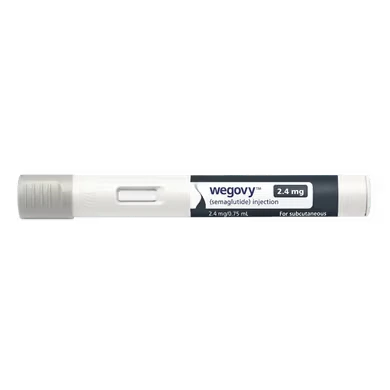


The card takes $100 off your copay. It does not set your price to $25.
Novo calls it a savings offer, the pharmacy counter calls it a copay card, and almost everybody searching for it calls it an Ozempic or Wegovy coupon. Same thing, and the terms below are the manufacturer's own.
That is the whole article, and it is the sentence missing from almost every page about these programmes, including the ones the manufacturers point you at.
What the terms actually say
For Wegovy, verbatim:1
Pay as little as $25, subject to a maximum savings of $100/month. Government beneficiaries excluded.
NovoCare
For Ozempic, the same structure:2
Pay as little as $25, subject to a maximum savings of $100/month. Eligibility and restrictions apply.
NovoCare Pharmacy
Both halves are true at once, and the second half does the work. Lilly’s equivalents for Mounjaro and Zepbound are structured the same way with different caps.
The arithmetic
| Your copay | Card takes off | You pay |
|---|---|---|
| $75 | $50 | $25 |
| $125 | $100 | $25 |
| $200 | $100 | $100 |
| $400 | $100 | $300 |
Roughly the copay above which the card stops getting you to $25. Below it, the advertised number is real. Above it, you are getting $100 off and nothing more.
So "pay as little as $25" is an accurate statement about the best case, and the best case is a low copay. If your plan already had you paying $110, this is excellent. If it had you paying $400, this is a 25% discount on a bill that is still large.
Who cannot use it
"Government beneficiaries excluded" is doing a lot of work in that sentence. In practice that means anyone whose prescription drug coverage comes through a federal or state programme, which includes Medicare and Medicaid. Manufacturer copay cards generally cannot be combined with government coverage, and this is not a Novo quirk.
If you are on Medicare, these cards are not your route and no amount of trying will make them one. The coverage question is a different one, and it is worth reading what your plan actually publishes rather than what a card advertises.
What the card is competing against
Here is the part we have an interest in, so we will be direct about it.
This site ranks cash-pay programs and earns a commission when someone buys through one. A manufacturer copay card is not one of those, we earn nothing from it, and if the card gets you to $25 a month it beats every price on our board by a wide margin. Take it.
The card is the wrong answer for you only in specific situations: if you are a government beneficiary and excluded, if you have no prescription coverage at all so there is no copay to reduce, or if your copay is high enough that $100 off still leaves you above the cash market.
That last one is the case worth checking, and it is checkable:
Before you assume anything
Two things worth doing in order, and neither costs anything:
- Find out what your copay actually is for the specific drug and dose, from your plan rather than from a forum. Coverage for weight-management indications and diabetes indications routinely differs even when the molecule is identical.
- Read what your insurer publishes. We keep the major insurers' own coverage statements with the quotes and dates, because plans change and prior authorisation rules are where most of this is decided.