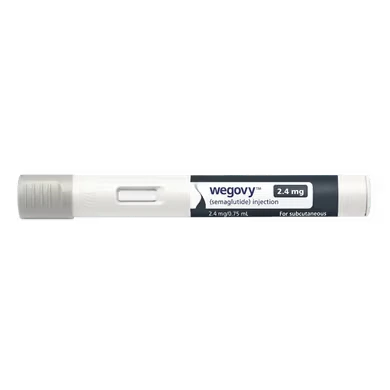



If you have type 2 diabetes, Ozempic is the drug doing its actual job. Novo Nordisk's own statement of what it is for:1
For adults with type 2 diabetes, along with diet and exercise, to improve blood sugar.
Novo Nordisk
That matters more than it sounds on a site like this one, because most of what is written about semaglutide is written for people using it off-label to lose weight. Almost none of that advice is aimed at you, and some of it is actively wrong for you.
General information, not medical advice. Diabetes management is a clinical relationship, and blood sugar, other medicines you take and hypoglycaemia risk are all things your prescriber is weighing. Nothing here should change what you do.
The doses
Ozempic runs 0.25 mg, 0.5 mg, 1 mg and 2 mg, climbed in steps over months so gastrointestinal effects can settle. It tops out at 2 mg, which is lower than Wegovy's range, because it was dosed for blood sugar rather than for maximum weight loss.
What it costs, three ways
With coverage. This is the one that matters and it is the one we cannot tell you, because it depends entirely on your plan's formulary. Type 2 diabetes coverage for GLP-1s is generally far better than weight-management coverage, so if you have insurance there is a real chance your copay beats everything below. What the major insurers publish is a ten-minute read and worth doing first.
With the savings card. Novo's terms:2
Pay as little as $25, subject to a maximum savings of $100/month.
NovoCare
Read both halves. The $25 is real, and so is the $100 cap. If your copay is $110, the card takes you to $25. If your copay is $400, the card takes you to $300, not $25. The cap is what decides which of those you are.
Paying cash. Novo publishes $349 a month up to 1 mg and $499 at 2 mg, with an introductory rate of $199 for a new patient's first two fills through the end of 2026.2
Where this site's usual advice does not apply to you
We rank programs by price, and the cheapest rows are compounded semaglutide from telehealth companies. For someone paying cash to lose weight, that ranking is the answer. For you it may not be, and we would rather say so than take the click.
- Compounded semaglutide is not FDA-approved, and you are managing a chronic condition rather than pursuing a cosmetic goal. That changes how the trade-off reads.
- Telehealth weight programs are built around weight. They are not managing your HbA1c, your other medicines, or your hypoglycaemia risk if you also take insulin or a sulfonylurea.
- Your coverage is probably better than you think. Diabetes indications are far more commonly covered than obesity ones.
If you are paying cash anyway
Plenty of people with type 2 diabetes have no coverage for this, and pretending otherwise would be its own kind of dishonesty. If that is you, here is the market, ranked, with everything verified and dated:
Take the ranking to your prescriber rather than acting on it. A price is one input into a decision that is not really about price.
The short version
Ozempic is the on-label drug for type 2 diabetes, dosed to 2 mg, and if you are insured your formulary is very likely the cheapest route by a distance. The savings card can reach $25 but caps at $100 off, which is the number that decides whether it helps you a lot or a little. And the cheap compounded market this site tracks is aimed at a different buyer than you.