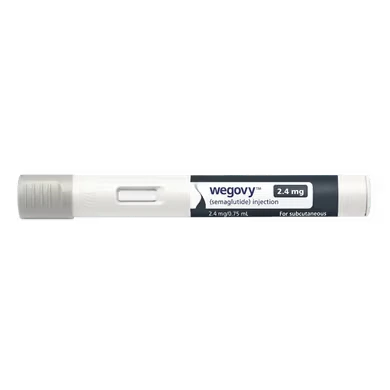


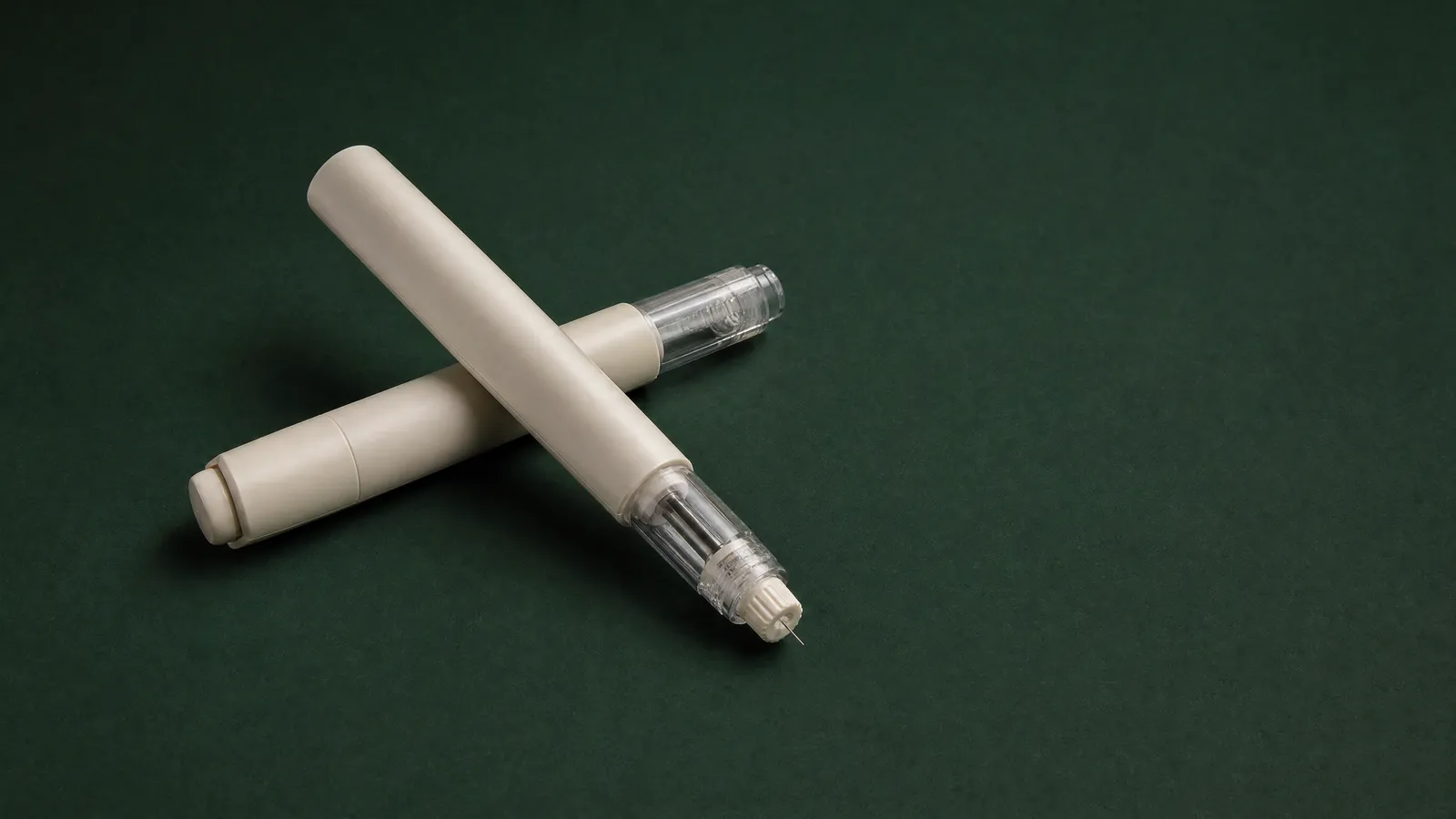
Lilly settles the pharmacology question itself, in five words, on Mounjaro's own website: "Mounjaro is not a weight loss drug."1 It is tirzepatide. So is Zepbound. The molecule does not know which box it was packed in, but everything else about your treatment does, and that is what this comparison is really about.
What each box is approved for
Mounjaro arrived first, in 2022, as a diabetes drug. Its approved uses are for people with type 2 diabetes: to improve blood sugar, in adults and now children from age 10, and to reduce the risk of heart attack and stroke in diabetic adults at high risk.1 Lilly's site reports that people in its diabetes trials lost between 12 lb at 5 mg and 25 lb at 15 mg, and then states, in bold, that weight loss is not what it is for.1
Zepbound is the same molecule resubmitted in 2023 for the thing Mounjaro was visibly doing anyway: "to reduce excess body weight and maintain weight reduction long term in adults with obesity" or overweight with a related condition, and, since 2024, for obstructive sleep apnoea in adults with obesity.2
Why one company sells the same drug under two names: the second approval let Lilly price, market and negotiate coverage for weight loss separately from diabetes, and it let insurers say yes to one and no to the other without contradiction. That is the entire reason the two boxes exist, and it is the reason the box matters more than the molecule.
The doses are identical
Unlike Wegovy and Ozempic, where the weight box climbs higher than the diabetes box, Zepbound and Mounjaro share the same ladder exactly. Both start at 2.5 mg for four weeks, both climb in 2.5 mg steps every four weeks, both top out at 15 mg.2 The starting dose is a starting dose on both, not one you stay on. What a person on Mounjaro takes and what a person on Zepbound takes can be, milligram for milligram, the same injection.
That is what makes this pair the cleanest illustration in the category of a drug priced by its label rather than by what is in it.
What each costs, cash
Here the two boxes are not the same, and the gap is large.
Zepbound has a published self-pay programme. Lilly sells it direct to cash patients as a vial or KwikPen at $299 (2.5 mg), $399 (5 mg), $499 (7.5 mg) and $699 (10, 12.5 and 15 mg) a month.4 The vial and the KwikPen are both $449 from 7.5 mg as long as each refill is within 45 days.7 Every dose is priced in Zepbound without insurance.
Mounjaro's pricing page gives its list price, "$1,112.16 per fill", and says that people without coverage "may be eligible for self-pay savings options".3 LillyDirect puts the number on it: every strength is listed at "Self-pay price: Starting at $499/month".6 So the diabetes box is flat at $499 while the weight box climbs from $299 to $699.
| Paying cash | Zepbound | Mounjaro |
|---|---|---|
| List price (what a pharmacy bills) | $499 to $1,086.37 per fill | $1,112.16 per fill |
| Published self-pay price | $299 to $699 by dose ($449 refill offer from 7.5 mg) | from $499 at every strength |
| Where to buy at that price | direct from Lilly | direct from Lilly (LillyDirect) |
If you are paying cash for tirzepatide and the reason is weight, Zepbound is the box approved for that use, from $299 at the starting dose against Mounjaro's $499. Ask for the weight-loss prescription.
What each costs through a plan
The mirror image. Mounjaro is a diabetes drug, so a plan that covers diabetes medicines covers it, and Lilly's card takes commercially insured patients to $25 for up to three months.5 Prescribed for weight loss, the same pen is refused by nearly every insurer, because the prescription does not match the formulary's reason for listing it.
Zepbound is the box a plan can cover for weight, and whether yours does is plan-specific. Here is the position of eight insurers, quoted from their own documents:
Which one fits you
The lowest price, full stop
cheapest all-in program we track at $69/mo
chosen from 22 qualifying programs · full breakdown · is it legit?
Tirzepatide specifically
cheapest verified tirzepatide at $85/mo
chosen from 16 qualifying programs · full breakdown · is it legit?
A pill, not an injection
cheapest oral option at $147/mo
chosen from 4 qualifying programs · full breakdown · is it legit?
FDA-approved brand medication
cheapest branded drug we track at $208/mo, which is the only route that is FDA-approved
chosen from 2 qualifying programs · full breakdown · is it legit?
Your plan billed for you
cheapest program that will bill your insurance, from $158/mo
chosen from 4 qualifying programs · full breakdown · is it legit?
No membership fee at all
$69/mo with nothing added on top
chosen from 19 qualifying programs · full breakdown · is it legit?
The strongest review record
4.8 out of 5 across 5,340 published reviews, from $199/mo
chosen from 9 qualifying programs · full breakdown · is it legit?
Third-party certification you can check
LegitScript certified and verifiable independently, from $75/mo
chosen from 2 qualifying programs · full breakdown · is it legit?
Every row is computed from today’s verified prices. Nobody picks the winners, and no program can pay to appear here.
Every one of the eight says no to Mounjaro for weight loss. For Zepbound the answers range from covered (TRICARE) to excluded (Humana) with "depends on your plan" in between. If you have type 2 diabetes, Mounjaro is the easy prescription and the well-covered one. If you do not, Zepbound is the only box that can be covered at all, and the coverage guide is the order to ask in.
The third box, again
Because both are one molecule, the cheap route is one molecule too. Licensed compounding pharmacies sell tirzepatide through telehealth programs, not FDA-approved as a finished product, at prices that make Lilly's $699 look like the list price it replaced. Today, from every seller we track, verified on each seller's own page:
From $85 a month. That is the same molecule as both branded boxes at a sixth of the maintenance price, with the loss of FDA review as the trade. Check the seller first; the gap is wide enough to attract the wrong kind of pharmacy as well as the right kind.
Choosing the box
- Type 2 diabetes: Mounjaro. It is approved for you, widely covered, and the card brings it to $25. The weight loss comes with it.
- Weight loss, insured: Zepbound. Mounjaro on a weight prescription will be refused.
- Weight loss, paying cash: Zepbound self-pay, $299 to $699 ($449 on vial or KwikPen with on-time refills), because Mounjaro is off-label for weight and starts at $499 self-pay. Or compounded tirzepatide from $85 with the trade-off above.
- Sleep apnoea with obesity: Zepbound is the only one approved for it, which is also a coverage lever with some plans.
The honest summary
There is nothing to choose between Zepbound and Mounjaro as drugs. There is everything to choose between them as products. The label decides whether a plan pays for weight loss. Match the box to the reason on your prescription, and if the reason is weight and the plan says no, the compounded version of the same molecule is the route most cash payers take.


