
Zepbound is one molecule at six strengths, and the label says exactly how to climb them. What the label does not say is what each rung lost in the trial or what each rung costs, and those are the two things that decide where people actually settle. This chart has all three columns.
The chart
| Dose (weekly) | Label role | Earliest week | SURMOUNT-1, 72 wk | Lilly self-pay / mo |
|---|---|---|---|---|
| 2.5 mg | Starting dose only, "not approved as a maintenance dosage" | 1 | not tested as a maintenance dose | $299 |
| 5 mg | Maintenance (weight) | 5 | −15.0% | $399 |
| 7.5 mg | Step, or a maintenance dose if it is what you tolerate | 9 | not a trial arm | $449*, $499 regular |
| 10 mg | Maintenance (weight, sleep apnoea) | 13 | −19.5% | $449*, $699 regular |
| 12.5 mg | Step, or a maintenance dose if it is what you tolerate | 17 | not a trial arm | $449*, $699 regular |
| 15 mg | Maintenance (weight, sleep apnoea); maximum | 21 | −20.9% | $449*, $699 regular |
*Lilly's refill purchase offer on the single-dose vial or the KwikPen, kept while each refill is within 45 days of the last delivery.6
Sources: label sections 2.1 and 2.2 for the roles and schedule,1 SURMOUNT-1 for the results (placebo lost 3.1%),3 Lilly's pricing page for the self-pay tiers.4 "Earliest week" is the first week you can be on that dose if every step is taken at the label's minimum four weeks.
The escalation rule
The label's words: "the recommended starting dosage of ZEPBOUND for all indications is 2.5 mg injected subcutaneously once weekly for 4 weeks ... After 4 weeks, increase the dosage to 5 mg ... The dosage may be increased in 2.5 mg increments, after at least 4 weeks on the current dose."1 The reason is stated in the same sentence: "to reduce the risk of gastrointestinal adverse reactions". Four weeks is a minimum, not a target. Nothing in the label requires you to keep climbing.
Where you stop is the label's other instruction: "Consider treatment response and tolerability when selecting the maintenance dosage. If patients do not tolerate a maintenance dosage, consider a lower maintenance dosage."1 The three named maintenance doses for weight are 5, 10 and 15 mg. For obstructive sleep apnoea they are 10 or 15 mg. The maximum is 15 mg.1
The 7.5 and 12.5 mg rungs are real doses you can stay on. The label names 5, 10 and 15 because those are the doses the trials tested, not because the in-between strengths are forbidden as destinations. Plenty of people settle at 7.5 mg because 10 mg was one step too many for their stomach.
What each rung did in the trial
SURMOUNT-1 randomised 2,539 adults without diabetes to 5, 10 or 15 mg or placebo for 72 weeks.3 Mean weight change: −15.0% at 5 mg, −19.5% at 10 mg, −20.9% at 15 mg, −3.1% on placebo. The share losing at least 5% was 85%, 89% and 91% against 35% on placebo; the share losing 20% or more was 50% at 10 mg and 57% at 15 mg against 3%.3
Read the gaps. 5 to 10 mg is worth 4.5 points. 10 to 15 mg is worth 1.4. The last step is the smallest gain and, from the label's side-effect table, carries the most vomiting and diarrhoea; Zepbound side effects has those numbers by dose. For many people the honest maintenance dose is 10 mg, and the label's "consider treatment response and tolerability" is permission to stop there.
What each rung costs
With commercial insurance that covers Zepbound, dose does not change the bill: Lilly's card brings it to as low as $25 regardless. Paying cash, dose is the bill. Lilly's list price is "$499 - $1,086.37 per fill", and its self-pay tiers are $299, $399, $499 and $699 for 2.5, 5, 7.5 and 10 mg and above.4 On the single-dose vial or the KwikPen, 7.5 mg and up is $449 as long as you refill within 45 days.6 Lilly's own dose ladder, with the date we last checked it:
Lilly defines a monthly supply as "28 days per month",4 so a year of weekly doses is 13 fills, not 12. A first year that climbs to 15 mg on the label's minimum schedule costs one fill at $299, one at $399 and eleven at $449 refilled on time: $5,637. At the regular price it is one at $299, one at $399, one at $499 and ten at $699: $8,187. A first year that stops at 5 mg costs $5,087 either way ($299 plus twelve fills at $399). Zepbound without insurance sets out the whole calculation and the cheaper routes.
Pen, vial, multi-dose vial, KwikPen
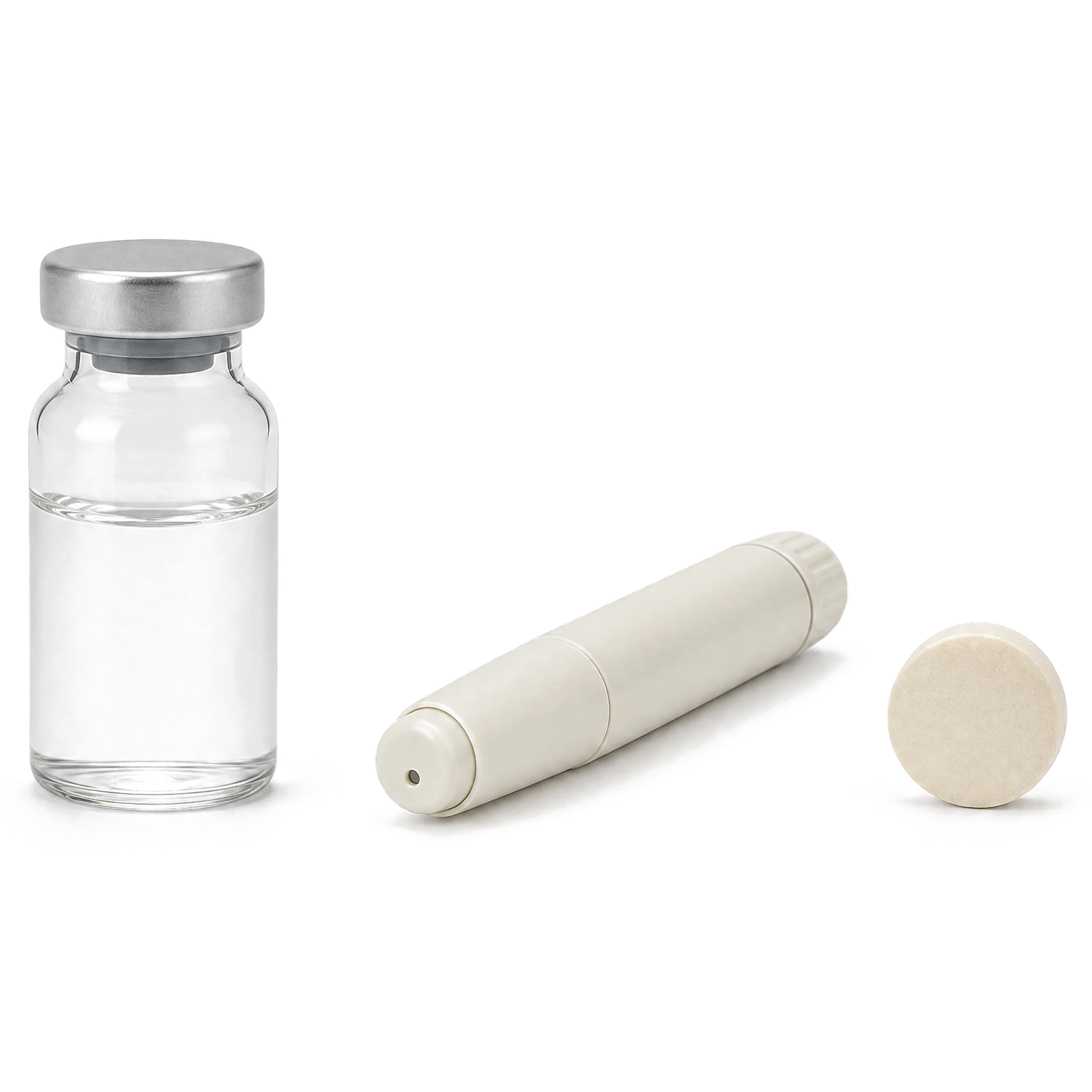
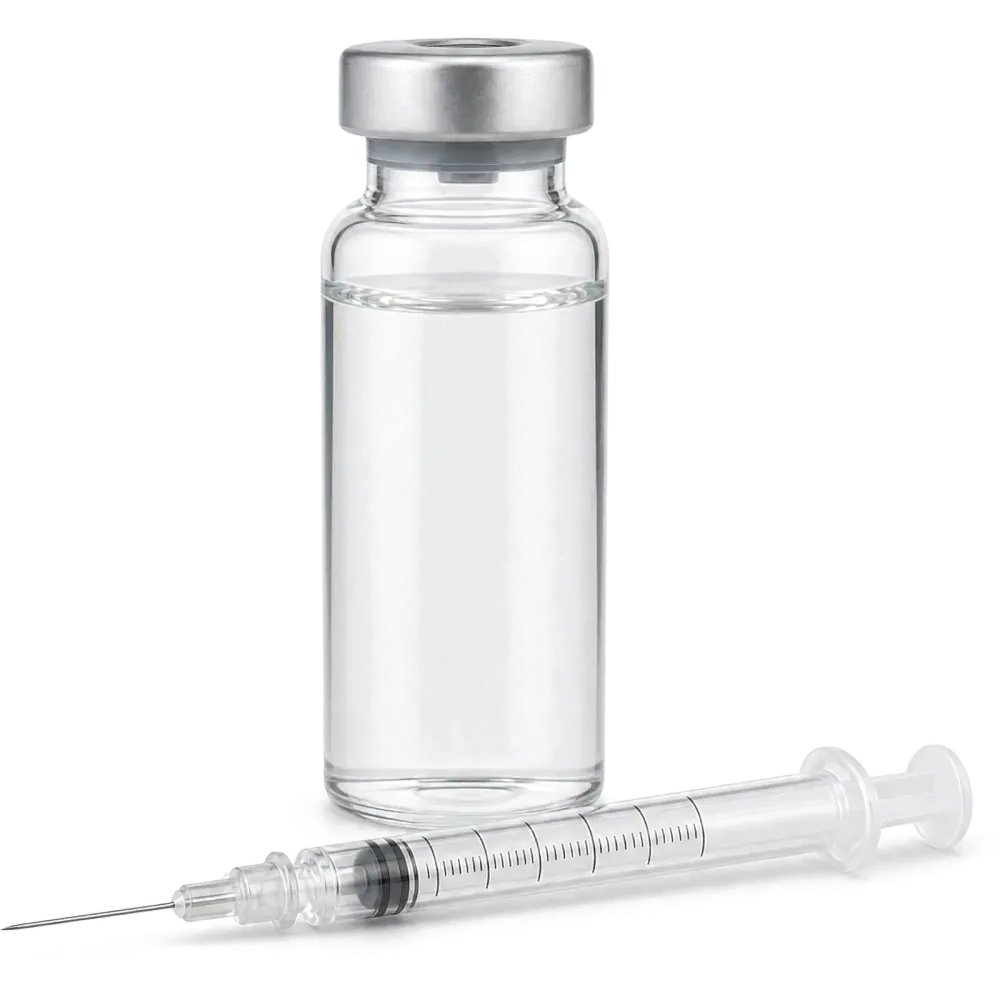
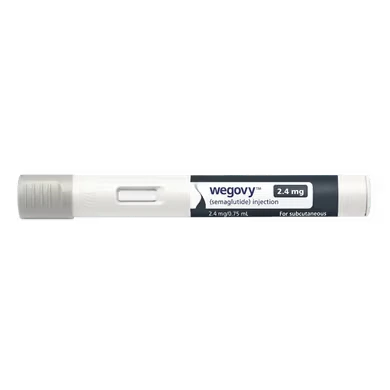
Zepbound comes four ways, and the label lists them all.2 Single-dose pens and single-dose vials hold one dose in 0.5 mL, at every strength. Multi-dose vials and the KwikPen hold four doses each, Lilly sells the single-dose vial and the KwikPen to self-pay patients, and the KwikPen is the one the Medicare GLP-1 Bridge covers.
| Presentation | Doses | Volume per dose | Measuring |
|---|---|---|---|
| Single-dose pen | 1 (4 per carton) | 0.5 mL | none; auto-injector |
| Single-dose vial | 1 | 0.5 mL | draw the whole vial with a syringe |
| Multi-dose vial | 4 | 0.6 mL | draw 0.6 mL each week |
| KwikPen | 4 | fixed | none; dial and inject |
The multi-dose vial is where units matter. Each strength is a different concentration, and 0.6 mL of the vial is one dose at that strength: 4.17 mg/mL for the 2.5 mg vial, 8.33 for 5 mg, 12.5 for 7.5 mg, 16.7 for 10 mg, 20.8 for 12.5 mg.2 On a standard insulin syringe, 0.6 mL is 60 units, at every strength. The dose is set by which vial you were sent, not by how much you draw.
If you are on compounded tirzepatide
Compounded vials do not follow Lilly's concentrations, and that is where the risk sits. FDA has received "multiple reports of adverse events, some requiring hospitalization, that may be related to dosing errors" from "patients measuring and self-administering incorrect doses" and from "health care professionals miscalculating doses".5 The chart above tells you the milligrams the label intends at each rung. Converting that to units on your syringe requires your vial's concentration, in mg per mL, from its label, and the arithmetic is: units = (mg ÷ mg per mL) × 100. Ask the pharmacy to write the units for your dose on the instructions, and check it once against the vial. Compounded sellers' own ladders, with what each costs:
Missed doses, storage, timing
Missed a week: the label says to "administer ZEPBOUND as soon as possible within 4 days (96 hours) after the missed dose"; after that, "skip the missed dose and administer the next dose on the regularly scheduled day".2 Same day each week, any time, with or without food; the day can be moved as long as two doses are at least three days apart. Refrigerate; a single-dose pen or vial "can be stored unrefrigerated at temperatures not to exceed 30°C (86°F) for up to a total of 21 days".2 Rotate between abdomen, thigh and upper arm; the injection guide covers technique.
The honest summary
Four weeks at 2.5 mg, then 2.5 mg steps of at least four weeks, stopping at whichever of 5, 7.5, 10, 12.5 or 15 mg your stomach and your results agree on. The trial says 10 mg gets nearly all of the benefit; the label says a lower dose is fine if the higher one is not tolerated; Lilly's price list says the difference between 5 mg and 15 mg is $300 a month at the regular price, or $50 with on-time refills, for the rest of the time you take it. Those three facts, together, are the dosing decision.