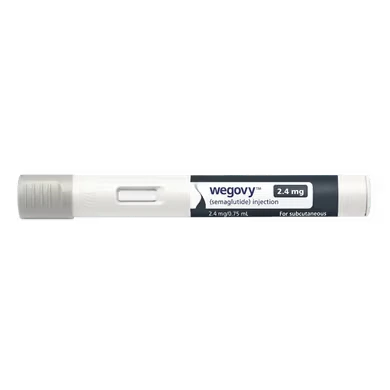

Compounded tirzepatide exists because of a shortage, and the shortage is over. That is the fact most pages selling it leave out, and it changes what you are buying. Here is what the product is, where it stands with FDA now, what FDA specifically worries about, and what the price gap to Zepbound actually buys.
What it is
Tirzepatide is the molecule in Zepbound and Mounjaro. A compounding pharmacy buys the active ingredient in bulk, dissolves it, and fills vials on prescription. Same receptor, same mechanism, and at the same dose the same expected weight loss: 15 to 21% of body weight in Lilly's trials, set out by dose in the Zepbound dosage chart. What it is not is FDA-approved. In FDA's words, "FDA does not verify the safety, effectiveness or quality of compounded drugs before they are marketed."2 Lilly's product went through that review. The vial did not.
Where it stands with FDA now
Compounding pharmacies are not normally allowed to make copies of an approved, commercially available drug. The exception is a shortage. While a drug is on FDA's shortage list, pharmacies may compound it to fill the gap. Tirzepatide was on that list from 2022 to 2024, which is how a whole telehealth industry came to sell it.
It is not on the list any more. FDA's position: "Tirzepatide and semaglutide do not currently appear on the 503B bulks list or on FDA's drug shortage list."1 The same notice records that for semaglutide the "period of enforcement discretion", the grace period FDA gave pharmacies to wind down, "has ended".1 FDA has gone further and proposed excluding tirzepatide from the list of substances that 503B facilities may compound from bulk at all.6
What that means for a buyer: mass-produced copies of Zepbound are no longer what the rules allow. What the rules still allow is compounding for an individual patient with a prescription, where a prescriber documents a reason the approved product does not meet that patient's need. That is why compounded tirzepatide is now often sold with an added ingredient, a different strength, or a different form. Some of those are clinical judgements and some are legal cover. Ask which.
FDA's own view of when compounding is appropriate is narrow: "Compounded drugs should only be used in patients whose medical needs cannot be met by an FDA-approved drug."3 Price is not a medical need in that sentence, and it is the reason nearly everyone buys compounded. That is the honest position, and the rest of this page assumes you may take the trade anyway.
Two kinds of pharmacy
FDA draws a line most sellers blur.2 A 503A pharmacy compounds per prescription and is overseen by its state board; it is not held to manufacturing standards. A 503B outsourcing facility compounds in batches and registers with FDA. It is "inspected by FDA according to a risk-based schedule", and its drugs "are subject to current good manufacturing practice (CGMP) requirements", the same rules as a factory.2 Neither is FDA-approved, but they are not the same thing. A seller that says "FDA-registered facility" means 503B. Ask.
FDA's four concerns, and how to check each
None of FDA's published concerns about compounded GLP-1s is that the molecule is wrong. All four are about what happens between the pharmacy and your arm.3
| FDA's concern | Its words | Your check |
|---|---|---|
| Dosing errors | "multiple reports of adverse events, some requiring hospitalization ... patients measuring and self-administering incorrect doses" | Get the vial's mg/mL and your dose in both mg and units, in writing. Lilly's doses are 2.5 to 15 mg weekly; if your units do not compute to one of those, stop. |
| Doses beyond the label | "compounded semaglutide or tirzepatide products in doses beyond what is in the FDA-approved drug label" | The label's ladder is 4 weeks at 2.5 mg then 2.5 mg steps of at least 4 weeks, maximum 15 mg.5 A program that climbs faster or higher is not following the drug's evidence. |
| Fraudulent products | "compounding pharmacies identified on the labels of the products do not exist" | The vial names a pharmacy. Look it up in its state's licence register before you inject anything. |
| Warm shipping | "arrived warm or with inadequate ice packs" | Warm on arrival means spoiled. Refuse it and expect a replacement. |
Plus one rule for every multi-dose vial, whatever the compounder's label says: "Discard the vial within 28 days after the first use, even if medication remains in the vial."3 The full seller checklist is in how to check a GLP-1 seller.
What it costs, and what the gap buys
Lilly sells Zepbound to cash patients at "$299, $399, $499, $699, $699 and $699" for the six doses, against a list price of "$499 - $1,086.37 per fill".4 Compounded tirzepatide on our board, verified on each seller's page today:
And each seller's own dose ladder, because the cheap headline price is usually the starting dose and the maintenance doses cost more:
| A year of tirzepatide | Cheapest compounded on our board | Zepbound direct from Lilly |
|---|---|---|
| Starting dose, month 1 | from $85 | $299 |
| Maintenance at 10 mg or more | varies by seller; see ladders | $449/mo KwikPen refilled on time, $699 regular |
| Year, climbing to 15 mg on the label schedule | about $1,000 to $4,800 at the from-prices on our board; more where a seller prices by dose | $5,637 on the KwikPen refilled on time; $8,187 regular (13 fills of 28 days) |
Lilly defines a Zepbound month as "28 days per month",4 so its year is 13 fills. At the doses that produced Zepbound's trial results, the KwikPen year ($5,637, refilled within 45 days) costs more than a year at any compounded from-price on our board, and the regular-price year ($8,187) costs more again. That gap is the reason the question exists. What the gap buys, from Lilly's side: FDA review of the finished product, a fixed-dose pen with no measuring, a manufacturer's cold chain, and a label that says what is in it. Whether that is worth it is a decision about money and risk tolerance, not chemistry.
Compounded tirzepatide vs Zepbound: the short table
| Compounded tirzepatide | Zepbound | |
|---|---|---|
| Molecule | tirzepatide | tirzepatide |
| FDA-approved product | no | yes |
| Made by | a 503A pharmacy or 503B facility | Lilly |
| Form | usually a multi-dose vial and syringe | single-dose pen, vial, or KwikPen |
| Dosing | you measure, in units | fixed dose, no measuring |
| Insurance | never | possible, to $25 with the card |
| Legal basis | per-patient compounding; shortage exemption ended | approved drug |
| Cash price | from $85/mo | $299 to $699/mo ($449 KwikPen offer) |
The honest summary
Compounded tirzepatide is the same molecule at a third of the price, from a pharmacy FDA has not reviewed, under rules that no longer allow copies at scale. FDA's concerns are a checklist, and every item on it takes about ten minutes to verify. The pharmacy exists and is licensed. The concentration and units are written down. The schedule matches the label. The box arrived cold. If you take the trade, take it that way. If the trade makes you uneasy, Zepbound's $299 starting month and a prior-authorisation request to your insurer are the two doors back to the approved product; how to get Zepbound walks through both.


