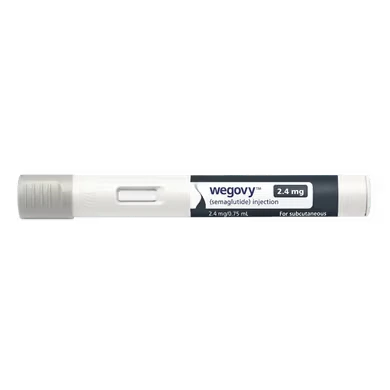

Microdosing a GLP-1 does not save you money at a compounded seller. We checked every compounded program on our board in October 2026, and not one charges less when you take less. The rest of this page is why, and where a lower dose genuinely does cost less.
Start with what the word is.
Microdosing is not a medical term. It's a term that has been popularized on social media...
Dr Amanda Velazquez, Director of Obesity Medicine, Cedars-Sinai
That matters more than it sounds. Because there is no clinical definition, there is no agreed dose, no protocol and no way to compare one seller's version with another's. In psychedelics research, where the term came from, microdosing means a specific sub-perceptual fraction. Here it means whatever the person using the word wants it to mean, most often somewhere below the label's starting dose, or staying at a starting dose indefinitely instead of titrating up.1
Who offers microdosing GLP-1, and what each charges
The partner programs on our board that sell compounded semaglutide or tirzepatide are below, with each one’s lowest plan as a monthly price (membership fee included where there is one) and whether its price list changes with your dose. The prices are live: they update when the board does. Programs are in alphabetical order, not ranked.
| Program | Compounded semaglutide, lowest plan | Compounded tirzepatide, lowest plan | Does a smaller dose cost less? |
|---|---|---|---|
| bmiMD | $119 | $179 | No dose tiers: one price per plan length |
| Bodybuilding.com Health+ | $141 | $174 | No dose tiers: one price per plan length |
| Collective | $75 | $85 | No: it says one price covers every dose |
| CoreAge Rx | $99 | $149 | No dose tiers |
| Embody | $69 | $119 | No: it says the price does not climb with your dose |
| Enhance MD | $212 | $329 month to month (full dose) | Only as a separate product: Microdosing Tirzepatide, 1 mg a week, from $169 on a 12-month plan |
| Found | $169 | $239 | No dose tiers: one price per plan length |
| Oak Longevity | $190 | not sold | No dose tiers |
| ShedRx | $159 | $239 | No dose tiers: one price per plan length |
| SnagRx | $69 | $119 | No dose tiers |
| TMates | $158 | $167 | No: it lists one price for all dose options |
| Wellorithm | $147 | $249 | No dose tiers |
| Sesame Care | brand only | brand only | Yes, on brands: it prices Ozempic and Foundayo by dose |
Read the last column and the answer to “who offers microdosing” is short. One program sells a product with the word in its name. Every other compounded program charges one price for its plan, whatever dose your prescriber sets. The only partner that charges by dose sells brands, not compounded vials. The cheapest tirzepatide and cheapest semaglutide lists rank the same programs by price.
The money claim, which we can actually check
We are a price tracker, so this is the part we can settle rather than opine on. The central promise of microdosing is that a smaller dose costs less. We went through the offer-level pricing of every compounded program on our board, re-checked in October 2026.
Not one of them charges less for a smaller dose. Every compounded program prices a flat monthly rate whatever you inject. Use a quarter of the vial or all of it, the bill is the same.
Compounded programs on our board where taking a smaller dose reduces your bill. If you are microdosing a compounded GLP-1 to save money, you are not saving money.
One thing to watch, because it fooled us on the first pass: plenty of these sellers show four different prices for the same product, which looks like dose pricing. It is not. It is the prepay term: the same vial, cheaper per month the longer you commit, with no dose attached to any of the four. You are being paid to commit, not to take less.
What about the seller that actually sells microdosing?
One partner program on our board sells microdosing as its own product with its own price: Enhance MD, whose “Microdosing Tirzepatide” is listed at 1 mg a week. When we first checked in August a second seller listed one too; by October it no longer did.
- Against its own full dose. On a three-month plan the microdose is $189 a month, and Enhance MD’s full-dose tirzepatide month to month is $329: the microdose is the cheaper of the two. That is the only place on our board where taking less can cost less, and it is because it is sold as a different product, not because the price follows your dose.
- Against the market. Its lowest price, $169 a month, needs a twelve-month prepay, and it costs more than full-dose compounded tirzepatide at the cheapest program we track, $85 a month.
So check the market before you pay for a smaller dose. Whatever case exists for microdosing, on these numbers the money case is weak: a full dose of the same molecule elsewhere is priced against it in the live ranking below.
What a microdose actually costs per mg
Here is the arithmetic the microdosing pitch skips. On a flat price, the bill stays put while the milligrams fall, so every milligram you take gets dearer. The table divides each monthly price by the drug in it, counting a monthly bill as four weekly doses (Lilly defines a month’s supply of Zepbound as 28 days6, and a calendar month at a compounded program runs a few days longer, so if anything this flatters the brand). The doses in the first column are the label’s steps for Zepbound5 plus the 1 mg a week that Enhance MD sells as its microdose. They are price points, not a dose suggestion.
Live prices print in whole dollars, so the table works per 10 mg (one 2.5 mg KwikPen holds exactly that5). Divide by ten for the price of a single milligram.
| Weekly amount (mg in a 4-week supply) | Cheapest flat-price compounded tirzepatide, per 10 mg | Zepbound self-pay, regular price, per 10 mg | Zepbound with the 45-day refill offer, per 10 mg |
|---|---|---|---|
| 1 mg (4 mg) | $213; Enhance MD’s microdose product: $422 | no 1 mg dose | no 1 mg dose |
| 2.5 mg (10 mg) | $85 | $299.00 ($29.90 a mg) | no offer at this dose |
| 5 mg (20 mg) | $42 | $199.50 ($19.95 a mg) | no offer at this dose |
| 7.5 mg (30 mg) | $28 | $166.33 ($16.63 a mg) | $149.67 ($14.97 a mg) |
| 10 mg (40 mg) | $21 | $174.75 ($17.48 a mg) | $112.25 ($11.23 a mg) |
| 12.5 mg (50 mg) | $17 | $139.80 ($13.98 a mg) | $89.80 ($8.98 a mg) |
| 15 mg (60 mg) | $14 | $116.50 ($11.65 a mg) | $74.83 ($7.48 a mg) |
Sources: compounded prices are the live board floor; the Zepbound columns divide Lilly’s published self-pay prices4 and its $449 refill offer for 7.5 mg and up6 by the milligrams in a fill.5 The compounded price is per program, not per dose, so the same live number sits behind every row of the first column.
Two things fall out of it. At a flat price, a 1 mg a week microdose costs fifteen times as much per milligram as 15 mg a week, because the bill is the same and the drug is a fifteenth. The brand slopes the same way, only less steeply: per milligram, Zepbound’s regular price at 2.5 mg is about two and a half times its price at 15 mg, and about four times the 15 mg refill-offer price. A lower dose of the brand costs less a month and more a milligram. A lower dose at a flat-price program costs the same a month and more a milligram.
Semaglutide works the same way. At Wegovy’s 0.25 mg starting step, a four-week supply is 1 mg, so at a flat-price program the whole monthly bill, from $69 at the cheapest, is the price of a single milligram.
Where a lower dose really does cost less
Here is the inversion, and it is the useful part of this page.
The steep dose ladders belong to the brands, which is exactly where nobody markets microdosing. Lilly publishes theirs:4
Available through Zepbound self-pay, Zepbound is offered as a 4-count single-dose vial (0.5mL) and a single-patient-use KwikPen (2.4mL, 0.6mL/dose) in doses of 2.5mg, 5mg, 7.5mg, 10mg, 12.5mg and 15mg, with direct-to-patient pricing of $299, $399, $499, $699, $699 and $699 respectively.
Eli Lilly, read 9 October 2026
On those list prices that is a $400 monthly spread between the starting dose and the top of the ladder, and it is the manufacturer's own published price rather than anybody's marketing. Lilly’s $449 refill offer on 7.5 mg and up, kept by refilling within 45 days, narrows it to $150.6 The ladder above also shows any purchase offer Lilly runs on top, and the cheapest seller price at each step. If you are paying cash for a brand and you and your prescriber conclude a lower dose holds your result, the saving is large and entirely legitimate. Nobody calls that microdosing. They call it staying on the dose that works, which is a normal clinical conversation with a real financial consequence.
The same holds when a telehealth program sells a brand. Sesame Care, on our board, prices brand Ozempic and Foundayo by dose on its own pricing page, so on those a lower dose is a lower bill there too.
So the pattern reverses cleanly. Dose changes your bill on the brands, where the word is never used. Dose changes nothing on compounded vials, where the word is used constantly.
If a compounded program is selling you a microdosing protocol on the promise that it is cheaper, ask one question: does your price change with my dose? Across every compounded program we track we could not find a single yes. Our board shows what each one actually charges.
Flat price or dose-priced: what a lower dose saves you
Put the two pricing models side by side and the microdosing question becomes a money question you can answer before you talk doses with anyone. The table shows how much a month’s bill falls when the weekly dose falls, at a flat-price compounded program, at Lilly’s self-pay prices for Zepbound,46 and at the one compounded program that sells a microdose as a separate product.
| Dose change (weekly) | Flat-price compounded program | Zepbound self-pay, regular price | Zepbound, 45-day refill offer |
|---|---|---|---|
| 15 mg down to 10 mg | $0 a month | $0 a month ($699 at both) | $0 a month ($449 at both) |
| 15 mg down to 5 mg | $0 a month | $300 a month ($699 to $399) | $50 a month ($449 to $399) |
| 15 mg down to 2.5 mg | $0 a month | $400 a month ($699 to $299) | $150 a month ($449 to $299) |
| Any dose down to 1 mg | $0 at a flat-price program; at Enhance MD, moving from full dose month to month to the microdose on three months saves $140 | not possible: no 1 mg dose | not possible: no 1 mg dose |
Read across a row and the pattern is plain. On a flat price, dose and bill are unrelated, so microdosing a compounded vial is a medical decision with no financial upside. On a dose-priced brand, a lower dose is a real saving, largest on the regular price and smaller once the refill offer flattens the top of the ladder. Over a year at 2.5 mg instead of 15 mg, the regular-price gap is $400 on each of 13 four-week fills, $5,200 in all. That is the one place where the money case for a lower dose is real, and the lower dose there is an approved starting step, not a microdose, and not approved for staying on (the next section has the label’s words).
If the bill is what matters most to you, the bigger lever is not the dose but the program: across the board, the same compounded tirzepatide runs from $85 to $399 a month.
What the dose studies show, and what they do not
Start with the plain statement, from the obesity medicine director quoted above:1
We don't have any evidence that low-dose, intermittent use of GLP-1s provides meaningful or sustained weight loss or broader health benefits. Even more concerning are the potential risks of inappropriate use.
Cedars-Sinai
To be fair to the idea, that is a statement about absent evidence rather than proof of absent effect, and the trial record has more in it than either side of the microdosing argument usually quotes. Low doses have been given to people in trials, just never as a microdosing protocol. Here is what exists.
| Study | Who and what dose | What it found | What it does not show |
|---|---|---|---|
| Tirzepatide phase 2, Lancet 20187 | 316 adults with type 2 diabetes; 1, 5, 10 or 15 mg a week, or placebo, for 26 weeks | Blood sugar fell at every dose, “-1·06% for 1 mg” HbA1c against “-0·06% for placebo”. Weight change “ranged from -0·9 kg to -11·3 kg” across the doses. Stomach side effects were “dose-related (23·1% for 1 mg ... 66·0% for 15 mg” | Weight loss in people without diabetes, any result past 26 weeks, or a compounded product. The abstract gives weight change as a range across doses, not a figure for 1 mg |
| Semaglutide dose-ranging, Lancet 20188 | 957 adults with obesity and no diabetes; 0.05 to 0.4 mg once a day for 52 weeks | “-6·0% (0·05 mg)” weight loss at the lowest dose and “-13·8% (0·4 mg)” at the highest, against “-2·3%” on placebo | A weekly dose. These were daily injections, and even the lowest adds up to 0.35 mg a week, above Wegovy’s 0.25 mg starting step. It did not test staying low after weight loss |
| SURMOUNT-1, NEJM 20229 | 2,539 adults with obesity; 5, 10 or 15 mg a week, or placebo, for 72 weeks | “-15.0%” weight change at 5 mg, “-20.9%” at 15 mg, “-3.1%” on placebo | Anything below 5 mg as a long-term dose: no arm stayed lower |
| Microdosing trial, NCT070926053 | Registered on ClinicalTrials.gov, enrolling by invitation | Aims “to evaluate the effectiveness of microdosed GLP-1 receptor agonists” | Any result yet: none is posted |
| Zepbound label5 | 2.5 mg a week to start, for 4 weeks | “The 2.5 mg dosage is for treatment initiation and is not approved as a maintenance dosage.” | That a lower dose is wrong for you; it means staying there is off-label, a call for your prescriber |
So lower doses do something in trials, and the 1 mg tirzepatide arm had fewer stomach side effects than the higher arms. What no trial has reported yet is a test of a microdosing protocol, which is why the registered study matters:3
The Primary Objective is to evaluate the effectiveness of microdosed GLP-1 receptor agonists in improving measures of health, quality of life, and longevity.
ClinicalTrials.gov, NCT07092605
So the honest position is: an open question with a trial running, not a debunked myth and not an established practice. Anyone telling you it definitely works, and anyone telling you it definitely does not, is ahead of the data. None of this is a dose recommendation: what you take is between you and your prescriber.
The thing that could end this anyway
Microdosing in practice depends on compounded multi-dose vials, because you cannot meaningfully subdivide a fixed-dose branded pen. That supply is now in question.
On 30 April 2026 the FDA proposed removing the three molecules this market runs on:2
the FDA did not identify a clinical need for outsourcing facilities to compound semaglutide, tirzepatide, and liraglutide from bulk drug substances. "When FDA-approved drugs are available, outsourcing facilities cannot lawfully compound using bulk drug substances unless there is a clear clinical need," said FDA Commissioner Marty Makary, M.D., M.P.H.
FDA
The comment period, extended once, closed on 30 July 2026 and a final determination is pending. We are not going to predict the outcome. But if you are choosing a protocol that only exists because compounded vials exist, that is a risk worth pricing in, and it argues against building a long plan around it.
The legitimate version of this idea
Strip away the word and there is something real underneath, which is worth separating out.
- Every label already starts low. Wegovy begins at 0.25 mg, Zepbound at 2.5 mg, Foundayo at 0.8 mg, and each titrates up over weeks. Low-and-slow is not a hack; it is the approved schedule, and it exists mainly to limit nausea.
- Staying at a lower dose is a normal conversation, but not automatically an approved one. The Zepbound label says it plainly: “The 2.5 mg dosage is for treatment initiation and is not approved as a maintenance dosage.”5 So parking there indefinitely is off-label, which does not make it wrong, but does make it your prescriber’s call rather than a self-service decision.
- Going below the starting dose is the untested part. That is the bit with no trial behind it, and it is what the quotes above are actually warning about.
- Never split a dose to stretch a supply you are struggling to afford. Price the alternatives instead. The spread between the cheapest and dearest program we track is several hundred dollars a month for the same molecule.
What we would actually check
- Ask whether your program prices by dose. On our data no compounded program does, which removes the main reason most people are asking in the first place.
- Are you paying brand cash prices? Then the ladder is steep and dose genuinely is a money question, for your prescriber and you together.
- Is anyone offering you a protocol with no published basis? Ask what it is based on. "Not a medical term" is a fair thing to quote back.
- If cost is the real driver, compare programs before you compare doses. Every route without insurance, priced.
Nothing here is dosing advice, and we do not give any: what dose you take is between you and your prescriber. What we can tell you is what each option costs, which sellers change their price when your dose changes, and which do not.