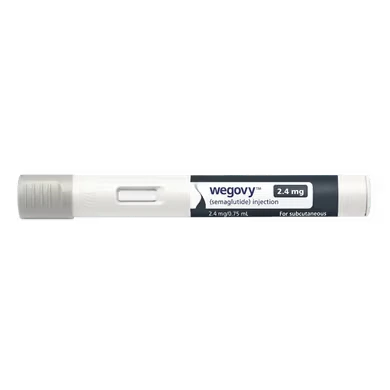

GoodRx is very good at one thing, and GLP-1s are not that thing.
Its model is negotiating cash prices on drugs with competition, which in practice means generics. Ozempic, Wegovy, Mounjaro and Zepbound are brand-name drugs with no generic version, so there is very little for a discount card to negotiate against.
What its own pages say
For Ozempic:1
Get Ozempic for as low as $149.00, which is 88% off the average retail price of $1,212.63 for the most common version, by using a GoodRx coupon.
GoodRx
And Wegovy:2
Get Wegovy for as low as $149.00, which is 91% off the average retail price of $1,642.80 for the most common version, by using a GoodRx coupon.
GoodRx
Two brand drugs, two very different retail prices, one identical floor. That is worth a second look.
Where the $149 comes from
It is Novo's. Their published cash price for the semaglutide tablet:3
Patients pay $149 for each month of 1.5 mg, $199 per month for 4 mg and $299 per month for 9 mg and 25 mg. One month defined as 1 bottle of 30 tablets.
NovoCare Pharmacy
Same number, and Novo's own offer appears on the GoodRx page alongside it. The advertised saving is real, it is just the manufacturer's programme surfaced by GoodRx rather than a discount GoodRx created. If you are comparing "GoodRx at $149" against "Novo at $149" as two options, they are one.
Useful to know for two reasons: the average retail figures are a genuine reference point nobody else publishes plainly, and the floor is reachable directly.
What you cannot do
- Stack it with insurance. A discount card is used instead of your coverage, not alongside it. If your copay is lower than the GoodRx price, use your insurance.
- Stack it with a manufacturer copay card. Those reduce an insured copay; GoodRx replaces the insurance transaction. Pick one.
- Count it toward anything. A cash transaction does not move you through a deductible or an out-of-pocket maximum.
The one place it beats the manufacturer cards
Eligibility. Every manufacturer savings card in this category excludes government beneficiaries, so Medicare and Medicaid are shut out. A discount card has no such rule: anyone can use it, because it is simply a cash price.
If you are on Medicare that makes GoodRx an option where the coupons are not. It is still a cash purchase that does nothing for your Part D totals, and for weight-loss indications the Medicare GLP-1 Bridge at $50 a month is very likely the better route to ask about first.
How it compares with what we track
A $149 floor on branded semaglutide is a real number and it is the tablet. Against the compounded market it is not the cheapest thing available, and against the branded injection it is much less:
So should you use it?
- With commercial insurance that covers the drug: probably not. The manufacturer card can reach $25, which no discount card will.
- With insurance that excludes it: compare the GoodRx price against the manufacturer's own direct price, remembering they may be the same number.
- On Medicare or Medicaid: it is open to you when the coupons are not, but ask about the Bridge and about your state's coverage first.
- Uninsured: it is one of several cash routes. We priced all of them.