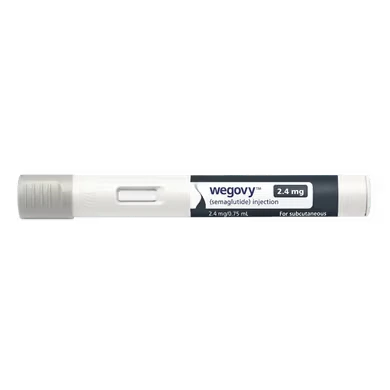

Yes, Medicare covers GLP-1s, by two routes that depend on why you take one. For type 2 diabetes, your Medicare drug plan covers Ozempic, Mounjaro and Rybelsus the ordinary way. For weight loss, a separate federal programme, the Medicare GLP-1 Bridge, covers Wegovy (pen or pill), the Zepbound KwikPen and Foundayo for a $50 copay a month from 1 July 2026 to 31 December 2027, if you have Part D coverage and meet CMS's BMI criteria.14
Two facts most coverage of this misses, both in CMS's own words: the Bridge runs outside Part D, and no part of the $50 counts toward your Part D deductible or out-of-pocket cap.2 The rest of this page covers each drug, who qualifies, what the $50 does and does not do, and what you pay if Medicare says no.
What an eligible person with Medicare drug coverage pays at the pharmacy for a one-month supply of Wegovy, the Zepbound KwikPen or Foundayo under the Bridge, through 31 December 2027.
Medicare GLP-1 coverage by drug, at a glance
The answer changes with three things: the drug, what it is prescribed for, and which part of Medicare you have. Original Medicare on its own (Parts A and B) has no route here; both columns below need drug coverage, through a standalone Part D plan or a Medicare Advantage plan that includes drug coverage.412
| Drug | Prescribed for | Part D plan or Medicare Advantage drug coverage | Medicare GLP-1 Bridge |
|---|---|---|---|
| Ozempic | Type 2 diabetes | Yes, under your plan's formulary and prior authorisation rules | No: diabetes rules you out of the Bridge |
| Ozempic | Weight loss (off-label) | No | No: not on the Bridge list |
| Mounjaro | Type 2 diabetes | Yes, under your plan's rules | No |
| Rybelsus | Type 2 diabetes | Yes, under your plan's rules | No |
| Wegovy pen or pill | Weight loss | No | Yes, all doses, $50 a month |
| Wegovy | Cardiovascular risk reduction | Yes, this is a Part D use | No: already a Part D use |
| Zepbound KwikPen | Weight loss | No | Yes, no more than $50 a month |
| Zepbound vials or single-dose pens | Weight loss | No | No: KwikPen only |
| Zepbound | Moderate-to-severe sleep apnea with obesity | Yes, submit to your Part D plan | No |
| Foundayo tablet | Weight loss | No | Yes, $50 a month |
| Compounded semaglutide or tirzepatide | Weight loss | No | No: not on Medicare.gov's list |
Sources for the table: Medicare.gov's list of Bridge drugs,4 its exclusion for type 2 diabetes, sleep apnea and fatty liver disease,5 KFF on what Part D already covers,12 and Lilly on Zepbound for sleep apnea.11 A "yes" in the Part D column means your plan may cover the drug, not that it must: each plan sets its own formulary, tiers and prior authorisation.
Does Medicare cover Ozempic?
For type 2 diabetes, yes. Part D plans cover GLP-1s for medically accepted uses other than obesity, and KFF names type 2 diabetes first among them, with cardiovascular risk reduction and sleep apnea.12 What you pay depends on your plan's tier for Ozempic and where you are in the Part D year, and most plans ask for prior authorisation.
For weight loss, no. Ozempic is not on the Bridge list, and Medicare drug plans cannot cover a drug used only for weight loss.412 If you want semaglutide for weight under Medicare, the Bridge drug is Wegovy, which is semaglutide at its own doses.
One rule matters for Ozempic users: if your Part D plan already pays for a GLP-1 for a covered use, you stay on Part D and do not move to the Bridge.13 Medicare.gov lists the same exclusion.5
Does Medicare cover Wegovy?
Yes, since 1 July 2026, through the Bridge. Novo Nordisk, which makes Wegovy, describes it this way:8
The Medicare GLP-1 Bridge is a temporary program starting July 1, 2026. It helps eligible Medicare Part D members access certain GLP-1 weight-loss medications, including Wegovy®.
Novo Nordisk
The Bridge covers all doses of Wegovy, pen and pill, for $50 a month.8 Novo defines a month as one box of four pens or one bottle of 30 tablets. Two details from Novo's FAQ that save a phone call: your doctor does not need to be enrolled in Medicare for you to use the Bridge, and you do not sign up for it.8
Wegovy also has a second Medicare route. Its cardiovascular risk reduction use is a Part D use, so if your prescriber writes it for that, your drug plan, not the Bridge, is where the claim goes.1213
Does Medicare cover Zepbound?
Yes for weight loss, but only one form of it. Medicare.gov lists the Zepbound KwikPen and says the programme does not cover single-dose Zepbound vials or pens.4 Lilly states the same and puts the cost at no more than $50 a month if you qualify.11
Check the prescription before it reaches the pharmacy. A prescription for vials or single-dose pens will not go through the Bridge. Lilly also notes that a refill needs no new approval while you stay on Zepbound, even when the dose changes.11
For moderate-to-severe obstructive sleep apnea, Zepbound goes to your Part D plan instead. Lilly says you can submit the prescription to your plan for that use, but not to the Bridge.11
Mounjaro, Rybelsus and Foundayo
Mounjaro and Rybelsus are diabetes drugs. Part D plans cover them for type 2 diabetes under the same formulary rules as Ozempic, and neither is on the Bridge list.412
Foundayo, Lilly's daily GLP-1 tablet, is on the Bridge list, so an eligible person pays the same $50 copay as for Wegovy or Zepbound.4 Our Foundayo guide covers the drug itself.
Does Medicare Advantage cover GLP-1s?
The same way Part D does, because a Medicare Advantage plan with drug coverage is your Part D coverage. For type 2 diabetes, the plan's own formulary decides how Ozempic, Mounjaro or Rybelsus is covered and what you pay.12 For weight loss, Medicare.gov lists Medicare Advantage coordinated care plans with drug coverage (HMO, HMO-POS, and local and regional PPO plans) among the plans whose members can use the Bridge.4
The exceptions sit at the edges. Lilly says you are not eligible if your drug coverage comes only through certain special plan types, and names private fee-for-service plans and PACE organizations as examples.11 If your plan card does not say HMO or PPO, ask 1-800-MEDICARE before your prescriber starts the paperwork.3
What the Medicare GLP-1 Bridge is
A short-term CMS demonstration, not a Part D benefit. CMS's own definition:1
The Medicare GLP-1 Bridge is a short-term demonstration run by CMS that will provide eligible Medicare Part D beneficiaries with access to certain GLP-1 drugs between July 1, 2026, and December 31, 2027.
CMS
It runs outside the Part D benefit's coverage and payment flow. Your plan carries no risk for these drugs, plans do not opt in, and a single CMS processor handles prior authorisation, claims and payment to pharmacies.1 Novo's version for patients: your Medicare drug plan does not review, approve or pay for these prescriptions.9
The money flows like this, per KFF. Manufacturers agreed to supply Bridge drugs at a net price of $245 per month supply. The pharmacy collects your $50 and claims the rest from the central processor, and the manufacturer then pays CMS back the gap between its list price and that net figure.12 Pharmacies do not need to opt in to take part.10
Who qualifies for the Bridge
Three conditions, all from Medicare.gov. First, you need Medicare drug coverage through one of these:4
- A standalone Medicare drug plan (PDP)
- A Medicare Advantage coordinated care plan with drug coverage: HMO, HMO-POS, and local and regional PPO plans
- A Special Needs Plan
- An employer or union group waiver plan
- The LI NET programme, the temporary drug coverage for people who qualify for Extra Help but have not yet joined a plan
Lilly adds the exclusion: if your drug coverage comes only through certain special plan types, such as a private fee-for-service plan or a PACE organization, you are not eligible.11
Second, you must be 18 or older. Third, you must meet one of three clinical tiers when you start GLP-1 therapy:5
| Your BMI | Plus at least one of |
|---|---|
| 35 or higher | Nothing else needed |
| 30 or higher | Heart failure with preserved ejection fraction; uncontrolled high blood pressure; chronic kidney disease stage 3a or higher |
| 27 or higher | Prediabetes; a previous heart attack or stroke; peripheral artery disease with symptoms |
Read the rows literally. A BMI of 32 with high cholesterol alone meets none of them, and neither does a BMI of 28 with high blood pressure: at 27 to 29.9 only the three conditions in the last row count.
Already on a GLP-1 you pay for yourself? The tiers apply to your BMI when you start GLP-1 therapy, and Lilly's checklist counts a BMI that was true before you started, so weight you have already lost does not by itself rule you out.511
Who is out. Medicare.gov names two groups: people who already get a GLP-1 covered through their Part D plan, and people with type 2 diabetes, moderate-to-severe sleep apnea or fatty liver disease, whose Part D plan may cover a GLP-1 for that condition instead.5 People with Medicare but no drug coverage are out until they add it.
Your prescriber must also certify that you are using the drug as part of a lifestyle programme focused on diet and exercise.6 Raise it at the appointment, since the authorisation asks for it.
What the $50 does not count toward
This is the part that changes the arithmetic for anyone with other expensive prescriptions. CMS states it directly:2
This means that the Part D deductible will not apply, no part of the $50 copay counts towards the beneficiary’s TrOOP costs, and there is no low-income subsidy (LIS) provided for LIS beneficiaries.
CMS
TrOOP is "true out-of-pocket" spending, the running total that moves you through the Part D year. Medicare.gov spells out what that means for your copay. It does not count toward your plan's deductible or out-of-pocket limit, it will not show on your Part D Explanation of Benefits, Extra Help cannot lower it, and you cannot spread it over several months with the Medicare Prescription Payment Plan.7
The Part D numbers it sits beside, for scale. No plan may set a deductible above $615 in 2026 or $700 in 2027, and your Part D out-of-pocket spending is capped at $2,100 in 2026 and $2,400 in 2027.18 A full year of Bridge fills costs $600 and moves you $0 toward either figure.
The good side of the same rule: the copay stays $50 in every phase of the Part D year, so it never jumps when your plan resets its deductible in January.13
If you get Extra Help (the low-income subsidy), it does not apply to the Bridge. You pay the full $50 even if your other drugs cost you a few dollars.214
What a year costs, worked through
The Bridge on its own. Twelve monthly fills cost $600. Eighteen fills, July 2026 through December 2027, come to $900. None of it counts toward the Part D deductible or cap.2
The Bridge plus expensive Part D drugs. Say your other prescriptions take you to the 2026 Part D cap of $2,100 by midsummer. From then on you pay nothing out of pocket for covered Part D drugs for the rest of the calendar year.18 The Bridge copay keeps running at $50 a fill through that period, because it sits outside the count.213 In January the Part D count resets and the 2027 cap is $2,400; the Bridge copay stays $50.1318
Not eligible, paying the maker. At Novo's self-pay price for the 1.5 mg Wegovy pill, $149 a month, a year costs $1,788.23 At the board's cheapest compounded semaglutide, a year costs about $830, with the caveats on compounded drugs below.
How to get a Bridge prescription filled
- Confirm your drug coverage. Check that you have a Part D plan or a Medicare Advantage plan with drug coverage, and what type it is. If you are unsure, 1-800-MEDICARE (1-800-633-4227) can tell you.3
- See a prescriber. They decide whether a covered drug suits you and send the prescription to your pharmacy. Ask for the exact form the Bridge covers: Wegovy pen or pill, Zepbound KwikPen, or Foundayo.4
- Give the pharmacy your Medicare Number. It is on your red and blue Medicare card, not your Part D card. The pharmacy runs the claim through a separate Bridge system.10
- Your prescriber completes the prior authorisation when the Bridge asks for it, certifying your BMI tier and the lifestyle programme.6
- Watch the post. Medicare sends a letter confirming your drug is covered under the Bridge.6
- Pay $50 per fill. Medicare.gov defines a fill as a one-month supply of 28 or 30 days, depending on the drug.7
The approval lasts. Medicare.gov says your prior authorisation stays valid, including for refills and dose changes, through 31 December 2027, unless you change GLP-1s.6 Switching from Wegovy to Zepbound, for example, means a new authorisation.
Novo runs a support line for the Bridge at 888-809-3942, weekdays 8am to 8pm ET.10 CMS points questions about your own eligibility to 1-800-MEDICARE.3
If the Bridge says no
A denial is not always the last word. Lilly lists the common reasons a Bridge prior authorisation fails, such as a BMI in range without a qualifying condition on the form, and says a denied authorisation may be resubmitted with additional information. Your doctor can resubmit if the first form had wrong details or left something out.11
Three checks before you give up:
- Is the condition documented? At BMI 30 to 34.9 and 27 to 29.9, the qualifying condition has to be on the request, not just in your history.5
- Is it the right route? Sleep apnea and type 2 diabetes belong to your Part D plan, not the Bridge, and a Part D denial can be appealed.511
- Where is it stuck? 1-800-MEDICARE can check the status of a Bridge prior authorisation.6
If the answer is still no, the self-pay routes further down are open to you.
Why it is called a Bridge, and what comes after 2027
CMS planned two steps. The Bridge would cover 2026, and a permanent-style model called BALANCE would take over in Medicare Part D from January 2027. BALANCE was to cover all formulations of Foundayo, Mounjaro, Ozempic, Rybelsus and Wegovy, plus the Zepbound KwikPen.15
Participation was voluntary for manufacturers, state Medicaid agencies and Part D plans, and CMS set a threshold: plans covering 80% of Part D enrolment had to sign up for 2027.15 The Part D deadline was 20 April 2026. On 21 April, CMS said it would not move forward with BALANCE in Medicare in 2027 and would extend the Bridge to the end of 2027 instead.15
CMS's stated reason for the extension is to collect more data on GLP-1 use "ahead of potential implementation of BALANCE in Part D".3 KFF's reading: what happens after 31 December 2027 is uncertain, pending CMS action to bring BALANCE into Part D in 2028.14
Plan around the date you know. Novo says more information on continued coverage may come later.8 Nobody has published what replaces the Bridge.
Timeline: Medicare and GLP-1s, 2026 to 2031
| Date | What happened or happens |
|---|---|
| 8 Jan 2026 | Deadline for manufacturers to tell CMS they want into BALANCE15 |
| Jan 2026 | 13 state Medicaid programmes cover GLP-1s for obesity under fee-for-service17 |
| 20 Apr 2026 | Deadline for Part D plans to apply to BALANCE15 |
| 21 Apr 2026 | CMS drops BALANCE in Medicare for 2027 and extends the Bridge to the end of 202715 |
| 1 May 2026 | BALANCE starts in Medicaid, with states joining on a rolling basis16 |
| 1 Jul 2026 | The Bridge starts: $50 a month for eligible people with Part D coverage12 |
| 31 Jul 2026 | Application date for state Medicaid programmes in BALANCE15 |
| 1 Jan 2027 | Last start date for states joining BALANCE;16 Part D deductible cap rises to $700 and the out-of-pocket cap to $2,40018 |
| 31 Dec 2027 | The Bridge ends; Bridge prior authorisations run to this date36 |
| 2028 | Possible BALANCE start in Part D, pending CMS action14 |
| Dec 2031 | BALANCE in Medicaid ends16 |
If you have Medicare and Medicaid
Special Needs Plans, which Medicare.gov describes as serving groups such as people with both Medicare and Medicaid, are on its Bridge list.4 So a dual-eligible person in one of the listed plan types who meets the clinical tiers can use the Bridge. The catch is cost: the low-income subsidy that keeps most of your copays small does not apply, so the Bridge copay is the full $50.214
Medicaid on its own is a state decision. Federal law lets states choose whether to cover weight-loss drugs,16 and KFF counted 13 state programmes covering GLP-1s for obesity under fee-for-service as of January 2026.17 Since KFF's October 2025 count, California, New Hampshire, Pennsylvania and South Carolina dropped that coverage, North Carolina restored it after a gap that began in October 2025, and Utah reported its funding ran only through fiscal year 2026.17
BALANCE now runs in Medicaid for states that join, with out-of-pocket costs held to the nominal amounts federal law allows.16 Our Medicaid guide has the state-by-state detail.
Why Wegovy and Zepbound savings cards will not work
Both makers exclude anyone on government drug coverage from their copay cards. NovoCare's Wegovy card:19
Pay as little as $25, subject to a maximum savings of $100/month. Government beneficiaries excluded.
NovoCare
Lilly's Zepbound card terms require that you are not enrolled in Medicaid, Medicare, Part D, Medicare Advantage, Medigap, VA, TRICARE or any similar programme.20 So the copay-card route is closed to anyone on Medicare, whatever their plan covers. The Bridge exists partly because it was.
What you pay if Medicare will not cover it
If you miss the BMI tiers, need a form the Bridge excludes, or have no drug coverage, you can still pay cash. The makers' self-pay programmes are not the same thing as their copay cards, and they do let people on Medicare buy outside their plan.
Novo's self-pay. NovoCare Pharmacy's terms say patients may be uninsured or have insurance, "either commercial or government-funded", and decide to self-pay; the pharmacy does not take insurance.21 Novo's Wegovy self-pay terms speak to Medicare directly:22
If you have Medicare, Medicare Part D, a Medicare Advantage Prescription drug plan, or any other state or federal health insurance plan, you agree to the following: ... you will tell your insurance company that you bought this medicine outside of its prescription plan using the Wegovy® self-pay offer and that you are not seeking reimbursement or submitting a claim for this prescription.
Novo Nordisk
Novo's published self-pay prices for Wegovy: the pill at $149 a month for 1.5 mg, $199 for 4 mg and $299 for 9 mg and 25 mg, and the standard pen doses at $349 a month.23
Lilly's self-pay. Lilly's KwikPen self-pay card is for "self-paying (cash) patients" and "operates outside of any health insurance program". Unlike the savings card, its terms carry no Medicare exclusion; they bar you from claiming the cost back from any state or federal programme.24 Lilly's regular Zepbound KwikPen prices run $299 for 2.5 mg, $399 for 5 mg, $499 for 7.5 mg and $699 for 10 mg and up.24
Two things to know before paying cash. It does not count toward your Part D deductible or out-of-pocket cap, the same as the Bridge; both makers' terms say so.2224 And paying cash now does not by itself shut you out of the Bridge later, because eligibility looks at your BMI when you started GLP-1 therapy.511
Compounded versions. Telehealth programmes sell compounded semaglutide from $69 a month and compounded tirzepatide from $85 on today's board. Compounded drugs are not FDA-approved, and Medicare covers neither form.4 Against the Bridge's fixed $50, the Bridge copay is still the lower bill for anyone who qualifies.
The Bridge against cash, side by side
| Route | What you pay a month | Counts toward Part D caps? | Who can use it |
|---|---|---|---|
| Medicare GLP-1 Bridge (Wegovy, Zepbound KwikPen, Foundayo) | $50 | No | Part D enrollees in a BMI tier25 |
| Part D plan, for diabetes, CV risk or sleep apnea | Your plan's copay or coinsurance | Yes | Anyone whose plan covers the drug for that use12 |
| Wegovy self-pay, NovoCare | $149 to $349, by form and dose | No | Anyone with a prescription, including Medicare2123 |
| Zepbound KwikPen self-pay, Lilly | $299 to $699, by dose | No | Self-paying patients24 |
| Compounded semaglutide (telehealth) | $69 and up | No | Not FDA-approved; not covered by Medicare |
| Manufacturer copay cards | Not available | n/a | Excluded for anyone on Medicare1920 |
Worth reading alongside what every route costs without insurance, since the arithmetic is the same once a plan is out of the picture.
What to do this week
- Type 2 diabetes: ask your prescriber about the drug your Part D formulary covers, and check its tier before the first fill.
- Weight, with a qualifying BMI tier: ask for the Bridge by name, and for the exact form it covers. If it is Zepbound, check the prescription says KwikPen.
- Several expensive Part D drugs: remember the $50 Bridge copay does not help you reach the out-of-pocket cap. Budget for both.
- Extra Help: plan for the full $50; the subsidy does not reach the Bridge.
- Outside the tiers: compare the makers' self-pay prices above with the board, and check what the major insurers publish if you also have employer coverage.
- Put 31 December 2027 in your calendar. That is the end date CMS has set, and nothing after it is decided.