

The question under this one is whether these drugs are a course or a condition. A course ends and the result stays. A condition is managed for as long as you manage it. The two withdrawal trials answer that with numbers, the labels answer it with a word, and the answer is the same from both: this is the second kind.
What happened when people stopped semaglutide
STEP 1 was the trial that made Wegovy famous. Its extension followed a subset of participants for a further year after everything stopped, the drug and the lifestyle programme both.1 The numbers:
| Semaglutide 2.4 mg, STEP 1 extension | |
|---|---|
| Lost on the drug, weeks 0 to 68 | 17.3% of body weight |
| Regained in the year after stopping | 11.6 points |
| Net position at week 120, a year off the drug | 5.6% below the start |
| Share of the loss given back | two-thirds |
One year after withdrawal of once-weekly subcutaneous semaglutide 2.4 mg and lifestyle intervention, participants regained two-thirds of their prior weight loss, with similar changes in cardiometabolic variables. Findings confirm the chronicity of obesity and suggest ongoing treatment is required to maintain improvements in weight and health.
Wilding et al., STEP 1 extension, conclusions
The phrase to hold onto is "similar changes in cardiometabolic variables". Blood pressure, lipids and blood sugar improved on the drug and went back with the weight. The regain is not cosmetic.
What happened when people stopped tirzepatide
SURMOUNT-4 was built to answer this question directly. Everyone took tirzepatide for 36 weeks, then half were switched to placebo without being told and half continued, for another year.2
| Tirzepatide, SURMOUNT-4 | Continued | Switched to placebo |
|---|---|---|
| Lost in the 36-week lead-in (everyone) | 20.9% | |
| Change over the next 52 weeks | a further −5.5% | +14.0% |
| Kept at least 80% of the loss at week 88 | 89.5% of people | 16.6% |
Two things in that table. The people who stopped gave back 14 of the 20.9 points in a year, the same two-thirds pattern as semaglutide. And the people who continued did not merely hold; they lost a further 5.5%, which is the "maintained and augmented" in the authors' conclusion.2 Continuing past the point where you feel done is not maintenance in the sense of standing still. It is more loss, more slowly.
What the labels say the drugs are for
Both labels use the same phrase, and it is the answer to the course-or-condition question in the manufacturers' own words. Zepbound is "to reduce excess body weight and maintain weight reduction long term".3 Wegovy is "to reduce excess body weight and maintain weight reduction long term".4 Not to reach a target. To maintain, long term. The regulators approved these as ongoing treatments, and the trials above are why.
What a maintenance dose actually is
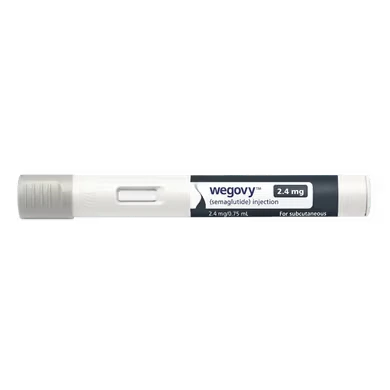
People searching for a maintenance dose usually mean a lower dose you drop to once you have reached goal, and the honest answer is that the labels do not define one. The maintenance dose is whichever dose you climbed to and stay on: 5 to 15 mg for Zepbound; 1.7 mg or 2.4 mg (the label's recommended dose) for the Wegovy pen, which the label now lets a prescriber raise to a maximum of 7.2 mg once 2.4 mg has been tolerated for at least 4 weeks; and 25 mg for the Wegovy tablet.4 Zepbound's label says its 2.5 mg starting dose "is not approved as a maintenance dosage", and the only step-down it names is for tolerability: "If patients do not tolerate a maintenance dosage, consider a lower maintenance dosage."3 Neither label names a step-down for people who have reached goal.
That does not mean nobody steps down. Prescribers do reduce doses, stretch intervals, or move people to a lower rung once weight is stable, and there is a real logic to it: a lower dose costs less and has fewer gut effects. But it is clinical judgement rather than a labelled regimen, and the trial that comes closest, SURMOUNT-4, tested full dose against nothing, not full dose against half. What the evidence supports is that some dose, continued, holds the weight. What it does not yet tell you is how low that dose can go.
If it seems to have stopped working
The plateau is the point in every trial where the curve flattens, usually somewhere past a year, and it is not the drug failing; it is the drug having done what it does at that dose. Three things are true at a plateau. The drug is still working, in the sense that stopping it would produce the regain above. A higher rung may produce more, which is what Wegovy's 7.2 mg dose exists for and what the switch to tirzepatide is usually about. And a plateau at 15% or 20% below where you started is, by the standard of every prior treatment for obesity, the result.
The cost of the second kind of drug
If it is a condition rather than a course, the price that matters is the price per month, indefinitely, and not the price of getting to goal. That reframes every number on this site. A Wegovy box and a Zepbound month are each 28 days,56 so a year of weekly pens is 13 fills, not 12. A year at maintenance:
| Route at a maintenance dose | Per month | Per year |
|---|---|---|
| Compounded semaglutide, cheapest on our board | from $69 | from about $830 |
| Compounded tirzepatide, cheapest on our board | from $85 | from about $1,030 |
| Wegovy tablet, 25 mg, direct | $299 | $3,588 |
| Wegovy pen, 2.4 mg, direct | $349 | $4,537 (13 boxes) |
| Zepbound, 10 to 15 mg, direct | $449 KwikPen refilled on time ($699 regular) | $5,837 ($9,087), 13 fills |
| Either brand, commercial plan that covers it | $25 | $325 (13 fills) |
The live board, verified on each seller's page today, is where the top two rows come from:
The compounded route's whole case is that row: a price that can be sustained for years, at the cost of FDA review of the product. Is compounded semaglutide safe sets out that trade in FDA's own words.
The honest summary
Stopping gives back about two-thirds of the loss within a year, on either molecule, with the health improvements going back alongside it. Continuing holds it and, on tirzepatide, adds to it. The labels call the drugs long-term maintenance treatments and do not define a step-down dose for people at goal, though prescribers use one in practice. So the decision at goal weight is not whether to stop. It is which dose, from which seller, at which price, you can stay on for as long as it takes, and that is a monthly number.