
Zepbound is a brand name, and tirzepatide is the medicine inside it. Eli Lilly sells tirzepatide as Zepbound for weight loss and sleep apnea, and as Mounjaro for type 2 diabetes. It is a weekly injection, and what sets it apart from the older GLP-1 drugs is that it works on two hormone receptors instead of one. Below is what the label approves it for, how it differs from semaglutide, the forms it comes in, and what it costs today.
Zepbound at a glance
| Zepbound | |
|---|---|
| Active ingredient | Tirzepatide, a GIP and GLP-1 receptor agonist3 |
| Maker | Eli Lilly |
| Approved for | Weight reduction in adults with obesity, or overweight with a weight-related condition; moderate to severe obstructive sleep apnea in adults with obesity1 |
| How often | Once a week, injected under the skin4 |
| Starting dose | 2.5 mg weekly for 4 weeks4 |
| Maintenance dose | 5, 10 or 15 mg for weight; 10 or 15 mg for sleep apnea4 |
| Forms | Single-dose pen, single-dose vial, multi-dose vial, KwikPen5 |
| Lilly self-pay price | $299 to $699 a month by dose9; $449 on the KwikPen from 7.5 mg with on-time refills |
| Sister drug | Mounjaro, the same molecule approved for type 2 diabetes8 |
What Zepbound is approved for
The label's own definition: "ZEPBOUND is a glucose-dependent insulinotropic polypeptide (GIP) receptor and glucagon-like peptide-1 (GLP-1) receptor agonist indicated in combination with a reduced-calorie diet and increased physical activity: ... to reduce excess body weight and maintain weight reduction long term in adults with obesity or adults with overweight in the presence of at least one weight-related comorbid condition. ... to treat moderate to severe obstructive sleep apnea (OSA) in adults with obesity."1
Three things in that sentence matter. It is for adults. It is meant to be used alongside diet and activity, not instead of them. And it carries two approvals: chronic weight management, and sleep apnea in adults with obesity.
How tirzepatide works
The label puts it in one line: "Tirzepatide is a GIP receptor and GLP-1 receptor agonist. It contains a C20 fatty diacid that enables albumin binding and prolongs the half-life."3
In plain terms, GLP-1 and GIP are two hormones the gut releases after a meal. Drugs that mimic GLP-1 slow how fast the stomach empties and act on appetite. Semaglutide (Wegovy, Ozempic) mimics GLP-1 alone. Tirzepatide mimics both GLP-1 and GIP. The fatty chain the label mentions is what lets it last long enough to be injected once a week.
Zepbound vs semaglutide: what the head-to-head trial found
The two molecules have been tested directly against each other. In SURMOUNT-5, adults with obesity but without diabetes took the highest dose they could tolerate of either drug for 72 weeks: "The least-squares mean percent change in weight at week 72 was -20.2% (95% confidence interval [CI], -21.4 to -19.1) with tirzepatide and -13.7% (95% CI, -14.9 to -12.6) with semaglutide (P<0.001)."7
| Tirzepatide (Zepbound) | Semaglutide (Wegovy) | |
|---|---|---|
| Receptors it acts on | GIP and GLP-1 | GLP-1 |
| Average weight change at 72 weeks, SURMOUNT-5 | -20.2% | -13.7% |
| Doses used in the trial | 10 mg or 15 mg weekly | 1.7 mg or 2.4 mg weekly |
| Maker | Eli Lilly | Novo Nordisk |
An average is not a prediction for any one person, and the trial was funded by Lilly. The full comparison, with prices on both sides, is in our tirzepatide vs semaglutide guide.
Zepbound and Mounjaro are the same molecule
Mounjaro is tirzepatide too. Its label approves it "as an adjunct to diet and exercise to improve glycemic control in adults and pediatric patients 10 years of age and older with type 2 diabetes mellitus."8 Same medicine, different approved use, and that difference decides how insurance treats it: a plan may cover Mounjaro for diabetes and still exclude Zepbound for weight loss. The Zepbound label also says not to stack them: "Coadministration with other tirzepatide-containing products or with any GLP-1 receptor agonist is not recommended."2 Our Zepbound vs Mounjaro guide covers the coverage side.
The forms it comes in
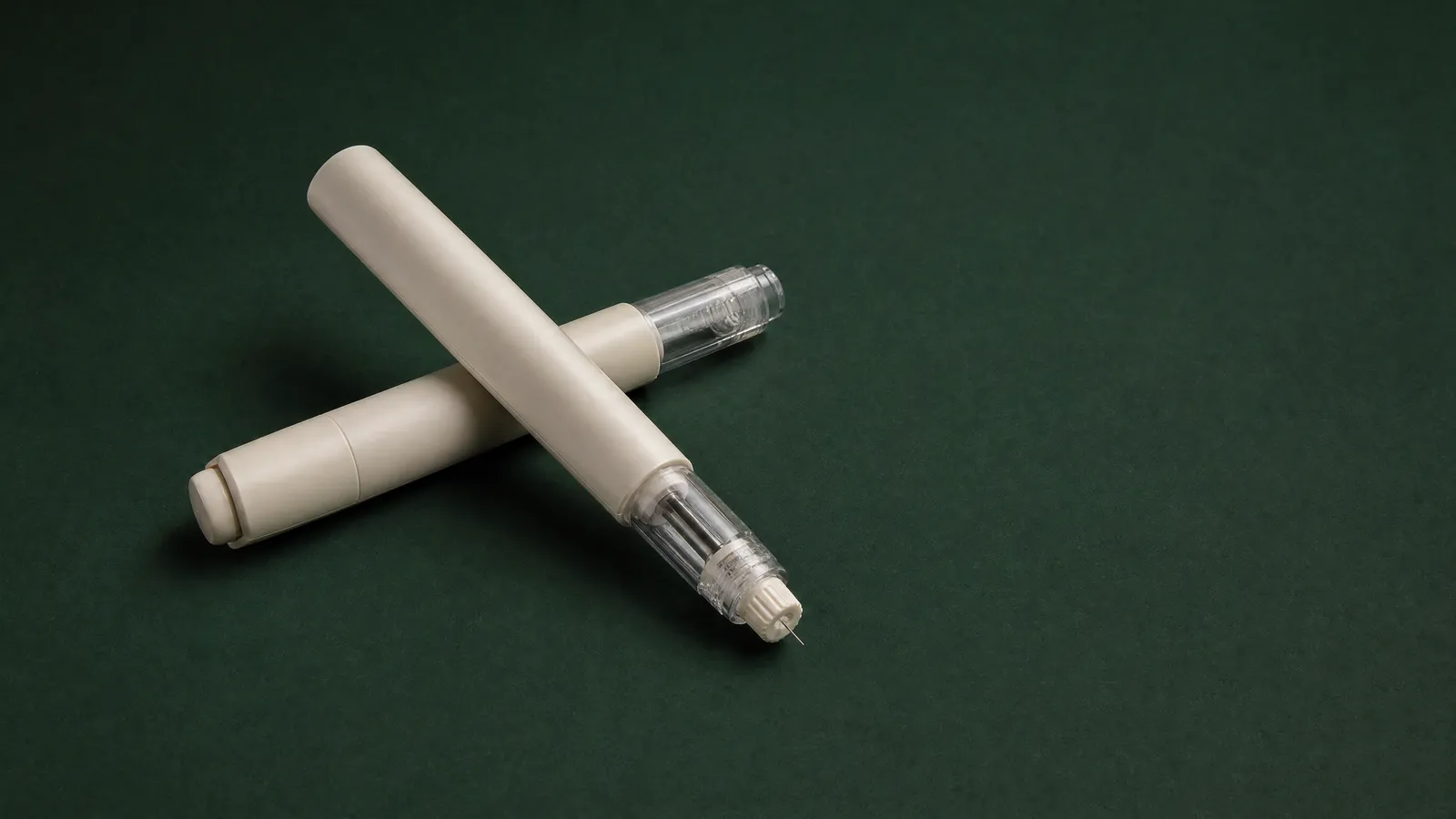
Zepbound is sold in four presentations. The label: "Injection: Clear, colorless to slightly yellow solution in pre-filled single-dose pens, single-dose vials, multi-dose vials, or single-patient-use KwikPens, each available in the following strengths. The multi-dose vials and single-patient-use KwikPen each contain 4 doses:"5
- Single-dose pen: one auto-injector per weekly dose, and the version Lilly's savings card covers.
- Single-dose vial: drawn up with a syringe, sold by Lilly direct to cash-paying patients.
- Multi-dose vial and KwikPen: four weekly doses in one device.
Brand names, molecules and makers, untangled
Four brand names cover two molecules, which is where most of the confusion starts:
| Name | Molecule | Maker | What it is approved for |
|---|---|---|---|
| Zepbound | Tirzepatide | Eli Lilly | Weight reduction; obstructive sleep apnea in adults with obesity1 |
| Mounjaro | Tirzepatide | Eli Lilly | Blood sugar control in type 2 diabetes8 |
| Wegovy | Semaglutide | Novo Nordisk | Weight management (see our Wegovy vs Ozempic guide) |
| Ozempic | Semaglutide | Novo Nordisk | Type 2 diabetes (same guide) |
| Compounded tirzepatide | Tirzepatide | Compounding pharmacies | Not an FDA-approved product |
So "tirzepatide" on a telehealth menu can mean branded Zepbound, branded Mounjaro, or a compounded version, and the price gap between them is large. Our board labels which is which on every program.
How the dose works
The label sets a starting dose and steps up from there: "The recommended starting dosage of ZEPBOUND for all indications is 2.5 mg injected subcutaneously once weekly for 4 weeks."4 For weight reduction, "The recommended maintenance dosage is 5 mg, 10 mg, or 15 mg, injected subcutaneously once weekly." For sleep apnea, "The recommended maintenance dosage is 10 mg or 15 mg injected subcutaneously once weekly."4 Your prescriber sets your dose. Every step, week by week, is in the Zepbound dosage chart.
What Zepbound costs
Lilly publishes two prices. The list price, which is what a pharmacy bills without insurance help, and a self-pay price for patients buying direct. The self-pay terms: "Available through Zepbound self-pay, Zepbound is offered as a 4‑count single‑dose vial (0.5mL) and a single‑patient‑use KwikPen (2.4mL, 0.6mL/dose) in doses of 2.5mg, 5mg, 7.5mg, 10mg, 12.5mg and 15mg, with direct‑to‑patient pricing of $299, $399, $499, $699, $699 and $699 respectively."9
With commercial insurance that covers it, Lilly's savings card can bring it down further: "If you have commercial drug insurance with coverage for Zepbound, you may be eligible to pay as low as $25 for a one- or three-month supply Zepbound single-dose pens."10 Government plans are excluded. The details are in the Zepbound savings card guide, and every route without insurance is in Zepbound cost without insurance.
Compounded tirzepatide, made by pharmacies rather than Lilly, is the cheaper route. It is the same molecule but not an FDA-approved product, and our compounded tirzepatide guide explains what that trade means. Today's cheapest verified price:
Side effects and who should not take it
The most common side effects are stomach-related: nausea, diarrhoea, vomiting and constipation, most often while the dose is going up. The full rates by dose are in Zepbound side effects. The label also carries a boxed warning about thyroid C-cell tumors and a firm contraindication: "ZEPBOUND is contraindicated in patients with a personal or family history of MTC or in patients with Multiple Endocrine Neoplasia syndrome type 2 (MEN 2)."6 MTC is medullary thyroid carcinoma.
Who Zepbound is for, and who it is not for
Read the approval sentence closely and three groups fall out. It is for adults with obesity. It is for adults with overweight only "in the presence of at least one weight-related comorbid condition", a condition linked to weight such as high blood pressure or type 2 diabetes.1 And for sleep apnea, it is for adults with obesity and moderate to severe obstructive sleep apnea.1
Who it is not for, on the label's own terms: anyone with a personal or family history of medullary thyroid carcinoma or with MEN 2,6 and anyone already taking another tirzepatide product or another GLP-1 drug, since combining them "is not recommended".2 Children are outside the approval, which names adults throughout. Whether you meet the bar is your prescriber's call; our BMI check shows how your numbers compare with what the label and its trials describe.
What to ask before you start
- Which form am I getting? Pen, vial or KwikPen change how you inject and, often, what you pay. The dosing calculator shows a vial dose in syringe units.
- Does my plan cover it, and for which use? A plan can cover Zepbound for sleep apnea and not for weight, or cover Mounjaro and not Zepbound. Our coverage checker quotes each insurer's own policy.
- What will a year cost at my dose? The price climbs as the dose does. The titration cost tool prices every monthly fill on the label schedule.
- Brand or compounded? Same molecule, different rules and very different prices. The difference is set out in compounded tirzepatide.
How to get it
Zepbound needs a prescription. You can get one from your own doctor, through Lilly's direct program, or through a telehealth program that prescribes it. The steps, and what each route asks for, are in how to get Zepbound. Every program we track that sells tirzepatide, ranked by what it actually costs you each month: