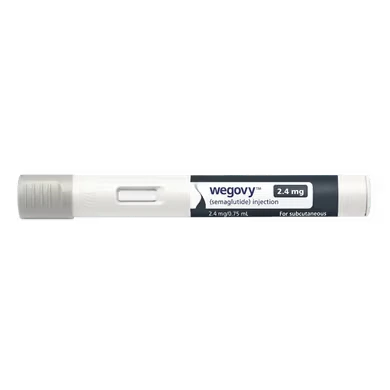

If your plan covers it and charges a flat copay, Ozempic, Wegovy, Zepbound or Mounjaro will most likely cost you $25 a month once you add the maker's savings card. If your plan charges coinsurance, or you have not met your deductible yet, the bill is a share of the list price instead, and that is where the surprise four-figure pharmacy totals come from. The list price is $1,027.51 per Ozempic pen,1 $1,349.02 per Wegovy package,2 up to $1,086.37 per Zepbound fill3 and $1,112.16 per Mounjaro fill.4 Every maker's card takes a fixed amount off your share, $100 a month for the Novo cards and Zepbound, $150 for Mounjaro, and stops there.131618
The largest monthly share your plan can charge for the Ozempic, Wegovy or Zepbound card to bring you down to $25. The Mounjaro card pays more, so its line sits higher. That line is $175. Above it, you pay your share minus the card's cap, not $25.
So "how much is Ozempic with insurance" has three honest answers, one per plan design. On a copay plan, about $25. On a 25% coinsurance plan once the deductible is met, roughly $157 a month. For a fill bought while the deductible is still open, up to about $928. The rest of this page shows how to tell which design you have, works the arithmetic for each drug month by month across a full year, and marks the points where paying cash, through the maker or a program on our board, costs less than using the plan.
What you pay with insurance, drug by drug
The table assumes your plan covers the drug and you hold the maker's savings card. The copay rows use KFF's 2025 averages for employer plans with three or more drug tiers; the coinsurance rows use KFF's average rates for the second and third tier.11 The deductible row is the most you would owe for one fill before your deductible is met, using the list price; your plan's negotiated rate can be lower.
| Your plan's cost share | Ozempic | Wegovy | Zepbound | Mounjaro |
|---|---|---|---|---|
| List price per fill (the starting number) | $1,027.511 | $1,349.022 | $1,086.373 | $1,112.164 |
| Preferred-tier copay, $40 average | $25 | $25 | $25 | $25 |
| Non-preferred copay, $71 average | $25 | $25 | $25 | $25 |
| Fourth-tier copay, $123 average | $25 | $25 | $25 | $25 |
| 25% coinsurance, deductible met | $156.88 | $237.26 | $171.59 | $128.04 |
| 35% coinsurance, deductible met | $259.63 | $372.16 | $280.23 | $239.26 |
| Deductible not met, one fill at list | $927.51 | $1,249.02 | $986.37 | $962.16 |
| Without the card, 25% coinsurance | $256.88 | $337.26 | $271.59 | $278.04 |
Read it from the bottom row up. On a coinsurance plan your bill tracks the list price, and the card's fixed cap barely dents it. On a copay plan, the card swallows almost any copay a plan charges, because even the average fourth-tier copay of $123 sits under the $125 line. That is why two coworkers on "the same insurance" can report $25 and $250 for the same pen: their employers picked different designs.
Zepbound's list price is for the single-dose pen, which is the product commercial plans cover and the Zepbound card is written for. The KwikPen and vial carry Lilly's lower self-pay prices instead.1617
Copay, coinsurance, deductible: the four settings that decide your bill
Your drug price with insurance is not one number your insurer picks. It is the output of four settings in your plan, and once you know yours you can calculate the bill to the cent.
- Deductible. What you pay for covered care before the plan pays anything.6 Some plans run a separate, smaller deductible just for prescriptions; others apply the medical deductible to drugs too, and that difference alone can move your first GLP-1 fill by several hundred dollars.6 The average single deductible in employer plans was $1,886 in 2025, and 34% of covered workers had one of $2,000 or more.10
- Copayment. A fixed dollar amount per fill, paid after any deductible.7 Predictable, and the card handles it well.
- Coinsurance. A percentage of the drug's cost, paid after any deductible.8 For a drug with a four-figure list price this is the expensive design.
- Out-of-pocket maximum. The most you pay for covered care in a plan year; after it, the plan pays everything.9 Marketplace plans may not set it above $10,600 for one person in 2026.9 Most GLP-1 users on coinsurance never reach it from the drug alone, as the year tables below show.
One more fact changes how to read all four. A third of covered workers, 33%, are in a high-deductible plan with a savings account (HDHP/SO),10 and on those plans brand drugs usually sit inside the deductible. If that is you, the "deductible not met" row above is your price for the first months of the year, every year. Novo itself says its 2027 list price cut is aimed at exactly these people, whose costs "are linked to list price, such as individuals with high-deductible health plans or co-insurance benefit designs".5
Formulary tiers: where GLP-1s sit and what each tier costs
Your plan sorts every drug into tiers on its formulary (drug list). The tier sets the copay or coinsurance. Brand GLP-1s are never on the generic tier; they usually land on the preferred-brand tier when the plan's pharmacy benefit manager has a deal with the maker, and on a non-preferred or specialty tier when it does not.
| Tier (employer plans, 2025) | Typical drugs | Average copay | Average coinsurance |
|---|---|---|---|
| Tier 1 | Generics | $12 | 19% |
| Tier 2 | Preferred drugs | $40 | 25% |
| Tier 3 | Non-preferred drugs | $71 | 35% |
| Tier 4 | Higher-cost drugs | $123 | 31% |
| Specialty tier | Biologics, injectables on some plans | $111 | 27% |
Source: KFF 2025 Employer Health Benefits Survey, workers in plans with three or more cost-sharing tiers; specialty figures are for tiers covering only specialty drugs.1112
Two things in that data matter for a GLP-1. Copays are the most common design in the first three tiers, with coinsurance second.11 And on specialty tiers coinsurance is the norm: 58% of workers with a specialty tier pay coinsurance on it, though 62% of those have a dollar cap per fill.12 If your plan lists Wegovy or Zepbound as specialty with a capped coinsurance, the cap, not the percentage, is your number. Ask for it by name.
Where a drug sits is not fixed. CVS Caremark, for example, put Zepbound back on its commercial template formularies as a preferred option on 1 October 2026, and plan sponsors can still customize what they adopt.19 A move to preferred can drop you from a tier-3 coinsurance to a tier-2 copay at your next fill. Our coverage tracker keeps each insurer's and PBM's published tier and criteria for every GLP-1, with the source line for each.
Who actually sets your price: insurer, employer and PBM
Three parties sit between you and the pharmacy counter, and the one with the most power over your copay is usually the one whose name is smallest on your card.
- Your employer (or the plan sponsor) decides whether weight-loss GLP-1s are covered at all and picks the cost-share design. Aetna, for instance, tells employers they can customize benefits to include or exclude GLP-1 coverage for weight management.22 Our employer coverage guide tracks who covers it and who dropped it.
- The pharmacy benefit manager (PBM) writes the formulary and negotiates with Novo and Lilly. The big three are CVS Caremark, Express Scripts (Evernorth, part of Cigna) and Optum Rx (part of UnitedHealth Group). Each also sells employers a GLP-1 program: Evernorth's option caps the monthly copay for Wegovy and Zepbound at $200 and counts it toward the deductible,20 and Optum Rx Weight Engage has been offered to plan sponsors since 1 January 2024.21
- The insurer runs prior authorization and the member portal where your real price shows. On many plans the insurer and PBM are the same company under two names.
The Evernorth cap is worth a closer look, because it reverses the usual math. At $200 a month, and counted toward the deductible, it beats every deductible month in the first table, the 25% coinsurance month for Wegovy, and the makers' regular cash prices for the pens after any starter offer; Evernorth says members can save as much as $3,600 a year against buying direct.20 It exists only where an employer has bought it, so ask HR whether your plan includes Evernorth's capped-copay GLP-1 option. Lilly also sells employers Zepbound KwikPen directly, at $449 for all doses to network pharmacies, with what you pay set by the cost share your employer chooses.25
Plan-level detail for each PBM: CVS Caremark and Zepbound, Express Scripts and Wegovy, Optum Rx and Zepbound.
Prior authorization: why the price can jump mid-year
Prior authorization does not change your copay, but it decides whether you get the covered price at all. Your prescriber sends your BMI and history before the first fill; until it is approved the pharmacy can only sell at cash. Criteria vary by plan. Aetna's BMI 35 weight-loss policy, for one, asks for a baseline BMI of 35 or more, and for renewal it wants at least 3 months at a stable maintenance dose and at least 5% weight loss kept off.23
The cost risk is the renewal date. If an approval lapses, the next fill rings up at the full cash price until a new one clears, and on a coinsurance plan that can mean one month at list. Put the renewal date in your calendar 30 days early, and ask your prescriber's office to file before it. If you are refused, the appeal guide covers the next steps, and getting a GLP-1 covered covers the first approval. Our prior authorization letter builder drafts the prescriber's letter for Wegovy or Zepbound.
How the savings cards work, and their caps
Each maker's commercial card works the same way: "pay as little as $25", subject to a maximum it will pay per fill. You need commercial insurance that covers the drug, and Medicare, Medicaid, TRICARE and VA patients are excluded.131618
| Card | You pay as little as | Most the card pays per month | Yearly cap | Other terms |
|---|---|---|---|---|
| Ozempic Savings Offer | $25 | $100 | Not stated on the offer page | Government beneficiaries excluded13 |
| Wegovy Savings Card | $25 | $100 ($200 on a 2-month fill, $300 on a 3-month fill) | Not stated | Not for use with accumulator or maximizer plans14 |
| Zepbound Savings Card | $25 | $100 ($200 and $300 on 2 and 3-month fills) | $1,300, up to 13 fills | Single-dose pen; ends 12/31/202616 |
| Mounjaro Savings Card | $25 | $150 ($300 and $450 on 2 and 3-month fills) | $1,950 | Needs an approved use (type 2 diabetes); ends 12/31/202618 |
The formula behind every cell of the first table is: what you pay equals your plan share minus the card's cap, and never less than $25. A $40 copay becomes $25. A $256.88 coinsurance share becomes $156.88. The card is a coupon against your share, not a promise of $25.
Two traps sit in the fine print.
Accumulators and maximizers. Some plans stop the card's money counting toward your deductible (an accumulator), or set your copay based on the card being available (a maximizer). Novo says that if your insurer runs either kind of program, you may not use its Wegovy card, and it may cut the per-claim or annual benefit.14 Lilly reserves the right to reduce Zepbound card savings if your plan does not apply card payments to your copay, deductible or coinsurance.16 The bottom row of our worked year below prices that for each drug: an accumulator adds roughly $75 to $211 to a year, because the card's dollars stop filling the deductible.
The calendar. Both Lilly cards end on 31 December 2026,1618 and Zepbound's $1,300 yearly cap equals 13 monthly maximums. You will not hit it on monthly fills, but you can on 3-month fills with a high coinsurance share. Re-check the card's terms every January. The full card-by-card rules are in our copay card guide.
Novo Nordisk intends that all savings from this offer accrue to the patient and are intended to be credited toward patient out-of-pocket obligations and maximums, including applicable copayments, coinsurance, and deductibles.
Novo Nordisk, Wegovy savings card terms
A year on a $2,000 deductible and 25% coinsurance, month by month
This is the scenario most people search for after their first shocking receipt. The plan: covered drug, $2,000 drug deductible, 25% coinsurance after it, card applied to every fill, out-of-pocket maximum not reached. A plan year is 13 fills, because each box or month of these pens is a 28-day supply.314 We priced each fill at list, which is the ceiling; your plan's negotiated rate may shave a little off the deductible months.
| Fill | Ozempic | Wegovy | Zepbound | Mounjaro |
|---|---|---|---|---|
| Fill 1 (all deductible) | $927.51 | $1,249.02 | $986.37 | $962.16 |
| Fill 2 (deductible runs out) | $886.25 | $725.49 | $856.82 | $793.92 |
| Fills 3 to 13, each | $156.88 | $237.26 | $171.59 | $128.04 |
| Plan year total | $3,539.44 | $4,584.37 | $3,730.68 | $3,164.52 |
| Same year, plan runs an accumulator | $3,689.43 | $4,659.37 | $3,867.04 | $3,375.59 |
Our arithmetic, 15 October 2026: list prices from the makers,1234 card caps from the makers' terms,13141618 13 fills. With an accumulator, only your own payments fill the deductible, so fill 3 also carries some deductible.
Three things fall out of it. The first two fills cost more than the other eleven combined for every drug except Wegovy, so January is when people stop, not because the drug stopped working but because the bill arrived. The total is driven by the deductible, which you would partly pay anyway if you have other care that year. And the coinsurance months are where the drugs separate: the bigger $150 card cap on Mounjaro makes it the least costly to carry on this design, and the higher list price of Wegovy makes it the dearest.
Now hold those totals against the makers' own cash prices for the same 13 fills, for a new patient on the standard pens.
| Plan year, 13 fills | Ozempic, 0.25 to 1 mg | Wegovy, to 2.4 mg | Zepbound, to 7.5 mg and up |
|---|---|---|---|
| Through the plan, from the table above | $3,539.44 | $4,584.37 | $3,730.68 |
| Maker's self-pay pharmacy | $4,237 ($199 twice, then $349)13 | $4,237 ($199 twice, then $349)15 | $5,637 ($299, $399, then $449)17 |
| Lower of the two, and by how much | Plan, by $697.56 | Self-pay, by $347.37 | Plan, by $1,906.32 |
Mounjaro is left out: it is covered for type 2 diabetes, where the card usually brings a copay to $25, so a cash comparison rarely applies.
Self-pay money does not count toward your deductible or out-of-pocket maximum; Novo says so of its own pharmacy in plain words.1315 So the Wegovy result flips if you expect to meet your deductible anyway from other care. Then the plan's later months, at $237.26 each, are what you are really comparing, and they beat $349. The Zepbound self-pay figure assumes the $449 refill price on 7.5 mg and up, which needs each refill within 45 days of the last.17
Ozempic with insurance: the diabetes copay and the weight-loss wall
For type 2 diabetes, Ozempic is one of the better-covered brand drugs, and most commercial members on a copay design pay $25 a month with the card. The arithmetic only turns ugly on coinsurance or an HDHP: 25% of the $1,027.51 pen is $256.88, or $156.88 after the card's $100.113 The Ozempic coupon guide has the enrollment steps.
For weight loss, there is usually no "with insurance" price, because plans cover Ozempic for its approved use, type 2 diabetes, and weight-loss use is typically excluded. The insured route for weight is Wegovy, the same molecule approved for it. Our Ozempic cost guide covers every cash price, pen and pill.
Wegovy with insurance: the drug where cash can beat coverage
Wegovy carries the highest list price of the four, $1,349.02 per package,2 so it is where coinsurance and deductibles hurt most. Two worked cases:
- Copay plan, covered, deductible met: a $40 or $71 copay becomes $25 with the card.
- Coinsurance at 25%, deductible met: your share is $337.26; minus $100, you pay $237.26 a month.
- HDHP in January: the first fill is up to $1,349.02, or $1,249.02 with the card.
Against those, Novo's own pharmacy sells the pen for $199 a month for a new patient's first two fills, then $349 at every dose up to 2.4 mg.15 A program on our board selling the same Wegovy pen or pill starts at $208 a month all in, which is less than the 25% coinsurance month above. Wegovy is also on the Medicare GLP-1 Bridge at a $50 monthly copayment for eligible Part D members, outside commercial insurance entirely.24 More in what Wegovy costs and the Wegovy coupon.
Live chart · checked 15 Oct 2026
Every Wegovy price we track, all in
3 programs, cheapest first: the monthly price plus any membership fee, read off each seller's own page. The full ranking
Zepbound with insurance: pen versus KwikPen
Commercial plans cover the Zepbound single-dose pen, listed at up to $1,086.37 per fill.3 The card brings a covered fill to as little as $25, capped at $100 a month and $1,300 a year.16 Worked out:
- Copay plan, covered: $25.
- 25% coinsurance after the deductible: $271.59 share, $171.59 after the card.
- Deductible not met: up to $986.37 for the fill after the card.
- Commercial plan that does not cover it: the card's not-covered price for the single-dose pen is as low as $499 a month.16
Lilly sells the KwikPen to cash patients at $299 for 2.5 mg, $399 for 5 mg and $499 to $699 above that, with a $449 offer on 7.5 mg and up when you refill within 45 days.17 In a deductible month, $986.37 against $299 to $449 is not close. Over a whole covered year it reverses, as the year table showed, so the decision is about which months you expect to pay at list. The cheapest Zepbound on our board is $348 a month all in. Our Zepbound without insurance guide lays out every cash route, and the Zepbound savings card guide covers the card.
Mounjaro with insurance: the biggest card cap
Mounjaro's list price is $1,112.16 per fill,4 and its card is the most generous of the four: savings up to $150 a month and $1,950 a year.18 That moves the $25 line up to a $175 share. On 25% coinsurance your share is $278.04, so you pay $128.04 after the card. No other drug in the first table comes out lower on coinsurance.
The card needs a prescription for an approved use, which for Mounjaro means type 2 diabetes.18 A Mounjaro prescription written for weight loss will not get the covered price or the $25 card; the weight-loss version of the same tirzepatide is Zepbound. See what Mounjaro costs and the Mounjaro savings card.
When paying cash beats your insurance
Work out your plan price with the formula above, then hold it against these four alternatives. Cash wins more often than people expect in three situations: an unmet deductible you will not otherwise reach, coinsurance on Wegovy, and any month without an approved prior authorization.
- The maker's self-pay pharmacy. NovoCare and LillyDirect sell brand-name pens and pills at fixed monthly prices by dose. Our LillyDirect versus NovoCare comparison sets them side by side.
- A telehealth program selling the brand. Today's cheapest Wegovy on our board is $208 a month and the cheapest Zepbound $348, both all in, including any membership fee.
- Compounded versions. Compounded semaglutide starts at $69 a month and compounded tirzepatide at $85 on our board. They cost less than almost any coinsurance month above, but compounded drugs are not FDA-approved. Read whether compounded semaglutide is safe before choosing one.
- Pre-tax money. HSA and FSA dollars can usually pay for a prescribed GLP-1, covered or cash; see the HSA and FSA guide.
Cash purchases run outside your insurance. They usually do not count toward your deductible or out-of-pocket maximum, so a year of cash leaves your deductible untouched for everything else.1315 If you expect large medical bills this year, run the year-one total, not the monthly price.
Every program we track, priced all in and ranked:
Live chart · checked 3 Oct 2026
Every GLP-1 price we track, all in
22 programs, cheapest first: the monthly price plus any membership fee, read off each seller's own page. The full ranking
Cash prices have been moving, mostly down, since we started tracking them:
The GLP-1 Price Index · 15 Oct 2026
GLP-1 cash prices since we started tracking
modeled reconstruction observed median middle half of programs
The median all-in monthly price across the programs quoting that day, with the cheapest and dearest. How the index is built
What changes in 2027
On 1 January 2027 Novo cuts the list price of Wegovy, Ozempic and Rybelsus to $675 a month at every dose, about 50% off Wegovy and 35% off Ozempic.5 Novo says the cut does not touch its self-pay prices.5
Who gains depends on the design in your plan. On 25% coinsurance a $675 list price means a $168.75 share, or $68.75 after a $100 card; on a deductible month it means $575 after the card instead of $1,249.02 at the current list price. On a flat copay, nothing changes: you were already at $25. If you are on coinsurance or an HDHP and choosing between Wegovy and Zepbound for next year, that is a real difference to put to your prescriber alongside the clinical one. Lilly had not announced a matching list price change for Zepbound or Mounjaro when we checked on 15 October 2026. Card terms for all four drugs are written to run through 31 December 2026,13151618 so expect new terms in January.
How to find your exact price in ten minutes
- Find your PBM. It is printed on your insurance card, often as "Rx" with a BIN number, or named in your benefits portal.
- Use the PBM's price tool. Caremark calls it Check Drug Cost, Express Scripts calls it Price a Medication. Search the exact product: "Zepbound single-dose pen 2.5 mg", not just "Zepbound". It returns your plan's price and your deductible status.
- Note the tier and the codes. PA means prior authorization, ST step therapy, QL a quantity limit.
- Check where you are in your deductible and whether drugs have their own deductible.
- Apply the card formula: your share minus the card's cap, never below $25.
- Compare with the cash options above for the months you will pay at list.
Six questions to ask your insurer or HR
- [ ] Is the drug covered for my diagnosis, and on which tier?
- [ ] Is my cost share a copay or coinsurance, and is there a dollar cap per fill?
- [ ] Does the deductible apply to this drug, and is there a separate drug deductible?
- [ ] Does manufacturer copay assistance count toward my deductible and out-of-pocket maximum (is there an accumulator or maximizer)?
- [ ] Does my plan offer a capped-copay GLP-1 program, such as Evernorth's $200 option?
- [ ] When does my prior authorization expire?
Medicare, Medicaid and other government plans
None of the makers' savings cards can be used with Medicare, Medicaid, TRICARE or VA coverage.131618 People with Medicare Part D who qualify can get Wegovy, Foundayo or the Zepbound KwikPen through the Medicare GLP-1 Bridge at a $50 monthly copayment from 1 July 2026.24 The rules, and why that $50 sits outside Part D's out-of-pocket cap, are in does Medicare cover GLP-1s.