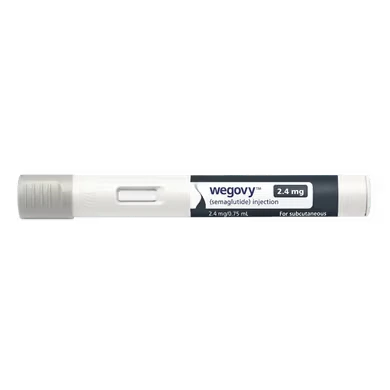


About one large US employer in five covers GLP-1s for weight loss, and the share is now shrinking at the top. In KFF's 2025 Employer Health Benefits Survey, 19% of firms with 200 or more workers covered GLP-1 drugs used primarily for weight loss, rising to 43% of firms with 5,000 or more.1 Among the very largest employers, Business Group on Health found coverage fell from 72% in 2025 to 60% in 2026.7 Diabetes coverage is a separate question, and almost every plan still has it.
Share of US employers with 200 or more workers whose largest plan covers GLP-1s for weight loss, KFF 2025. For firms with 5,000 or more workers the figure is 43%, up from 28% in 2024.1
So the honest answer to "does my employer cover Wegovy" is: probably not if you work for a mid-sized company, about a coin flip if you work for a very large one, and less likely next year than this year. The rest of this page shows where those numbers come from, which named employers and public plans have dropped, kept or added coverage, the conditions you will meet if yours covers it, and what to do in the next ten minutes to find out for certain.
How many employers cover GLP-1s for weight loss in 2026?
Four surveys get quoted, and they seem to disagree wildly: 19%, 36%, 44%, 60%. They are measuring different employers. Once you know which population each one samples, they tell one consistent story.
- KFF (all employers with 200 or more workers). The broadest and most representative. 19% overall in 2025, against 18% in 2024. By size: 16% of firms with 200 to 999 workers, 30% of firms with 1,000 to 4,999, and 43% of firms with 5,000 or more.1 Its 2026 survey had not been published when we checked on 8 October 2026.
- Mercer (employers with 500 or more employees). 49% covered GLP-1s for obesity in 2025, up from 44% in 2024.4 Its 2026 figures, as reported by Reuters, put coverage back at 44%,5 with 6% of these employers having dropped coverage in 2026 and 5% planning or considering a drop for 2027.6
- International Foundation of Employee Benefit Plans (corporate plans of all sizes). 36% cover GLP-1s for both diabetes and weight loss in 2026, the same as 2025. 60% cover them for diabetes only.10
- Business Group on Health (the largest employers, many in the Fortune 100). 60% covered GLP-1s for obesity in 2026, down from 72% in 2025, in a survey of 127 employers covering 8.7 million people in the US.7 14% have already eliminated coverage or plan to do so in 2027.8
The pattern is size. The bigger the employer, the more likely it covers weight-loss GLP-1s, and the bigger the employer, the more likely it has started cutting back. Smaller employers mostly never added the benefit, and KFF found little appetite to start: of firms with 200 or more workers that do not cover these drugs for weight loss, 67% said they were not likely to begin in the next 12 months, and only 1% said they were very likely.2
If you work for a company with fewer than 200 people, none of these surveys describes you well, and coverage is rarer still. Small groups usually buy a fully insured plan from an insurer, and in 2026 several insurers removed weight-loss GLP-1s from those plans on their own (the table below has them).
The trend, survey by survey and year by year
Each row is one survey's own population, so read across a row, never down a column. A dash means that survey did not publish a figure for that year that we could read at the source.
| Survey and who it covers | 2023 | 2024 | 2025 | 2026 |
|---|---|---|---|---|
| KFF, all firms with 200+ workers13 | - | 18% | 19% | not yet published |
| KFF, firms with 5,000+ workers1 | - | 28% | 43% | not yet published |
| Mercer, employers with 500+ employees45 | - | 44% | 49% | 44% |
| IFEBP, corporate plans, diabetes and weight loss10 | 26% | 34% | 36% | 36% |
| Business Group on Health, largest employers7 | - | - | 72% | 60% |
Two things stand out. Coverage climbed steadily from 2023 to 2025, fastest at the largest firms. Then 2026 is the first year in which two separate surveys of big employers recorded a fall. Business Group on Health's own earlier 2026 survey, fielded in February and March with 105 employers, found 67% covering and 10% of those saying they would likely not continue in 2027,9 which fits the 60% it measured in June.
The reason employers give is cost, not doubt about the drugs. North Carolina's State Health Plan said that before it dropped coverage, more than 23,000 members used these medications at a net cost of more than $800 per member per month after rebates.15 The IFEBP found the share of employers encouraging staff to buy through a maker's direct-to-consumer platform at 27%, and the share steering them to FSA, HSA or HRA money at 21%.10
Which employers and state plans dropped, kept or added coverage
This is the list nobody else keeps. Every row is dated and sourced to the employer, the plan or a news report that read the employer's own notice. If an employer is not here, that means we could not find a source we could quote, not that it covers the drugs.
| Employer or plan | Who it affects | What changed | Effective |
|---|---|---|---|
| University of Texas System17 | UT Select employees, UT Care retirees | Dropped coverage of weight-loss medications | 1 September 2023 |
| Ascension17 | Employee health plan | Dropped coverage of weight-loss drugs | 2023 |
| North Carolina State Health Plan15 | Teachers, state employees, retirees | Dropped GLP-1s for weight loss | 1 April 2024 |
| West Virginia PEIA16 | Public employees in the pilot | Paused its GLP-1 pilot | 15 March 2024 |
| Blue Cross Blue Shield of Michigan18 | Large-group fully insured employers | Phased out weight-loss GLP-1s; BMI 35 for prior authorization | Announced 2024 |
| Connecticut state plan24 | State and partnership plan members | Kept coverage, only through FlyteHealth, with a $12.50 monthly program fee | In force 2026 |
| HCA Healthcare14 | Employees | Stopped covering Zepbound and Wegovy for weight loss | 2026 |
| Blue Cross Blue Shield of Massachusetts19 | Fully insured groups; employers over 100 staff may keep it | Ended GLP-1 coverage except for type 2 diabetes | Renewals from 1 January 2026 |
| Harvard Pilgrim Health Care20 | Most 2026 plans | Excluded weight-loss medications including GLP-1s | 2026 plan year |
| Mass General Brigham Health Plan21 | Individual and small employers; groups of 50+ may add it | Ended weight-management GLP-1 coverage | 1 January 2026 |
| Ohio State University Health Plan22 | Faculty and staff | Diabetes only | 1 January 2026 |
| Kansas State Employee Health Plan23 | State employees | Kept coverage, tightened to BMI 35 or higher; Wegovy preferred | 1 January 2026 |
| Colorado state employees25 | Cigna and Kaiser plan members | Restored coverage; Cigna members get Zepbound only | 1 May 2026 |
| Cigna Group employee plan12 | Cigna's own staff | Ended coverage of GLP-1s for weight loss | 1 July 2026 |
| PwC (US)13 | US staff | Limited coverage to diabetes | July 2026 |
| Massachusetts Group Insurance Commission26 | Non-Medicare state members | Ended weight-loss-only coverage; heart disease, sleep apnea and MASH can still qualify | 1 July 2026 |
| University of Iowa27 | 500 employees in a pilot | Pilot coverage, extended by one year | Ongoing |
Three things to take from it.
Insurers can drop it for your employer. If your company buys a fully insured plan, the insurer's decision is your plan's decision. Blue Cross Blue Shield of Massachusetts ended coverage at renewal from January 2026, and only employers with more than 100 staff could choose to keep it.19 Mass General Brigham did the same for small employers.21 Large self-insured employers set their own rules, which is why two people with the same insurer's card can get opposite answers.
The insurer's own staff are not protected. Cigna, which runs Express Scripts, ended weight-loss GLP-1 coverage for its own employees from 1 July 2026 and told them cash purchases would not count toward their deductible.12 HCA told employees that the makers' discounts were, in many cases, cheaper than what group plans could negotiate.14
Not every change is a cut. Colorado restored coverage for state employees on 1 May 2026, though Cigna-plan members get Zepbound only unless a different drug is medically necessary.25 Connecticut kept coverage by routing it through a single clinical program.24 Kansas kept it and raised the bar.23
The usual conditions when your employer does cover it
Covering the drug is never the same as handing it out. Expect most of these, and sometimes all of them.
A BMI floor. The IFEBP found minimum BMI is the most common eligibility rule, used by 90% of corporate plans that cover GLP-1s, with obesity plus one other chronic disease next at 54%.11 The usual line is a BMI of 30, or 27 with a weight-related condition, but some employers now require 35, Segal told CNBC.6 Kansas set 35 for every new or renewed weight-management prescription from 1 January 2026,23 and Blue Cross Blue Shield of Michigan set 35 for its large-group prior authorizations.18
Prior authorization. Your prescriber sends evidence (your BMI, any related condition, what you have already tried) to the pharmacy benefit manager before the first fill, and again at renewal. Business Group on Health found 69% of large employers validate eligibility through biometrics.8
A required program. 34% of KFF firms that cover the drugs require a dietitian, case manager, therapist or lifestyle program.2 Business Group on Health puts it at 45% of its members.8 Connecticut goes furthest: weight-loss medications are covered only when prescribed through its chosen program.24
One preferred brand. Many plans cover one of Wegovy or Zepbound and make you justify the other. Kansas prefers Wegovy;23 Colorado's Cigna plan covers Zepbound only.25 The pharmacy benefit manager's template formulary drives much of this, and it moves: CVS Caremark said it would add Zepbound back to its commercial formularies as a preferred option on 1 October 2026, while employers keep discretion to customize.28
Your normal cost share. 83% of Business Group on Health employers charge the same copay or coinsurance as for any other drug,9 so check whether your plan puts these drugs on a specialty or non-preferred tier.
For how each gate works, in the order a plan applies them, read how to get a GLP-1 covered by insurance.
How pharmacy benefit managers and the makers are changing employer coverage
Your employer rarely decides alone. The pharmacy benefit manager (PBM) runs the formulary and sells the employer a program, and since 2026 both makers sell to employers directly.
- CVS Caremark. Its template formulary had dropped Zepbound and is adding it back as a preferred option on 1 October 2026; plan sponsors can still customize.28 It also lifted its new-to-market block on the Foundayo pill on 1 June 2026, where a plan approves coverage.28
- Express Scripts (Evernorth). EncircleRx offers employers a cap on GLP-1 spend or a promised level of savings, and enrolls members who meet the criteria in a lifestyle program run with Omada.29
- Optum Rx. Weight Engage has been available to employers since 1 January 2024 as a weight-management program around the drugs.30
- Eli Lilly. Lilly Employer Connect, launched 5 March 2026, lets employers buy Zepbound KwikPen outside the usual pharmacy benefit through independent program administrators, with the employer choosing the employee's cost share.31
- Novo Nordisk. Wegovy injection and pill are available to employers direct, for example through Goodpath's program announced 18 February 2026.32
Through this employer platform, Lilly's Zepbound® (tirzepatide) KwikPen® is available from Lilly to network pharmacies at a discounted price of $449 for all doses.
Eli Lilly, 5 March 2026
Why this matters to you: if your employer says "we don't cover it", ask whether it offers a direct-to-employer or subsidized cash program instead. Some do, and it is not always listed in the plan documents, because it sits outside the pharmacy benefit.
How to check your own plan in ten minutes
Do not trust a forum post or a coworker's answer. Coverage depends on your exact plan, and large employers often offer several. Three documents settle it.
- The Summary of Benefits and Coverage (SBC). Every plan must give you one. Look under "Services your plan generally does NOT cover" for "weight loss programs" or "weight loss drugs". It is in your benefits portal or open-enrollment packet.
- The formulary (drug list). Search for Wegovy, Zepbound, Saxenda and Foundayo. Note the tier and any codes beside the name: PA means prior authorization, ST means step therapy, QL means quantity limit. A drug that is missing, or marked "excluded" or "not covered", is out.
- The plan document or certificate of coverage. The exclusions section is the final word. Search for "weight", "obesity" and "anti-obesity".
Then use the drug-price tool in your insurer's or PBM's member portal for each drug by name. It reflects your employer's choices, which a public formulary may not.
Printable checklist: five questions for HR or benefits
- [ ] Does my plan cover GLP-1 medications for weight management, or only for type 2 diabetes?
- [ ] If it does, which drugs are preferred, and what are the criteria (BMI, related conditions, a required program)?
- [ ] Is coverage changing at the next renewal or plan year? If so, on what date does my current approval end?
- [ ] Do we offer a direct-to-employer program, a subsidy, or an HRA that pays toward a cash-price GLP-1?
- [ ] Does the plan cover these drugs for other conditions, such as heart disease, sleep apnea or liver disease?
Write down the answers with the date and the name of the person who gave them. If coverage changes mid-year, that note is what you will need.
What to do if your employer excludes it
First, find out what kind of no it is. A plan exclusion means the weight-loss benefit was never bought, so no clinical evidence can move it. A prior authorization denial or a step-therapy requirement is a different thing, and those are worth fighting. Our denial guide shows how to tell them apart and what each one needs.
Second, check whether you have a covered condition. Many plans that exclude weight loss still cover these drugs for an approved non-weight use. The Massachusetts Group Insurance Commission, for example, still considers coverage for heart disease, sleep apnea and certain liver conditions after ending weight-loss-only coverage.26 None of the changes in the table above removed coverage for type 2 diabetes; the plans that address it, such as Blue Cross Blue Shield of Massachusetts, Ohio State and the Massachusetts GIC, say it continues.192226 Ask your prescriber whether one of these applies to you and is in your chart.
Third, ask about exceptions honestly. An exception request asks the plan to cover something its rules exclude. It is worth one letter when you have a documented medical reason, but most benefit exclusions are written so that exceptions are not granted. Do not spend months on it.
Fourth, use pre-tax money. The IRS lets you count amounts you pay to lose weight as a medical expense when the weight loss treats a disease a physician diagnosed, such as obesity, hypertension or heart disease.33 In practice that means HSA or FSA dollars can usually pay for a prescribed GLP-1 bought for cash, and 21% of employers in the IFEBP survey actively point staff this way.10 Keep the prescription and the diagnosis on file, and check your account administrator's documentation rules before you buy. The full rules, limits and a worked tax example are in our HSA and FSA guide.
Fifth, price the cash routes. Two things to know first. Manufacturer copay cards only work when your plan covers the drug, so an exclusion rules them out:34 see what the savings cards are really worth. And cash purchases usually do not count toward your deductible.12
The routes:
- Brand-name Wegovy or Zepbound through a telehealth program on our board. The cheapest all-in Wegovy we track today is $208 a month; the cheapest Zepbound is $358 a month. These are the same FDA-approved drugs your plan would have covered.
- The makers' own self-pay programs (NovoCare Pharmacy for Wegovy, LillyDirect for Zepbound), which price by dose. Our Wegovy and Zepbound pages keep each maker's current ladder.
- Compounded semaglutide or tirzepatide, from $69 and $119 a month on our board. Cheaper, but compounded drugs are not FDA-approved. Read whether compounded semaglutide is safe before you choose it.
Today's full ranking, every program priced all-in and re-checked weekly:
For every cash route side by side, see GLP-1s without insurance. To check what a named insurer covers, use our coverage tracker.
If your coverage ends at the next renewal
Most changes take effect on a plan renewal date, and your existing approval usually ends that day. Blue Cross Blue Shield of Massachusetts, for example, said current prior authorizations would end at renewal on or after 1 January 2026,19 and Cigna gave its staff until 30 June to refill.12 Use the gap.
- Refill on the last covered day your plan allows, and ask whether a 90-day fill is permitted before the change.
- Get your starting weight and BMI into your chart now. If your next employer or a future plan covers the drug, its criteria may look at your BMI before treatment, and a record from today is easier than one rebuilt later.
- Price your cash route before the date, not after a missed dose. The board above shows today's numbers.
- Ask your prescriber about the plan for stopping if cash is out of reach. Weight regain after stopping is common,12 and the options are covered in what happens when you stop a GLP-1.
- Read your open-enrollment materials every year. Coverage moves in both directions: Colorado restored it in 202625 and the University of Iowa extended its pilot.27