

The cheapest alternative to Zepbound is Zepbound's own molecule, tirzepatide, compounded by a licensed pharmacy and sold through a telehealth program. It costs a fraction of Lilly's price and it is not FDA-approved. Everything else on this page is an approved drug, and each one is cheaper than Zepbound in a different way: a cheaper way to buy Zepbound itself, a different molecule, a pill, or a diabetes label your insurance may already pay for. Here is the floor today, read from every partner program we track:
Below, each alternative in the order most people look at them, with what it costs to stay on it, not just the first month.
First, the cheaper Zepbound
If the problem is the pharmacy price, the first alternative is Zepbound bought another way. Lilly's list price is "$499 - $1,086.37 per fill", and that is what a pharmacy bills a cash patient. Lilly sells the same drug directly to people paying cash at $299 for 2.5 mg and $399 for 5 mg, then $499 at 7.5 mg and $699 from 10 mg up.1
For the KwikPen there is one more Lilly price: $449 a month from 7.5 mg up, kept only if "you must complete your refill purchase of the Zepbound single-patient-use KwikPen within 45 days" of the last one.2 Refill on time and the top of the ladder costs $449, not $699.
That is still several hundred dollars a month at the doses that do the work. The Zepbound without insurance guide prices the whole first year.
The same molecule, compounded
Compounded tirzepatide is the alternative most people who search this end up choosing, because it is the same active ingredient at a much lower monthly price. The trade is the approval. In FDA's words: "Compounded drugs are not FDA-approved. This means that FDA does not verify the safety, effectiveness or quality of compounded drugs before they are marketed."3 The pharmacy's state licence, not an FDA review of the finished product, is what stands behind the vial.
Every price below is read from the seller's own page, ranked cheapest first, with any membership fee counted in:
Before you pick one, read what compounded tirzepatide is and where it stands with FDA, and check the seller in ten minutes. A price gap this large attracts bad actors as well as good pharmacies.
A different molecule: Wegovy and semaglutide
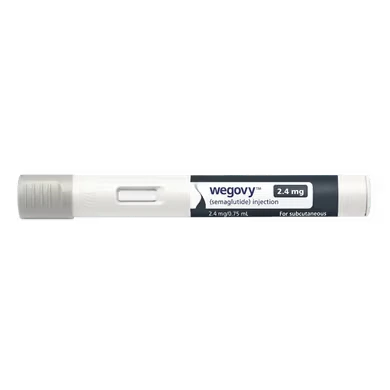
Wegovy is Novo Nordisk's semaglutide, approved for weight loss, and it is the approved alternative people compare Zepbound with most. Through NovoCare Pharmacy, new self-pay patients pay $199 for each of the first two months at 0.25 mg and 0.5 mg, then $349 a month for every pen dose up to 2.4 mg, and $399 for the 7.2 mg high dose.4
It is the cheaper approved injection over a year at the higher doses. It is also the less effective one. The two drugs were tested against each other in SURMOUNT-5, a 72-week trial of 751 adults with obesity: tirzepatide reduced weight by 20.2% and semaglutide by 13.7%.5 Whether that gap is worth the price difference is your decision; the numbers are not close.
Semaglutide is also sold compounded, by many of the same programs. The same FDA caveat applies.3
The Zepbound vs Wegovy guide goes through the two side by side.
No needles: the Wegovy pill and Foundayo
Two weight-loss pills are now approved, and both are priced below Zepbound at their starting doses.
The Wegovy pill is oral semaglutide. In Novo Nordisk's own words, "Wegovy is the first FDA-approved semaglutide pill for weight loss."7 NovoCare sells it to self-pay patients at $149 for each month of 1.5 mg, $199 for 4 mg and $299 for 9 mg and 25 mg.4
Foundayo is orforglipron, Lilly's own pill. Lilly says "Individuals opting for self-pay can access Foundayo starting at $149 per month for the lowest dose." In the ATTAIN-1 trial, people on the highest dose who stayed on treatment lost 12.4% of their body weight, against 0.9% on placebo.6 That is a smaller average loss than the injections, in a different trial, so treat the comparison as rough.
Programs on our board that sell an oral GLP-1, cheapest first:
More in the Foundayo vs Wegovy pill guide.
Mounjaro: the same drug on a diabetes label
Mounjaro is tirzepatide too, made by Lilly, in the same pens. Its label is for "glycemic control in adults and pediatric patients 10 years of age and older with type 2 diabetes mellitus".8 For someone with type 2 diabetes whose plan covers Mounjaro, that can be the cheapest route to tirzepatide there is. For weight loss without diabetes, plans that refuse Zepbound generally will not pay for Mounjaro either, and whether to prescribe it is your clinician's call. The Zepbound vs Mounjaro guide covers the difference.
All six side by side
| Alternative | Molecule | FDA-approved for weight loss | Form | What it costs |
|---|---|---|---|---|
| Compounded tirzepatide | tirzepatide | No, not FDA-approved | weekly injection | live on the board above |
| Zepbound, Lilly self-pay | tirzepatide | Yes | weekly injection | Lilly's prices: $299 to $699 by dose; $449 KwikPen with on-time refills |
| Wegovy, NovoCare | semaglutide | Yes | weekly injection | Novo's prices: $199 for two months for new patients, then $349 |
| Compounded semaglutide | semaglutide | No, not FDA-approved | weekly injection | live on the board above |
| Wegovy pill | semaglutide | Yes | daily tablet | Novo's prices: $149 to $299 by dose |
| Foundayo | orforglipron | Yes | daily tablet | Lilly's price: from $149 at the lowest dose |
Mounjaro is left out of the table because it is not approved for weight loss; it belongs in the conversation only for people with type 2 diabetes.
Which one fits
- You want the lowest monthly price and accept a compounded product: compounded tirzepatide keeps you on the molecule that won the head-to-head trial.
- You want an FDA-approved drug and the best trial result: stay on Zepbound and buy it from Lilly self-pay, refilling the KwikPen on time.
- You want an FDA-approved drug for less: Wegovy through NovoCare, accepting a smaller average loss.
- You do not want injections: the Wegovy pill or Foundayo, both priced lowest at their starting doses.
- You have type 2 diabetes and coverage: ask whether your plan covers Mounjaro before paying cash for anything.
Switching between any of these is a prescribing decision with its own dose plan; the switching guide quotes what the labels say.