PriceTracker GLP-1

The facts

Weight loss

Plan-dependent

Type 2 diabetes

Not verified

Prior auth

Plan sets it; criteria must be public

Typical cost

Plan-specific

The criteria, as published

5 of 9 criteria are stated in the FEHB (federal employees) documents we read. Tap a row for the exact wording. Where a cell says not published, the documents we read do not say, and the line under it is how to find out.

Formulary status
Each plan must cover at least one GLP-1 drug for weight loss; OPM does not name which
“OPM continues to require Carriers to provide a range of FDA-approved anti- obesity medications on their formulary, including at least one anti-obesity medication (AOM) from the GLP-1 class for weight loss and at least two (2) additional oral AOM options.”
opm.gov · 2026-03-31
BMI threshold
Not published in what we readAsk member services for the written prior authorization criteria for Zepbound.
Qualifying conditions
Not published in what we readAsk which conditions the Zepbound criteria accept alongside BMI.
Lifestyle program
From plan year 2027, intensive behavioral therapy before and during treatment
“Prior authorization and utilization management for any AOM must ensure the member has demonstrated and will continue participation in lifestyle interventions meeting the rigor of IBT as referenced in this Technical Guidance before initiating treatment and while on an anti-obesity medication.”
opm.gov · 2026-03-31
Step therapy
Not published in what we readAsk whether another drug has to be tried before Zepbound.
Quantity limit
Not published in what we readAsk what quantity limit applies to each fill.
Renewal
From plan year 2027, continued documented behavioral therapy while on the drug
“Continued participation and documentation of IBT should an AOM be prescribed.”
opm.gov · 2026-03-31
Plan can exclude it?
No: carriers may not exclude anti-obesity drugs through a benefit exclusion or carve out
“Carriers are not allowed to exclude anti-obesity medications from coverage based on a benefit exclusion or a carve out. … coverage of FDA approved anti-obesity medications on their formulary to meet member needs and must make available their exception process to members.”
opm.gov · 2025-04-25
2026 change
OPM dropped its requirement that 2026 plans update their obesity benefit; stricter behavioral therapy rules apply from 2027
“Finally, in accordance with changing priorities, we no longer require Plan Year 2026 proposals to clarify or update the obesity management benefit to include the elements listed in the bullets starting on the bottom of page 10 and continuing through the bottom of page 12 of Carrier Letter 2025-01.”
opm.gov · 2025-01-31

Who actually decides this

Not the logo on your card, most of the time. Three parties sit between you and the answer, and knowing which one is saying no tells you who to ask.

  1. 1

    The pharmacy benefit manager

    No single PBM to name here, which is itself the finding. Different plans under this name use different benefit managers, so one national statement about the formulary would be wrong.

  2. 2

    Your employer, if the plan comes through work

    Weight-loss drugs are usually a category an employer buys or declines, not something the insurer includes by default. That is why two people holding identical cards get opposite answers, and why the useful question for member services is whether your plan includes the weight-loss medication benefit at all, before anything about criteria.

How prior authorization works here

Six steps. Specifics come from the criteria above; where FEHB (federal employees) does not publish one, the step says what to ask for.

  1. 1

    Confirm the benefit exists

    Before any paperwork, ask whether your plan includes the weight-loss drug benefit. On whether a plan can leave it out, the documents say: No: carriers may not exclude anti-obesity drugs through a benefit exclusion or carve out.

  2. 2

    Get the criteria in writing

    Ask for the written prior authorization criteria for Zepbound, so your prescriber answers the plan's questions rather than guessing at them.

  3. 3

    Your prescriber documents the clinical picture

    Current and baseline BMI, with dates. Any weight-related conditions, with diagnosis codes. Lifestyle program: From plan year 2027, intensive behavioral therapy before and during treatment.

  4. 4

    Answer step therapy, if there is any

    Ask whether another drug must come first. If you have already tried one, the request should list it with dates and the reason it stopped.

  5. 5

    Submit, then track it

    Your prescriber sends the plan’s form with the notes. Our Zepbound prior authorization letter template covers the cover letter. Write down the date and the reference number, and ask how you will hear back.

  6. 6

    Plan for the renewal

    What the documents say: From plan year 2027, continued documented behavioral therapy while on the drug.

Get your real answer

Open your plan's 2026 brochure and drug formulary (linked from OPM's FEHB plan comparison tool) and search for Zepbound. Then call the pharmacy number on your member card and ask whether it is covered for weight loss, what the prior authorization criteria are, and whether you must join the plan's weight management or behavioral therapy program.

Coverage is plan-specific: this page reports what FEHB (federal employees) publishes, not a promise about your plan. Not medical or insurance advice.

What it actually costs you

If your plan covers it

The manufacturer savings card is the lever, and it is worth being precise about what it does: it takes up to $100 a month off your copay. It does not set your price to $25. You reach the advertised $25 only if your copay is roughly $125 or less, so on a $300 copay the card leaves you paying $200.

The Zepbound card, and what the cap does to your number →

If you are on Medicare, Medicaid or TRICARE For Life

The card is closed to you. Every manufacturer savings card in this category excludes government beneficiaries, and that is deliberate rather than an oversight you can argue around. The Medicare GLP-1 Bridge, at $50 a month, is the route worth asking about by name.

What Medicare covers, and what the Bridge does not count toward →

If the answer is no, or you have no plan

A copay card needs a copay to work on, so with no coverage it does nothing. That leaves the manufacturer’s own cash prices, the discount cards, and the compounded market, which is cheaper again and not FDA-approved. We priced all of them against each other.

Every route without insurance, priced →Whether GoodRx helps here →

All four manufacturers cap their cards differently. The caps compared side by side.

If FEHB (federal employees) says no

Read the denial letter for the reason first. Three different things get called a denial, and only two of them are worth appealing.

The plan excludes the category

Not a decision about you, so chart notes will not move it. The routes are a formulary exception, a different plan at open enrollment, or paying cash.

Step therapy

A sequence, not a refusal. Documented failure, intolerance or a reason you cannot take the first drug is the way through.

Criteria not met

The most winnable. It usually fails on missing paperwork, such as a BMI without a date or a lifestyle program with no records.

Which kind of no you got, and what each one needs →The Zepbound letter template for your prescriber →

Checklist · for the call

Questions to ask FEHB (federal employees)

Call the member services number on your card. Ask these in order, and write each answer down.

  1. Is Zepbound on my plan's formulary for weight management, and at what tier?
  2. Does my plan include the weight-loss medication benefit, or is that category excluded?
  3. Does Zepbound need prior authorization? Can you send me the written criteria?
  4. What BMI, and which conditions, does the policy require?
  5. Do I have to show a diet, exercise or behavioral program first? For how long?
  6. Do I have to try another drug first (step therapy)?
  7. Is there a quantity limit on each fill?
  8. How long does an approval last, and what does the renewal need?
  9. What will I pay each month at the pharmacy once it is approved?
  10. Which pharmacy do I have to use: retail, mail order or specialty?
  11. If it is denied, how do I appeal, and what is the deadline?

Write down: date of call · name of the person · reference number · what they said

The receipts

Every claim on this page traces to FEHB (federal employees)’s own published material or a primary document, quoted verbatim, with the date we read it.

1
“Carriers are not allowed to exclude anti-obesity medications from coverage based on a benefit exclusion or a carve out. … coverage of FDA approved anti-obesity medications on their formulary to meet member needs and must make available their exception process to members.”

https://www.opm.gov/healthcare-insurance/carriers/fehb/2025/2025-07.pdf · 2025-04-25

2
“Carriers must cover at least one anti-obesity drug from the glucagon-like peptide-1 (GLP-1) class for weight loss … In cases where utilization management edits are applied, the process and evidence-based criteria for coverage must be transparent, publicly accessible and follow OPM required turnaround timelines.”

https://www.opm.gov/healthcare-insurance/carriers/fehb/2025/2025-07.pdf · 2025-04-25

3
“OPM continues to require Carriers to provide a range of FDA-approved anti- obesity medications on their formulary, including at least one anti-obesity medication (AOM) from the GLP-1 class for weight loss and at least two (2) additional oral AOM options.”

https://www.opm.gov/healthcare-insurance/carriers/fehb/2026/2026-07.pdf · 2026-03-31

4
“Prior authorization and utilization management for any AOM must ensure the member has demonstrated and will continue participation in lifestyle interventions meeting the rigor of IBT as referenced in this Technical Guidance before initiating treatment and while on an anti-obesity medication.”

https://www.opm.gov/healthcare-insurance/carriers/fehb/2026/2026-07.pdf · 2026-03-31

5
“For Plan Year 2027, OPM clarifies that the obesity management benefit must include the following benefit and Carrier requirements prior to and while covering AOM. … AOM must only be covered when used concurrently with IBT as described above.”

https://www.opm.gov/healthcare-insurance/carriers/fehb/2026/2026-07.pdf · 2026-03-31

6
“Continued participation and documentation of IBT should an AOM be prescribed.”

https://www.opm.gov/healthcare-insurance/carriers/fehb/2026/2026-07.pdf · 2026-03-31

7
“Finally, in accordance with changing priorities, we no longer require Plan Year 2026 proposals to clarify or update the obesity management benefit to include the elements listed in the bullets starting on the bottom of page 10 and continuing through the bottom of page 12 of Carrier Letter 2025-01.”

https://www.opm.gov/healthcare-insurance/carriers/fehb/2025/2025-1a.pdf · 2025-01-31

8
“Carriers are reminded that all OPM pharmacy benefit requirements such as coverage of USPSTF Grade A or B recommendations at zero cost share, and coverage of at least one GLP-1 for the treatment of obesity, apply to all FEHB plan options, including PDP and MA-PD EGWPs.”

https://www.opm.gov/healthcare-insurance/carriers/fehb/2025/2025-05.pdf · 2025-03-20

Common questions

Does FEHB (federal employees) cover Zepbound for weight loss?

It depends on your specific plan rather than on the FEHB (federal employees) name. Weight-loss drugs are usually a category your employer buys or declines, so two people holding FEHB (federal employees) cards can get opposite answers.

Do I need prior authorization for Zepbound with FEHB (federal employees)?

Plan sets it; criteria must be public. Your prescriber submits it with the documentation the policy asks for, which for weight-management requests usually means a BMI threshold and a period of documented lifestyle or behavioural change.

Can I use a Zepbound coupon with FEHB (federal employees)?

If you have commercial insurance, the Zepbound savings card takes up to $100 a month off your copay rather than setting your price to $25, so you reach the advertised figure only if your copay is roughly $125 or less. If you are on Medicare, Medicaid or TRICARE For Life, every manufacturer card in this category excludes government beneficiaries and the card is closed to you.

What if FEHB (federal employees) will not cover Zepbound?

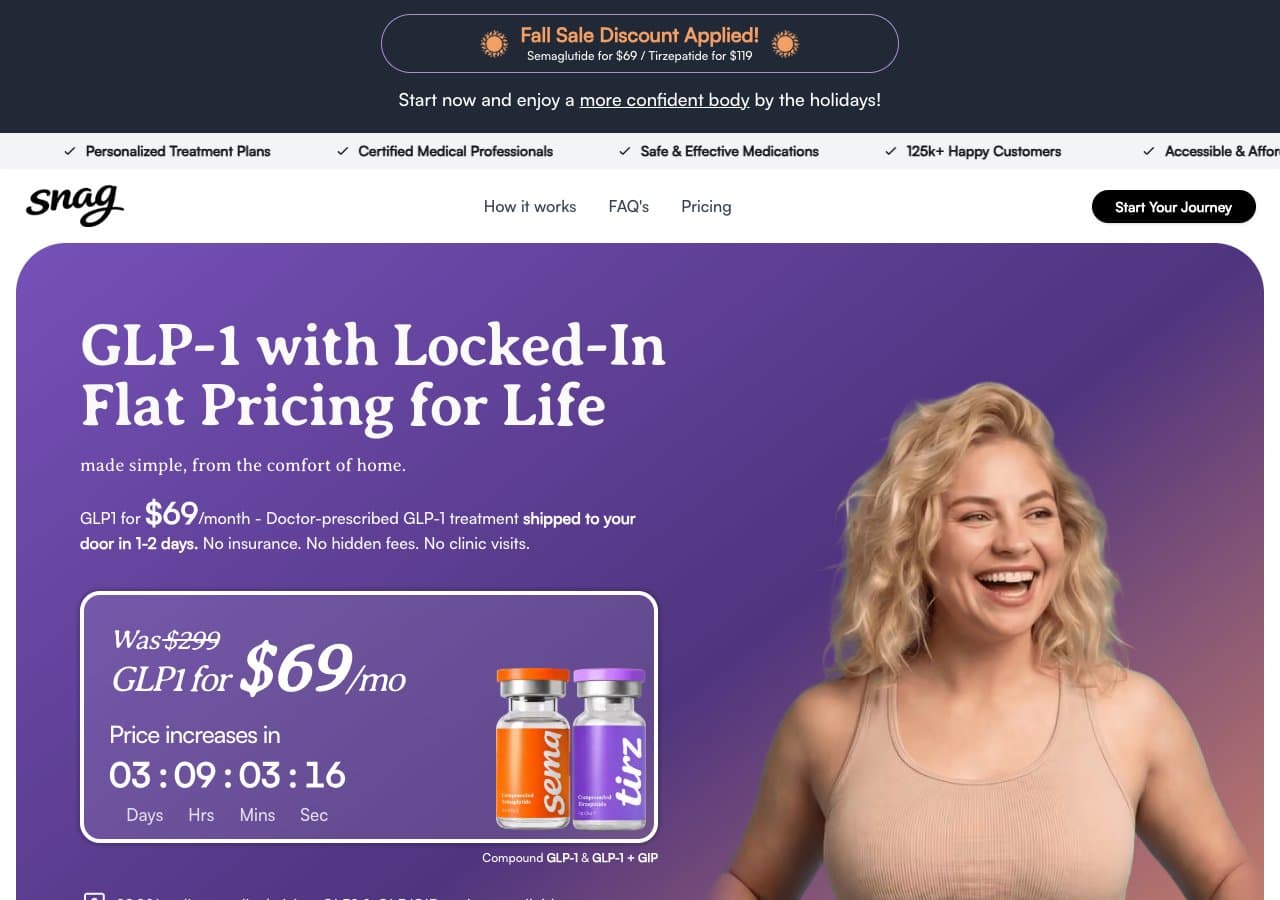
Cash-pay is the fallback and it is cheaper than most people expect. The cheapest verified tirzepatide program we track is $69 a month at SnagRx, with no insurance involved. Compounded programs are not FDA-approved, which is the trade-off to weigh against the price.

Coverage changes. We watch it.

Formularies move every year, and so do prices. Check your own insurer, or get the weekly price email.

Check your insurer