GLP-1 TV · Clinician
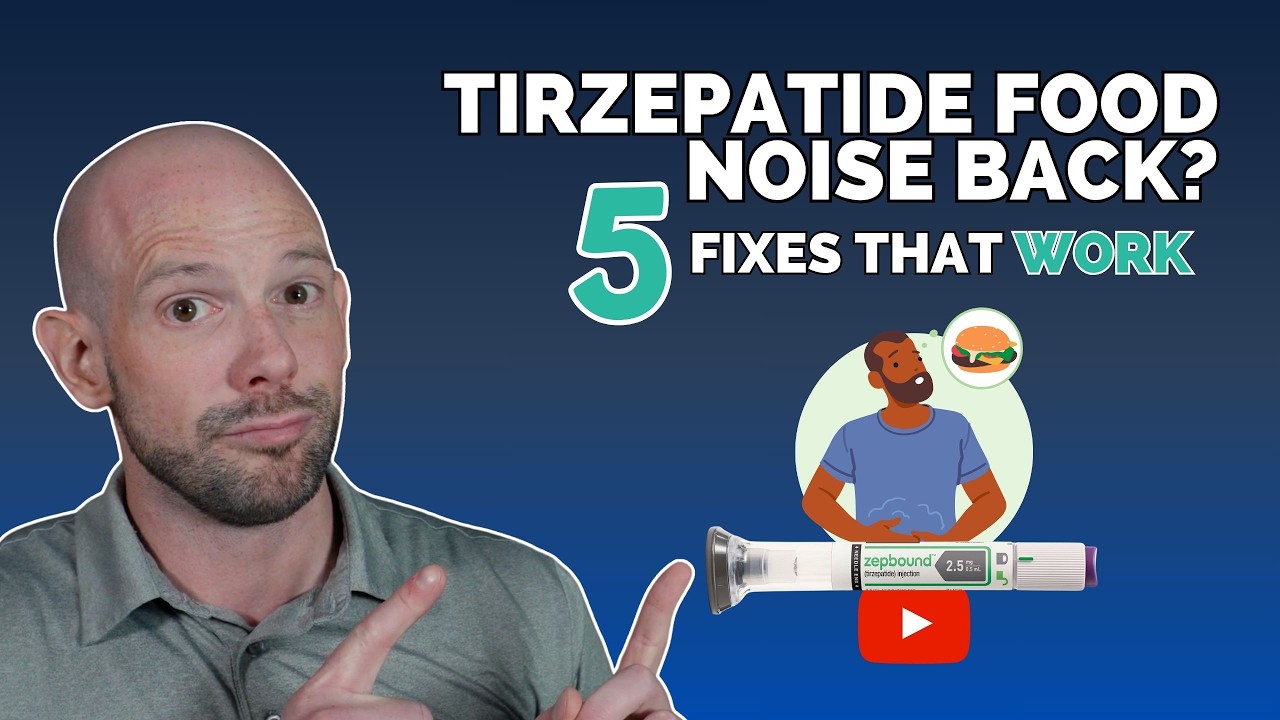
Tirzepatide Food Noise Fix: 5 Proven Ways to Beat It
Today’s cheapest GLP-1$39/mo at Wellmedr, sale price.Compare all GLP-1 prices Price read 22 Nov 2026 from the seller’s own page, ranked by price alone. That price is a compounded drug, and compounded drugs are not FDA-approved. Not from the video’s creator.Our summary
In this video, the speaker, who presents as an obesity expert, tells viewers that returning food noise while on tirzepatide (Zepbound) does not mean the medication has stopped working. He describes it as adaptation, saying the brain and body settle into a new baseline after the medication first turns the volume down. He explains that tirzepatide acts on GLP-1 and GIP, which quiet stomach hunger and the brain's food reward system.
Published by Dr. Dan | Obesity Expert on YouTube
As published by the channel. Not medical advice, and not an endorsement.
What else the video covers
He says the usual reaction to returning food noise is panic, restriction, bingeing and then shame, and he asks viewers to respond differently: pause, ask whether the hunger is stomach hunger or stress hunger, name what is going on (tired, lonely, bored, anxious), and then meet the real need. According to him, practicing this can quiet the voice again without raising the medication dose.
He also lists four basics to check when food noise increases: at least seven hours of sleep, enough fluids, enough protein, and stress levels, since he says cortisol can drown out the effect of GLP-1 medication. He adds that some food noise is normal and that the goal is balance rather than total silence. If urges are overwhelming for two or more weeks, especially with some weight regain, he suggests talking to a provider about raising the dose. The video also promotes his one-on-one consultations and a community hub.
Our summary of what is said, in our words. Doses, results and prices are the speaker’s, not advice.
Takeaways
The main points, in the order they come up. Tap a time to play from there.
- 0:00 The speaker says returning food noise on tirzepatide is normal and does not mean the medication has stopped working.
- 1:04 He explains that tirzepatide acts on GLP-1 and GIP, and that the brain adapts to a new baseline over time.
- 3:01 He recommends pausing, asking whether the hunger is stomach or stress hunger, naming the feeling, and meeting the actual need.
- 4:43 He says to check sleep (at least seven hours), hydration, protein intake and stress before assuming the medication is failing.
- 5:45 He says some food noise is healthy and that balance, not total silence, is the goal.
- 6:15 He suggests contacting a provider about a higher dose if overwhelming urges last two or more weeks, especially with weight regain.
Key moments
Tap one to play from there.
What the video says
As stated in the video, not checked by us. Doses and results are the speaker’s, not advice.
- Medication
- tirzepatide
- Side effects mentioned
- fatigue
Questions this video answers
Why is my food noise coming back on tirzepatide?
The speaker says it is usually adaptation, where the brain and body find a new baseline, rather than the medication failing. He adds that stress, hormones and poor sleep can make appetite and food noise louder.
What should I check when food noise increases on Zepbound?
He lists four basics: getting at least seven hours of sleep, drinking enough fluids, eating enough protein, and managing stress. He says low sleep, dehydration, low protein and high cortisol can each drive up food noise.
When should I ask my provider to raise my tirzepatide dose for food noise?
According to the speaker, it is time to talk to a provider if the food noise or urges are overwhelming, have lasted two or more weeks, and there may be some weight regain. He frames dose changes as a conversation with the provider.
Is it normal to have some food noise on a GLP-1 medication?
He says yes, some background food noise is healthy and normal. He states that total silence is not the goal and that balance is.
Videos on the same question
The closest videos in the library by what is said in them, not by title.
 The Science Behind Food Noise: What Tirzepatide Does to Your BrainThe speaker, who runs the channel with his wife another speaker, explains what he calls food noise: constant mental chatter about what to eat that does not depend on being hungry or full.
- Already on a GLP-1? What your next month costs at every programToday’s lowest is $39/mo. Every program ranked by price alone. Compounded drugs are not FDA-approved.
 They Scanned Zepbound Users Brains… and Found Food Noise?According to the video, food noise is the constant low-level mental chatter about food that many people living with obesity experience, even when they are not hungry.
 Tirzepatide: You Don't Know What It's Actually Doing to Your Body | A Doctor ExplainsIn this video, the speaker, a physician who works in medical weight management and says he has lost around 70 pounds himself, argues that tirzepatide does more than reduce appetite.
 GLP-1 And Food Noise BACK? Obesity DoctorIn this video, the speaker addresses a common question from people taking GLP-1 medications: does food noise come back?
 What Is Food Noise — And What Does Ozempic Actually Do to It? (Doctor Explains)In this video, the speaker explains "food noise," a phrase she says came from patient communities to describe persistent, intrusive thoughts about food when the body does not need to eat.
Read next
Our guides closest to what this video covers, with prices checked weekly.
- What is food noise, and do GLP-1 medicines quiet it? What the studies show
Food noise is persistent, unwanted thinking about food: what to eat, when, and how much, intrusive enough to feel like rumination. In a 2026 national survey, 51% of US adults said they experience it at least occasionally and 18% frequently. People taking semaglutide report it drops sharply: in one survey, the median food noise score fell from 13 to 6 out of 20. That evidence is surveys and interviews; no randomised trial has measured food noise as its outcome yet.
- What is Zepbound? Tirzepatide explained: what it treats, how it works, and what it costs
Zepbound is Eli Lilly's brand of tirzepatide, a once-weekly injection that acts on two hormone receptors, GIP and GLP-1. The FDA label approves it, with diet and exercise, for weight reduction in adults with obesity or overweight plus a weight-related condition, and for moderate to severe obstructive sleep apnea in adults with obesity. In the SURMOUNT-5 trial it produced 20.2% average weight loss at 72 weeks against 13.7% for semaglutide. Lilly sells it self-pay from $299 a month.
- GLP-1s for binge eating: what semaglutide, liraglutide and tirzepatide trials show
No GLP-1 is FDA approved for binge eating disorder; the only approved drug is lisdexamfetamine (Vyvanse). A 2026 meta-analysis of 25 randomized trials reports moderate drops in binge eating on GLP-1s, larger in people diagnosed with the disorder, but rates every trial at high risk or some concerns of bias. The one placebo-controlled liraglutide trial in diagnosed BED showed no significant difference. A tirzepatide versus Vyvanse trial is recruiting.
Next steps
Zepbound prices
Find more like it
Dose changeFood, protein and eatingFood noise and cravingsStopping and maintenanceHow it worksFatigue
Up next
More from this collection








Watched it? See what it costs.
Every GLP-1 program we track, ranked by what actually leaves your account.