
No GLP-1 medicine is approved to treat binge eating disorder. The only FDA-approved drug for it is lisdexamfetamine (Vyvanse), and the evidence for semaglutide, liraglutide and tirzepatide is promising but early: a July 2026 meta-analysis of 25 randomized trials reports moderate reductions in binge eating, while rating every one of those trials at "high risk or some concerns of bias".63 The single placebo-controlled liraglutide trial in people diagnosed with the disorder saw binges drop in both groups with no significant difference between them.5 The first large trial of tirzepatide for it, head to head with Vyvanse, is still recruiting.9
So the honest answer is: GLP-1s often quiet binge eating, the reviews agree on that direction, but nobody has yet shown in a well-run trial that they treat the disorder, and specialists flag real risks for people with an eating disorder history.8 What follows is what each study actually measured.
What binge eating disorder is
The National Institute of Mental Health describes it plainly: "People with binge-eating disorder regularly lose control of their eating and eat unusually large amounts of food," and they "are often overweight or obese."1 Unlike bulimia, the binges "are not followed by purging, excessive exercise or fasting."2 NIMH lists signs including eating very large amounts "within two hours", "eating even when full or not hungry", "eating alone or in secret to avoid embarrassment" and "feeling distressed, ashamed, or guilty about eating".1
In the US survey NIMH cites, 1.2% of adults had it in the past year (1.6% of women, 0.8% of men) and 2.8% at some point in their lives.2 A 2023 study calls it "the most common eating disorder".4
Is any GLP-1 approved for binge eating?
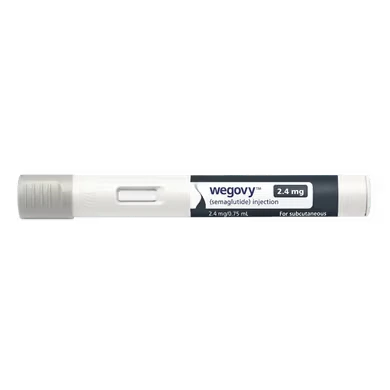
No. The labels approve these drugs for type 2 diabetes or weight reduction, some with heart outcomes too. Wegovy, for example, is indicated "to reduce excess body weight and maintain weight reduction long term" alongside diet and activity; binge eating is not on it.12 A prescriber can still prescribe a GLP-1 to someone who binge eats if that person qualifies for the weight or diabetes indication, but the binge eating itself is not what the drug is approved to treat.
The approved option is lisdexamfetamine. Its label covers "moderate to severe binge eating disorder (BED) in adults" and says plainly that "VYVANSE is not indicated or recommended for weight loss."3 It is a stimulant, and the 2023 semaglutide authors point out it "has known abuse-potential".4 NIMH's list of treatment plans for eating disorders puts "individual, group, or family psychotherapy" first, with medication "to treat the symptoms of some eating disorders, including bulimia nervosa and binge-eating disorder".1
What the trials show, drug by drug
| Drug | Best evidence so far | What it showed |
|---|---|---|
| Liraglutide (Saxenda, Victoza) | 17-week double-blind randomized trial, 27 adults with BED and a BMI of 27 or more5 | Weekly binges fell by 4.0 on liraglutide and 2.5 on placebo, not a significant difference (p = 0.37); remission 44% vs 36%; weight loss 5.2% vs 0.9%5 |
| Semaglutide (Ozempic, Wegovy) | 2023 open-label retrospective cohort4 | Patients on semaglutide alone "exhibited greater reductions in BES scores" than those on lisdexamfetamine or topiramate; the authors say its effects "warrant further investigation"4 |
| Tirzepatide (Mounjaro, Zepbound) | Randomized trial vs placebo and Vyvanse, 105 adults, recruiting9 | No results yet; primary completion listed for 1 December 20279 |
| All GLP-1s pooled | 2026 meta-analysis, 25 randomized trials, 8,069 people6 | "Moderate reductions in binge eating", larger in trials of people with BED; every trial at high risk or some concerns of bias6 |
| Weight loss drugs pooled | 2026 meta-analysis, 8 randomized trials, 870 people7 | Liraglutide cut binge episodes "in most individual studies but did not reach statistical significance in the meta-analysis"7 |
Liraglutide: the only placebo-controlled trial in diagnosed BED
The University of Pennsylvania pilot is the cleanest test so far, and it is small. Both groups improved a lot, and the gap between them did not reach significance. The authors also report "a pharmacy medication dispensing error was a significant limitation of this study."5 A ClinicalTrials.gov record from the same investigator, for a "17-week, single-center, double-blind" trial of liraglutide 3.0 mg against placebo, is listed as terminated because it "was not meeting recruitment goals."11 Liraglutide did clearly beat placebo on weight.5
Semaglutide: real-world data, no randomized trial
The semaglutide paper most often quoted online compared people at one obesity clinic who happened to be prescribed semaglutide, lisdexamfetamine or topiramate, or a mix. Those on semaglutide alone had the biggest drop on the Binge Eating Scale.4 That design cannot rule out that different people were given different drugs for different reasons, and the lead author discloses work on Novo Nordisk's speaker bureau.4 It is a reason to run a trial, which is what its authors asked for.
Tirzepatide: the trial that may settle it
Johns Hopkins is running the first randomized trial of tirzepatide in binge eating disorder, comparing it "against placebo and lisdexamfetamine dimesylate," with every participant also getting "guided self-help cognitive behavioral therapy."9 It aims to enrol 105 adults and lists 1 December 2027 for its primary results.9 In Norway, a separate observational study is following people with obesity and BED in group therapy with and without a GLP-1, and its secondary aim is to check for "alternative harmful coping mechanisms."10
The concerns specialists raise
The 2026 meta-analysis did not only see binge eating fall. It also reported "higher cognitive or dietary restraint" on GLP-1s, and its authors write that "whether restraint is pathological is unclear."6 In plain terms: eating less on purpose is the goal for weight loss, but for someone whose disorder swings between restriction and bingeing, more restraint is not automatically good.
A 2026 clinical review in Psychiatric Clinics of North America puts both sides in two sentences: GLP-1s "may significantly reduce weight and binge-eating symptoms among patients with binge-eating disorder," but "experts express concern about the potential for GLP-1 medications to cause unintended harm or be misused among some individuals with eating disorders."8 Our food noise guide covers the same tension from the appetite side.
Wegovy's prescribing information carried a warning on suicidal behavior and ideation; its Recent Major Changes list now shows that section as removed in February 2026.12 Mood still matters: NIMH notes medication is also used "to reduce symptoms of co-occurring anxiety or depression" in eating disorders,1 so tell the prescriber about any of them.
If you binge eat and want a GLP-1
- Say it out loud at intake. A telehealth form that never asks about eating disorders is skipping what the 2026 review's clinical guidance is built around: "careful assessment" of people with eating disorders considering a GLP-1.8
- Know what you are being treated for. If you qualify, the prescription is for weight or diabetes. Any change in bingeing is a hoped-for effect, not the approved use.12
- Ask about therapy alongside it. Both running trials pair the drug with cognitive behavioral therapy.910
- Watch for restriction. If not eating starts to feel like a rule rather than relief, tell the prescriber; that is the restraint signal the meta-analysis could not call harmless.6
For how fast appetite effects usually start, see how long a GLP-1 takes to work, and for what happens to appetite and weight when the drug stops, stopping a GLP-1. To compare the molecules, see tirzepatide vs semaglutide.
What it costs
Binge eating is not an approved use, so it does not open a coverage route of its own. On our board today the cheapest cash GLP-1 program is $69 a month, compounded semaglutide starts at $69, compounded tirzepatide at $85, and the middle of the board is $158. A licensed clinician decides whether you qualify, and compounded versions are not FDA approved.
For one molecule, see cheapest semaglutide and cheapest tirzepatide, both checked against the sellers' own pages.