


PriceTracker GLP-1

What is food noise, and do GLP-1 medicines quiet it? What the studies show

Food noise is persistent, unwanted thinking about food: what to eat, when, and how much, intrusive enough to feel like rumination. In a 2026 national survey, 51% of US adults said they experience it at least occasionally and 18% frequently. People taking semaglutide report it drops sharply: in one survey, the median food noise score fell from 13 to 6 out of 20. That evidence is surveys and interviews; no randomised trial has measured food noise as its outcome yet.

11 min read · published October 2026

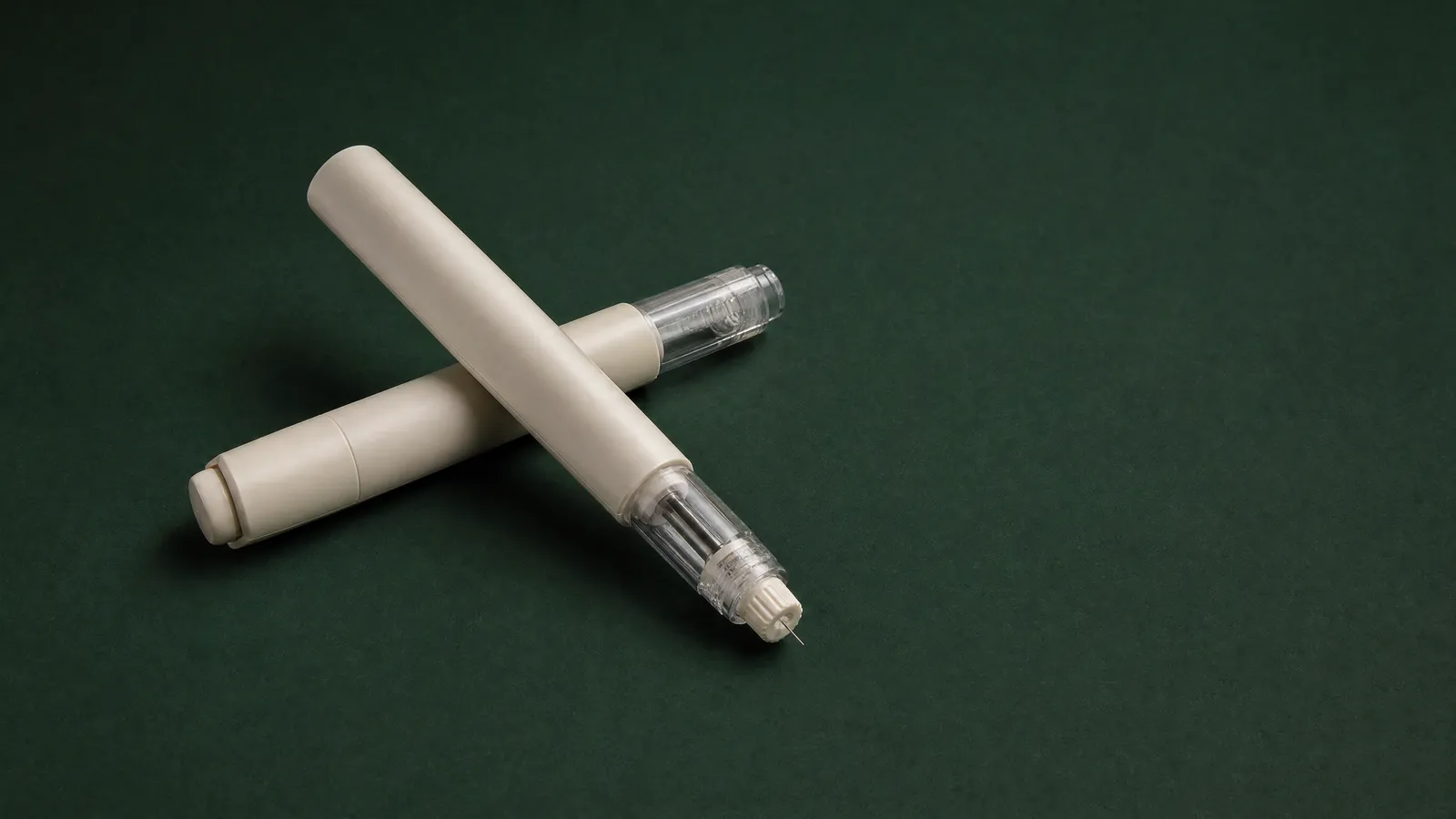
Studio still life: two unbranded pen injectors crossed at a shallow angle

Key takeaways

  • 1Food noise is a researchers' term now, not just a TikTok one: “persistent thoughts about food that are perceived by the individual as being unwanted and/or dysphoric”.
  • 2It is common: in a nationally representative 2026 survey of 1,000 US adults, 50.89% reported it at least occasionally and 17.98% frequently.
  • 3On semaglutide, 550 users in a Novo Nordisk-funded survey recalled a median score of 13 out of 20 before and reported 6 after. It is recall, not a trial, but a 2017 placebo-controlled study also found fewer cravings.
  • 4Both weight-loss labels say the medicine decreases calorie intake and the effect is “likely mediated by affecting appetite”. No study we found tracks food noise after stopping; weight regain after stopping is well measured.
  • 5Trying a GLP-1 for cash starts at $69 a month on our board today, ranked by price below.

Food noise is the constant, unwanted chatter about food: what to eat next, whether you should, how much, and when, loud enough that it crowds out other thinking. Researchers now define it as "persistent thoughts about food that are perceived by the individual as being unwanted and/or dysphoric", set apart from ordinary thoughts about lunch "by its intensity and intrusiveness, resembling rumination."3 GLP-1 medicines such as semaglutide (Ozempic, Wegovy) and tirzepatide (Mounjaro, Zepbound) are the reason the phrase spread, because so many people who take them say it went quiet.

The short verdict: people on these medicines consistently report much less food noise, and the one controlled trial that measured something close to it (cravings) agrees. What does not exist yet is a randomised trial with food noise itself as the outcome, and nobody has followed what happens to it after people stop. This page sets out what is measured, by whom, and what it costs to try.

What food noise is, in the researchers' words

The term came from patients before it came from science. By 2025 an Indiana University group had written a formal definition, and described the experience as "constant preoccupation with food-related decisions-such as which foods to eat, caloric intake, macronutrient balance, and meal timing-which can become intrusive and unpleasant."3

A second definition, built on how strongly people react to food cues, describes it as "heightened and/or persistent manifestations of food cue reactivity, often leading to food-related intrusive thoughts and maladaptive eating behaviors."6 Both point the same way: food noise is not hunger. Hunger is a body signal that a meal answers. Food noise is thinking that carries on after the meal.

Ordinary hungerFood noise
What it isA body signal that it is time to eatPersistent, unwanted thoughts about food3
Does eating stop it?Usually, for a whileOften not: it is about decisions, rules and cues, not an empty stomach
How researchers describe itAppetite, satietyIntensity and intrusiveness "resembling rumination"3
How it is measuredHunger rating scalesThe five-item Food Noise Questionnaire, scored 0 to 2024

How common it is

The first nationally representative estimate was published in October 2026. In a survey of 1,000 US adults taken in May 2026, "50.89% of respondents reported experiencing food noise at least occasionally and 17.98% frequently."1 Frequent food noise was more common in women (22.70% against 12.68% in men) and in current and former GLP-1 users (25.76% and 26.78% against 16.30% of non-users). The strongest predictor was loss of control over eating, with an odds ratio of 5.95.1

Read the GLP-1 figure with care: it is a snapshot, so it cannot say whether the medicine raised or lowered anything. People with the most food noise may simply be the ones who seek out a GLP-1.

How food noise is measured

Until 2025 there was no validated way to score it: the authors of the first tool wrote that "no validated questionnaires exist to measure it."2 Their Food Noise Questionnaire (FNQ) was tested on 400 people, and "the five FNQ items loaded onto a single factor", meaning the five questions measure one thing.2 It is scored out of 20. The same paper adds that "further research is needed to evaluate its clinical utility", and four of its authors worked for or held shares in WW International.2

The Indiana group built a separate tool, the RAID-FN Inventory, alongside their definition.3 Two instruments in two years is a sign of how new the field is: most of the numbers below come from the FNQ.

What GLP-1s do to food noise: the evidence, strongest first

StudyDesignWhoWhat it foundLimits
Blundell 20175Randomised, double-blind, placebo-controlled crossover, 12 weeks30 adults with obesity, semaglutide up to 1.0 mg"less hunger and food cravings, better control of eating"; 24% less energy eaten at test mealsSmall, short; measured cravings, not food noise by name; Novo Nordisk co-authors
INFORM survey 20264One-off survey, recalled "before" score550 US adults on injectable semaglutide, 81% for at least 4 monthsMedian FNQ 13 of 20 before, 6 after; agreement with food noise statements fell from 47-63% to 15-20%Memory of "before", self-selected panel, no comparison group; funded by Novo Nordisk
Stanford interviews 20267Qualitative, 30 interviewsCurrent and former GLP-1 users in 15 statesFirst theme: "reduction in food noise, psychological hunger, or appetite"Describes experience, does not measure size
TikTok content study 20266Analysis of the top 100 #FoodNoise videosMostly patient testimonies (70.71%)Half the videos (49.49%) mentioned medicines, mainly GLP-1sShows what people say online, not what the drug does

Put together: the direction is consistent and the size reported by users is large, a drop of about half on the questionnaire. The quality is the weak point. The biggest food noise number comes from a manufacturer-funded survey that asked people to remember how they felt before, and its own authors write that "further prospective, longitudinal research is warranted."4 The only randomised data are on cravings, from 30 people over 12 weeks.5

Why it happens: what the labels say

The prescribing information explains the appetite side, not food noise as such. Wegovy's label: "GLP-1 is a physiological regulator of appetite and caloric intake, and the GLP-1 receptor is present in several areas of the brain involved in appetite regulation", and "Semaglutide decreases calorie intake. The effects are likely mediated by affecting appetite."9

Zepbound's label says the same about GLP-1 and adds the second hormone tirzepatide copies: "Nonclinical studies suggest the addition of GIP may further contribute to the regulation of food intake. Both GIP receptors and GLP-1 receptors are found in areas of the brain involved in appetite regulation." It also states: "Tirzepatide decreases calorie intake. The effects are likely mediated by affecting appetite."10

We found no published study scoring food noise on tirzepatide specifically. The labels describe the same appetite mechanism for both, so the patient reports are not surprising, but a head-to-head on food noise does not exist. Our tirzepatide vs semaglutide guide covers the weight-loss trials that do compare them.

What happens to food noise when you stop

No study we found has followed food noise after people stop a GLP-1. What is measured is weight. In the STEP 1 extension, people lost 17.3% of their weight on semaglutide over 68 weeks, and "One year after withdrawal of once-weekly subcutaneous semaglutide 2.4 mg and lifestyle intervention, participants regained two-thirds of their prior weight loss".12

The Stanford participants framed the medicine as "a facilitator rather than a replacement for lifestyle change", and stressed "the need for behavioral interventions alongside pharmacotherapy to sustain treatment benefits."7 Our guide to stopping a GLP-1 and weight regain covers the stopping trials in full. The practical point for food noise: plan the habits you want to keep while it is quiet, and talk to your prescriber before you stop.

When quieter is not better

Food noise overlaps with eating disorders, and that cuts both ways. An eating disorders journal spotlight in 2026 wrote that GLP-1s "may hold therapeutic promise for some individuals with binge eating disorder or loss-of-control eating, but the same mechanisms that reduce appetite and food preoccupation may also reinforce restriction, avoidance of regular eating, compulsive weight control, and relapse in vulnerable individuals." Its first recommendation is "routine eating disorder screening before and during GLP-1 RA treatment".8

If you have had an eating disorder, tell the prescriber before you start, and tell them if not wanting to eat starts to feel like a rule rather than relief. A program that never asks about it is skipping a step the specialists now call routine.

What it costs to try

None of these medicines is approved to treat food noise; they are prescribed for weight or blood sugar, and a clinician decides whether you qualify. If you do, the cheapest cash route on our board today is $69 a month for compounded semaglutide, with compounded tirzepatide from $85 and the middle program at $158. The FDA notes that "compounded drugs are not FDA approved"11; our telehealth programs guide covers what the monthly price includes and the red flags to check.

For a single medicine, the ranked lists are at cheapest semaglutide and cheapest tirzepatide, both checked against the sellers' own pages.

Sources12
  1. Hayashi D, Masterson TD. Prevalence and Correlates of Perceived Food Noise Among U.S. Adults in a Nationally Representative Sample. Obes Sci Pract 2026 (Verasight survey, May 2026, N = 1000). PMID 42801078 read October 2026“50.89% of respondents reported experiencing food noise at least occasionally and 17.98% frequently. Frequent endorsement was higher among female-identifying respondents (22.70% vs. 12.68% in males, p < 0.001) ... and current and former GLP-1 users (25.76% and 26.78% vs. 16.30% among non-users, p = 0.009). ... In multivariable analyses, loss of control over eating (OR = 5.95), current GLP-1 use (OR = 1.60), and female sex (OR = 1.47) were the strongest independent predictors.” ↩
  2. Diktas HE et al. Development and validation of the Food Noise Questionnaire. Obesity 2025 (Pennington Biomedical; four authors are WW International staff or shareholders). PMID 39828656 read October 2026“Food noise has received attention in the media, although no validated questionnaires exist to measure it. This study developed and tested the reliability and validity of the Food Noise Questionnaire (FNQ). ... Participants (N = 400) ... The FNQ had excellent internal consistency reliability ... Factor analyses found that the five FNQ items loaded onto a single factor ... The FNQ provides a psychometrically reliable and valid measure of food noise, although further research is needed to evaluate its clinical utility.” ↩
  3. Dhurandhar EJ et al. Food noise: definition, measurement, and future research directions. Nutr Diabetes 2025. PMID 40628707 read October 2026“Anecdotal evidence from patients and clinical observations suggests that food noise involves constant preoccupation with food-related decisions-such as which foods to eat, caloric intake, macronutrient balance, and meal timing-which can become intrusive and unpleasant. ... The formal definition of food noise is persistent thoughts about food that are perceived by the individual as being unwanted and/or dysphoric and may cause harm to the individual, including social, mental, or physical problems. Food noise is distinguished from routine food-related thoughts by its intensity and intrusiveness, resembling rumination.” ↩
  4. Arnaut T et al. Retrospective Assessment of Food Noise Changes After Initiation of Injectable Semaglutide for Weight Management in the USA: The INFORM Survey. Adv Ther 2026 (funded by Novo Nordisk; three authors are Novo Nordisk employees). PMID 42217114 read October 2026“In total, 550 people participated in the survey. Respondents were predominantly women (86%) and white (79%), with a mean age of 53 years ... had used semaglutide for at least 4 months (81%). Based on recollection of food noise before initiating semaglutide, the median FNQ score was 13 [interquartile range (IQR) 10-16] out of a possible maximum score of 20. After initiation of semaglutide, the median FNQ score was 6 (IQR 3-10). ... The proportion of participants agreeing/strongly agreeing with statements indicating the presence of food noise decreased from 47-63% before semaglutide to 15-20% after. ... Further prospective, longitudinal research is warranted” ↩
  5. Blundell J et al. Effects of once-weekly semaglutide on appetite, energy intake, control of eating, food preference and body weight in subjects with obesity. Diabetes Obes Metab 2017 (randomised, double-blind, placebo-controlled crossover, 30 people, 12 weeks, 1.0 mg; Novo Nordisk co-authors). PMID 28266779 read October 2026“This randomised, double-blind, placebo-controlled, two-period crossover trial investigated the effects of 12 weeks of treatment with once-weekly subcutaneous semaglutide, dose-escalated to 1.0 mg, in 30 subjects with obesity. ... resulting in a 24% reduction in total energy intake across all ad libitum meals throughout the day ... Fasting overall appetite suppression scores were improved with semaglutide vs placebo, while nausea ratings were similar. Semaglutide was associated with less hunger and food cravings, better control of eating and a lower preference for high-fat foods.” ↩
  6. Hayashi D et al. "And just like that, quiet": a content analysis of TikTok videos on food noise. Nutr Diabetes 2026. PMID 42049707 read October 2026“A theoretical definition of "Food Noise" has recently been established as "heightened and/or persistent manifestations of food cue reactivity, often leading to food-related intrusive thoughts and maladaptive eating behaviors," ... We analyzed 100 videos on TikTok under the hashtag #FoodNoise. ... 70.71% of videos were patient testimonies. 49.49% of videos mentioned medications, mainly GLP-1 receptor agonists.” ↩
  7. de Vere Hunt I et al. Patient Experiences With GLP-1 Receptor Agonists. JAMA Netw Open 2026 (qualitative, 30 interviews, Stanford). PMID 42247231 read October 2026“It comprised the following themes: (1) reduction in food noise, psychological hunger, or appetite; (2) GLP-1 RAs are not a standalone weight loss solution; ... participants described GLP-1 RA therapy functioning as a facilitator rather than a replacement for lifestyle change, emphasizing the need for behavioral interventions alongside pharmacotherapy to sustain treatment benefits.” ↩
  8. Škudar S. Eating Disorders in the GLP-1 Era: A Spotlight on Emerging Clinical Risks, Research Gaps, and Practice Priorities. Int J Eat Disord 2026. PMID 42223191 read October 2026“GLP-1 RAs may hold therapeutic promise for some individuals with binge eating disorder or loss-of-control eating, but the same mechanisms that reduce appetite and food preoccupation may also reinforce restriction, avoidance of regular eating, compulsive weight control, and relapse in vulnerable individuals. ... We propose six priorities: routine eating disorder screening before and during GLP-1 RA treatment” ↩
  9. Wegovy (semaglutide) prescribing information (DailyMed), 12.1 Mechanism of Action and 12.2 Pharmacodynamics read October 2026“GLP-1 is a physiological regulator of appetite and caloric intake, and the GLP-1 receptor is present in several areas of the brain involved in appetite regulation. ... Semaglutide lowers body weight with greater fat mass loss than lean mass loss. Semaglutide decreases calorie intake. The effects are likely mediated by affecting appetite.” ↩
  10. Zepbound (tirzepatide) prescribing information (DailyMed), 12.1 Mechanism of Action and 12.2 Pharmacodynamics read October 2026“GLP-1 is a physiological regulator of appetite and caloric intake. Nonclinical studies suggest the addition of GIP may further contribute to the regulation of food intake. Both GIP receptors and GLP-1 receptors are found in areas of the brain involved in appetite regulation. ... Tirzepatide lowers body weight with greater fat mass loss than lean mass loss. Tirzepatide decreases calorie intake. The effects are likely mediated by affecting appetite.” ↩
  11. FDA, Concerns with Unapproved GLP-1 Drugs Used for Weight Loss read October 2026“However, compounded drugs are not FDA approved. This means the agency does not review compounded drugs for safety, effectiveness or quality before they are marketed.” ↩
  12. Wilding JPH et al. Weight regain and cardiometabolic effects after withdrawal of semaglutide: The STEP 1 trial extension. Diabetes Obes Metab 2022. PMID 35441470 read October 2026“From week 0 to week 68, mean weight loss was 17.3% (SD: 9.3%) with semaglutide and 2.0% (SD: 6.1%) with placebo. ... One year after withdrawal of once-weekly subcutaneous semaglutide 2.4 mg and lifestyle intervention, participants regained two-thirds of their prior weight loss” ↩

Common questions

What is food noise?

Food noise is persistent, unwanted thinking about food: what to eat, how much and when, intrusive enough to feel like rumination. A 2025 paper gave it a formal definition: persistent thoughts about food that the person perceives as unwanted or distressing and that may cause social, mental or physical harm. It is different from hunger, which a meal answers.

Do GLP-1 medicines get rid of food noise?

Most people who take them report much less. In a survey of 550 semaglutide users, the median Food Noise Questionnaire score fell from a recalled 13 out of 20 before treatment to 6 after, and a small placebo-controlled trial found fewer cravings on semaglutide. The survey was funded by Novo Nordisk and relied on memory, and no randomised trial has yet used food noise as its main outcome.

Does tirzepatide (Zepbound, Mounjaro) reduce food noise too?

Its label describes the same appetite effect: tirzepatide decreases calorie intake and the effect is likely mediated by affecting appetite, through both GLP-1 and GIP receptors in brain areas involved in appetite. We found no published study that scored food noise on tirzepatide specifically, and none that compares it with semaglutide on food noise.

How quickly does food noise go away on Ozempic or Wegovy?

No study has timed it. The placebo-controlled trial that found fewer cravings ran for 12 weeks, and 81% of the people in the largest food noise survey had used semaglutide for at least four months. Your prescriber sets the dose schedule from the label.

Does food noise come back after you stop a GLP-1?

Nobody has measured it. What is measured is weight: one year after stopping semaglutide in the STEP 1 extension, people had regained two-thirds of the weight they lost. In interviews, people describe the medicine as a help to change habits rather than a replacement for them, so building those habits while food noise is quiet is the common advice.

How much does a GLP-1 cost if I want to try it?

On our board today the cheapest cash program is $69 a month (compounded semaglutide), compounded tirzepatide starts at $85, and the middle program is $158. A licensed clinician has to prescribe it, and none of these medicines is approved specifically for food noise.

Choosing a program? See our ranking of the best online GLP-1 programs for every partner side by side, or the cheapest GLP-1 page for price alone.

Read next