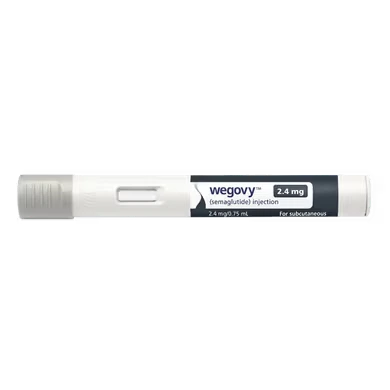

No GLP-1 supplement contains a GLP-1 drug. A pill, gummy or powder sold as a "GLP-1 booster", "GLP-1 support" or "natural GLP-1" is a dietary supplement. The GLP-1 medicines that produce large weight loss, semaglutide and tirzepatide, are prescription drugs, filled at a licensed pharmacy.13
The usual ingredients (berberine, fiber, probiotics) have been tested. The best of them, berberine, averaged 0.88 kg more weight loss than control across 23 trials.6 Semaglutide 2.4 mg averaged 12.7 kg more than placebo at 68 weeks.9
What a GLP-1 supplement is
It is regulated as a food, not as a medicine. FDA's own summary of the law:1
Under DSHEA, FDA does not have the authority to approve dietary supplements before they are marketed. ... FDA does not test dietary supplements before they are sold to consumers.
FDA, Questions and Answers on Dietary Supplements
That is why the labels say "supports healthy GLP-1 levels" and not "treats obesity". FDA's rule is that a supplement sold to treat, prevent or cure a disease "meets the definition of a drug and is subject to regulation as a drug".1 The wording on the bottle is chosen to stay on the supplement side of that line.
Why "boosting your own GLP-1" is not the same thing as the drug
Your gut makes GLP-1 after a meal, and it is gone in about two minutes: a 2025 pharmacology review describes "the extremely short half-life (2 min) of native human GLP-1".4 The drugs were engineered around exactly that problem. The Wegovy label says semaglutide is modified "to provide stabilization against degradation by the enzyme dipeptidyl-peptidase 4 (DPP-4)" and lists "an elimination half-life of approximately 1 week".5
So a supplement that nudges your own GLP-1 up after a meal is working with a hormone that lasts minutes. A weekly injection or a daily GLP-1 pill keeps a drug acting on the same receptor all week. The trial results below show what that difference looks like on the scale.
What the usual ingredients did in trials
These are the pooled or controlled results we could find for the ingredients most GLP-1 supplements are built on, next to the two prescription drugs. They are different trials, with different lengths and people, so read the gap as an order of magnitude, not a head-to-head.
| What was tested | Evidence | Result | Worth knowing |
|---|---|---|---|
| Berberine | Meta-analysis, 23 trials (2026) | 0.88 kg more weight loss than control (95% CI 0.39 to 1.36 kg)6 | The authors ask for better reporting of "purity, potency and gram amounts" and flag "lack of blinding and randomization"6 |
| Psyllium fiber | Meta-analysis, 22 trials (2020) | 0.28 kg, not statistically significant (p = 0.268)7 | Fiber may still help with bowel side effects on a GLP-1 (below) |
| Pasteurized Akkermansia (a probiotic strain) | One trial, 90 adults (2026) | After an 8-week diet, 1.2 kg regained on the strain vs 3.2 kg on placebo over 24 weeks8 | A weight-maintenance result, not weight loss; authors include the strain developer's founder and employees8 |
| Semaglutide 2.4 mg (prescription) | STEP 1, 68 weeks | -15.3 kg vs -2.6 kg on placebo; -14.9% vs -2.4% of body weight9 | Funded by Novo Nordisk9 |
| Tirzepatide 15 mg (prescription) | SURMOUNT-1, 72 weeks | -20.9% vs -3.1% of body weight on placebo10 | Supported by Eli Lilly10 |
A single product can also mix several of these at doses its label sets for itself. No trial tests that bottle; the trials above test one ingredient at a time.
The risks that are not on the label
Hidden drugs in weight loss supplements
FDA keeps a running list of weight loss products it found carrying undeclared drug ingredients, with new entries in 2026. Its description of the category: diet pills and "weight loss supplements, pills and teas ... are likely to be contaminated with dangerous hidden ingredients".2 It adds that these products "are sometimes falsely advertised as dietary supplements, food and/or all-natural treatments" and "often have multiple positive reviews and/or are being shared through social media".2 Five-star reviews are not evidence of what is inside.
Berberine is not inert
A 2026 review of berberine's drug interactions calls it one of the most widely used metabolic supplements, "popularized as "nature's Ozempic"", and says "berberine is far from inert".11 It lists added effects with prescription drugs including "hypoglycemia, hypotension, and QT prolongation", and advises managing it "as an active pharmacological perpetrator rather than as an inert supplement" in people on several medicines.11 If you take a diabetes medicine, a blood pressure medicine or a GLP-1, tell your prescriber and pharmacist before adding it.
"Research" semaglutide is not a supplement either
Some sites sell semaglutide or tirzepatide vials labeled "for research purposes" or "not for human consumption". FDA has warned companies selling them, says they "have been sold directly to consumers for human use with dosing instructions", and urges people not to buy them.3 A real GLP-1 comes with a prescription and a state-licensed pharmacy.3
The useful meaning of "GLP-1 support"
Some products marketed as GLP-1 companions are not trying to replace the drug; they are sold to people already on one. That is a different question with a more ordinary answer. A 2025 review written by employees of a supplement retailer (so read it with that in mind) puts it this way:12
Multivitamins are recommended to address micronutrient insufficiencies as determined by individual deficiencies and suboptimal intake. Protein supplements can help individuals meet daily protein intake recommendations of 1.2-2.0 g/kg/d. ... Fiber and probiotics can improve bowel regularity and mitigate side effects.
Obesity Pillars, 2025
Nothing there needs a product with "GLP-1" on the label. Protein, fiber and a check of your vitamin levels are a conversation with your prescriber, based on your bloods and what you are eating. Our guides on eating on a GLP-1, keeping muscle and constipation and nausea cover the same ground with sources.
Can you buy a real GLP-1 over the counter?
No. Every FDA-approved GLP-1 needs a prescription, and FDA's advice is to "obtain a prescription from their doctor and fill the prescription at a state-licensed pharmacy".3 A licensed telehealth program can do the prescribing online. If the appeal of a supplement was a pill instead of a needle, the approved Wegovy pill costs $149 a month at 1.5 mg self-pay from Novo Nordisk, up to $299 at 9 and 25 mg.13 Our GLP-1 pill guide prices every oral option, and the patches guide covers the skin-patch version of the same pitch.
What a real GLP-1 costs today
On our board today the cheapest cash GLP-1 program is $69 a month, compounded semaglutide starts at $69, and the middle of the board is $149. Each includes a licensed clinician's review and a prescription if you qualify. Compounded versions are not FDA-approved; the brand-name drugs are. Every program we track, cheapest first: