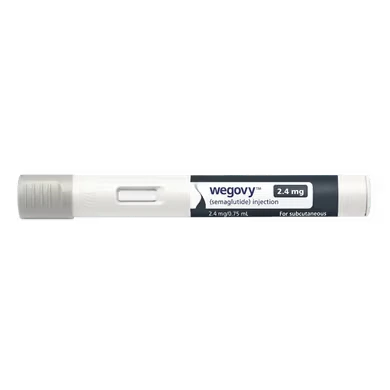

Yes, GLP-1 medicines take some lean mass with the fat: in tirzepatide's SURMOUNT-1 body scan substudy, "approximately 75% was fat mass and 25% was lean mass" of the weight lost.1 Across 20 randomised trials pooled in 2026, the lean share was 25% to 39% for semaglutide, tirzepatide and liraglutide, against 26.2% for weight lost through lifestyle change alone.3 Both weight-loss labels put it the same way: the drug "lowers body weight with greater fat mass loss than lean mass loss."24
The short verdict: the loss is real, it is roughly what any large weight loss costs, and "lean mass" overstates the muscle part, because it also counts organs, bone and fluid.5 Strength held up in the shorter trials. The best-supported protection is resistance training, which cut the lean share to 17.5% in the pooled trials,3 with enough protein alongside it. The group with the most to lose is older adults.
How much of the weight you lose is muscle
The cleanest numbers come from body scans (DXA or MRI) run inside the big randomised trials. In SURMOUNT-1, 160 people had a DXA scan at the start and at week 72. On tirzepatide, body weight fell 21.3%, fat mass 33.9% and lean mass 10.9%; on placebo the figures were 5.3%, 8.2% and 2.6%.1 The 75/25 split between fat and lean was the same on the drug and on placebo, and it "remained consistent across most subgroup analyses."1 Six of the paper's authors work for Lilly, which makes tirzepatide.
| Source | Design | Lean mass as a share of weight lost | Limits |
|---|---|---|---|
| SURMOUNT-1 substudy, tirzepatide1 | Randomised, 72 weeks, DXA, 160 people | About 25%, same as placebo | Subset of the trial; Lilly authors |
| 2026 meta-analysis, semaglutide3 | 20 randomised trials pooled | 35.2% | Trials differ in people and scan method; moderate heterogeneity |
| 2026 meta-analysis, tirzepatide3 | Same | 25.4% | Different trials from the semaglutide figure, not a head-to-head |
| 2026 meta-analysis, liraglutide3 | Same | 26.8% | Older, less potent drug |
| 2026 meta-analysis, lifestyle change only3 | Same | 26.2% | Smaller weight losses on average |
| 2026 meta-analysis, lifestyle plus resistance training3 | Same | 17.5% | The lowest share in the analysis |
Single studies swing much wider than the pooled numbers. A 2024 review found that "in some studies, reductions in lean mass range between 40% and 60% as a proportion of total weight lost, while other studies show lean mass reductions of approximately 15% or less."5 Who was studied, which drug, and how lean mass was measured explain most of that spread.
A second 2026 meta-analysis, of 7 placebo-controlled trials and 821 patients, framed the same data the other way round: as a share of body weight, lean mass went up by 1.81% on a GLP-1, because fat fell faster, even though absolute lean mass fell (most on semaglutide, by 5.44 kg).6 Its authors concluded that "lean mass loss should not be considered a limitation for the use of these drugs", while calling it "essential to accompany drug treatment with nutritional and physical exercise interventions."6
Lean mass is not the same as muscle
This is the point most coverage misses. A DXA scan sorts the body into fat, bone and everything else, and "everything else" is lean mass. The same review spells it out: "changes in lean mass may not always reflect changes in muscle mass as the former measure includes not only muscle but also organs, bone, fluids, and water in fat tissue."5 Lose a lot of fat and you also lose the water and supporting tissue that came with it, which shows up as lean loss.
MRI can look at muscle itself. In an MRI subset of STEP UP (semaglutide up to 7.2 mg, 72 weeks), thigh muscle volume fell 1.1 litres more than on placebo, a difference that did not reach statistical significance (p = 0.07), while fat inside the thigh muscle dropped 0.92 percentage points (p = 0.001).7 The review's reading of the MRI work is that muscle changes on these drugs "appear to be adaptive: reductions in muscle volume seem to be commensurate with what is expected given ageing, disease status, and weight loss achieved."5 Less fat marbling the muscle is generally read as better muscle quality, but only 55 people had a usable scan in that subset, so treat it as early evidence.
Does strength drop?
In the shorter studies, mostly no. In the STEP UP MRI subset, people managed a mean of 13 sit-to-stand repetitions in 30 seconds at the start and 15 at week 72, across the semaglutide and placebo groups together.7
A 2026 review of strength data agrees that short-to-mid-term trials "have shown statistically preserved handgrip strength despite reductions in lean soft tissue mass." It then adds the caveat that matters: in older adults with type 2 diabetes, "longitudinal and retrospective research ... have reported reductions in handgrip strength and accelerated sarcopenia with prolonged semaglutide use."11 Those are observational studies, which cannot prove cause, but they are the reason specialists single out older patients.
Who has the most to lose
Older adults, people who already have little muscle, and people with more severe disease. The 2024 review names "older age and severity of disease" as factors that "may influence the selection of appropriate candidates for these therapies due to risk of sarcopenia."5 Sarcopenia is age-related loss of muscle mass and strength, and it is harder to rebuild than to protect. If that describes you, ask the prescriber how they will check your strength before and during treatment.
What protects muscle: the evidence, strongest first
| Approach | What the evidence shows | Strength of evidence |
|---|---|---|
| Resistance training | Lean share of weight lost 17.5% with lifestyle plus resistance training, against 25% to 39% on incretin drugs3 | Best of the options; pooled trials, mostly without a GLP-1 in the same arm |
| Enough protein | Recommended by a four-society advisory alongside resistance training9; one review proposes at least 1.2 g/kg a day13 | Expert advice; no trial on these drugs has reported a protein effect yet |
| Body composition and strength checks | The advisory's baseline exam includes "muscle strength, function, and body composition assessment"9 | Expert advice; catches a problem, does not prevent one |
| Creatine | "no randomized clinical trial has directly evaluated creatine supplementation during GLP-1-based pharmacological weight loss"15 | Hypothesis only |
| Muscle-sparing drugs (bimagrumab, apitegromab) | Apitegromab with tirzepatide: 1.9 kg less lean mass lost than tirzepatide alone at 24 weeks in a 102-person phase 2 trial14; bimagrumab tested with semaglutide in 507 people12 | Investigational; not approved, not available outside trials |
Resistance training. It is the one approach with a measured effect on the lean share: 17.5% for lifestyle plus resistance training in the pooled trials, the lowest figure in the analysis.3 The four-society advisory on GLP-1 nutrition lists "preserving muscle and bone mass through resistance training and appropriate diet" among its priorities.9 The federal baseline for all adults is "muscle-strengthening activity, like lifting weights or doing push-ups, at least 2 days each week."8 Ask your prescriber or a trainer what fits your joints and fitness.
Protein. Eating less is how these drugs work, and protein drops with everything else. The advisory says only "appropriate diet" and recommends "registered dietitian nutritionist counseling" as support.9 A 2026 narrative review is more specific and proposes "daily protein intakes of ≥1.2 g/kg (up to 1.6 g/kg in appropriate adults without chronic kidney disease (CKD))".13 Note the kidney caveat: if you have kidney disease, the target is a conversation with your doctor, not a number from an article. Our GLP-1 diet guide covers eating with a smaller appetite.
Creatine. Popular on social media, untested here. A 2026 paper arguing for it calls the idea "hypothesis-generating" and states plainly that no randomised trial has tested it during GLP-1 weight loss.15 Its first author advises on and holds patents for creatine products.
Muscle-sparing drugs. Bimagrumab is "an investigational antibody targeting type II activin receptors, intended to reduce total body and visceral fat mass and promote muscle growth."12 Lilly is testing it with semaglutide. Apitegromab, "an investigational, fully human monoclonal antibody that selectively inhibits myostatin activation", was added to tirzepatide in the 102-person EMBRAZE trial: at week 24 it meant "1.9 (1.2-2.7) kg less lean mass loss than placebo (P = 0.001), despite similar total body weight loss between groups."14 Neither drug is approved, and no program can prescribe them.
Questions to ask a program before you start
- Will anyone check my strength or body composition at the start, as the four-society advisory recommends?9
- Is there a dietitian, or at least protein guidance that accounts for my kidney function?913
- If I am over 65 or already weak, how will you watch for sarcopenia?511
- What happens to the dose if I am losing weight faster than planned?
A program that has no answer to the first two is selling the medicine, not the treatment around it. Our telehealth programs guide sets out what a monthly price usually covers.
Semaglutide or tirzepatide: is one easier on muscle?
Nobody has tested that head to head. The pooled analysis puts semaglutide's lean share at 35.2% and tirzepatide's at 25.4%,3 but those figures come from different trials with different people, scanners and durations, so they cannot rank the drugs. The tirzepatide figure leans heavily on SURMOUNT-1, where the drug and placebo split the same way.1 Our tirzepatide vs semaglutide guide covers the weight-loss trials that do compare them.
What it costs
None of these medicines is prescribed to build muscle; a clinician prescribes them for weight or blood sugar and decides whether you qualify. If you do, the cheapest cash program on our board today is $69 a month, compounded tirzepatide starts at $85, and the middle program is $158. The FDA notes that "compounded drugs are not FDA approved."10 Whatever you pay for the medicine, the training and protein above are the parts with evidence for protecting muscle.
For one medicine, the ranked lists are at cheapest semaglutide and cheapest tirzepatide, both checked against the sellers' own pages. If you are thinking about stopping, read stopping a GLP-1 and weight regain first.