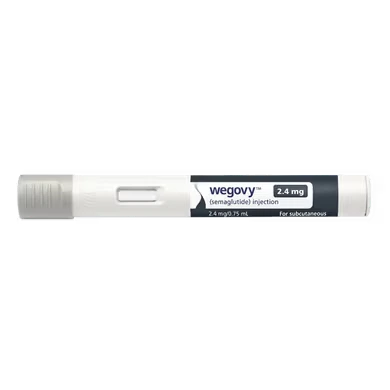

GLP-1 TV · Clinician
How GLP-1 Dosing Really Works! (Obesity Doctor)
Today’s cheapest GLP-1$39/mo at Wellmedr, sale price.Compare all GLP-1 prices Price read 22 Nov 2026 from the seller’s own page, ranked by price alone. That price is a compounded drug, and compounded drugs are not FDA-approved. Not from the video’s creator.Our summary
In this video, the speaker, who says she is board certified in internal medicine, lifestyle medicine and obesity medicine, explains how dosing works for semaglutide and tirzepatide, which she calls the most popular GLP-1 medications at the time of filming. She says patients often find the many dose levels confusing and ask whether they stay on one dose or when they move up.
Published by Weight Medicine with Dr. Meghan MD on YouTube
As published by the channel. Not medical advice, and not an endorsement.
What else the video covers
She says patients should be mentally prepared to take the medication long term. According to her, stopping does not cause harm, but the medication stops working, and in her experience and in the research she cites the weight tends to creep back over time for most people. She says she starts everyone at the lowest dose, 0.25 milligrams of semaglutide or 2.5 milligrams of tirzepatide. That dose is mainly to let the body adjust, and she is not worried if there is no weight loss at that step.
The doctor explains that the fastest possible increase is after every fourth weekly shot, so on the fifth shot. Whether to go up depends on tolerance, the pace of weight loss, and sometimes insurance or medication availability. She says some people stay on one dose for two to three months. On the question of a maintenance dose, she says nothing special changes at goal weight. Because the medications are dose dependent, her aim is to reach the highest dose a patient can tolerate, and she describes that dose as the maintenance dose. She closes by mentioning her life coaching services.
Our summary of what is said, in our words. Doses, results and prices are the speaker’s, not advice.
Takeaways
The main points, in the order they come up. Tap a time to play from there.
- 1:00 The speaker says patients should expect to stay on the medication long term, because she says weight tends to come back after stopping.
- 2:00 She starts patients on the lowest dose, 0.25 milligrams of semaglutide or 2.5 milligrams of tirzepatide, mainly so the body can get used to it.
- 2:30 She says the fastest dose increase is after four shots, meaning on the fifth weekly shot.
- 3:03 She explains that moving up depends on tolerance and speed of weight loss, and a dose may be held for two to three months.
- 4:34 She says insurance coverage and medication availability can also slow the pace of dose increases.
- 5:04 She says there is no special maintenance change at goal weight; the aim is the highest tolerated dose, since the drugs are dose dependent.
Key moments
Tap one to play from there.
Questions this video answers
How fast can you increase GLP-1 dose?
The speaker says the fastest increase for semaglutide and tirzepatide is after every fourth dose, which is every fourth week, so a patient could move up on the fifth shot. She adds that not everyone is ready to do this.
What dose do you start semaglutide and tirzepatide at?
According to the video, she starts patients at the lowest dose: 0.25 milligrams of semaglutide or 2.5 milligrams of tirzepatide. She says weight loss may or may not happen at that dose, and it mainly helps the body get used to the medication.
What is the maintenance dose for GLP-1 medications?
She says there is no big change at goal weight and no complicated step down. In her description, the maintenance dose is the highest dose a person can tolerate that gives the weight loss effect the person and doctor want.
Do you have to stay on GLP-1 medication forever?
The speaker says that at the time of filming, the standard is to be prepared to stay on it long term. She says stopping is not harmful, but the medication stops working and weight tends to creep back for most people.
Videos on the same question
The closest videos in the library by what is said in them, not by title.
 GLP-1 Timeline: When Hunger Finally Stops | Doctor ExplainsThe speaker opens a mini series on GLP-1 dosing by covering what he calls the traditional, scientifically proven protocol: weekly subcutaneous injections that follow each medication's schedule, with increases monthly until peak weight loss is reached.
- Already on a GLP-1? What your next month costs at every programToday’s lowest is $39/mo. Every program ranked by price alone. Compounded drugs are not FDA-approved.
 ‘Maintenance’ doses of GLP-1 medication | Ohio State Medical CenterIn this short the channel video, a clinician in obesity medicine talks about maintenance doses of GLP-1 receptor agonist medications.
 Is Your GLP-1 Dose Too Low? (Obesity Doctor)The speaker, an obesity medicine physician, explains the checks she runs through when a patient asks whether their GLP-1 dose is too low and whether it is time to go up.
 Don't Increase Your Semaglutide Dose Until You Watch This | A Doctor ExplainsIn this video, the speaker, an obesity medicine provider who says they have prescribed GLP-1 medications since 2021 and also uses tirzepatide, argues that raising the dose of tirzepatide or semaglutide is usually the wrong response to a stalled scale.
 Zepbound Dosing: Your Doctor Probably Didn't Tell You About This IssueThe host of On The Pen interviews the speaker, a board-certified emergency physician who runs his own clinic.
 How to Titrate Off a GLP-1The speaker, who introduces herself as a board-certified obesity medicine physician, explains what she says people can consider once they reach their health goal on a GLP-1 medication.
Read next
Our guides closest to what this video covers, with prices checked weekly.
- Stopping a GLP-1: what the withdrawal trials found, and what a maintenance dose actually is
Two trials have measured what happens when you stop. On semaglutide, people who lost 17.3% over 68 weeks regained two-thirds of it in the year after stopping, ending 5.6% below where they started. On tirzepatide, people who lost 20.9% in 36 weeks regained 14% over the next year on placebo while those who continued lost a further 5.5%. Both labels are explicit that these drugs are for maintaining weight reduction long term, which is a different claim from finishing a course. A maintenance dose is simply the dose you stay on; the labels do not define a lower one to step down to at goal.
- Tirzepatide vs semaglutide: the head-to-head result, and what the better one costs
They were finally tested against each other. In SURMOUNT-5, 751 adults with obesity took the maximum tolerated dose of one or the other for 72 weeks: tirzepatide lost 20.2% of body weight, semaglutide 13.7%. That gap is real and it is the whole argument for tirzepatide. The other half of the decision is the bill: compounded tirzepatide runs from $69 a month on our board against $39 for semaglutide, and the branded gap is wider still.
- GLP-1 muscle loss: how much of the weight is muscle, and what protects it
On semaglutide or tirzepatide, roughly a quarter to two fifths of the weight you lose is lean mass rather than fat: 25% in tirzepatide's SURMOUNT-1 scan substudy, and 25% to 39% across 20 randomised trials. That share is close to what diet-only weight loss costs. Lean mass is not all muscle, and strength held up in the shorter trials. Resistance training cut the lean share to 17.5% in the pooled trials, and expert groups pair it with enough protein.
Next steps
Compounded semaglutide prices
Find more like it
Dose change
Up next
More from this collection




Watched it? See what it costs.
Every GLP-1 program we track, ranked by what actually leaves your account.