




GLP-1 TV
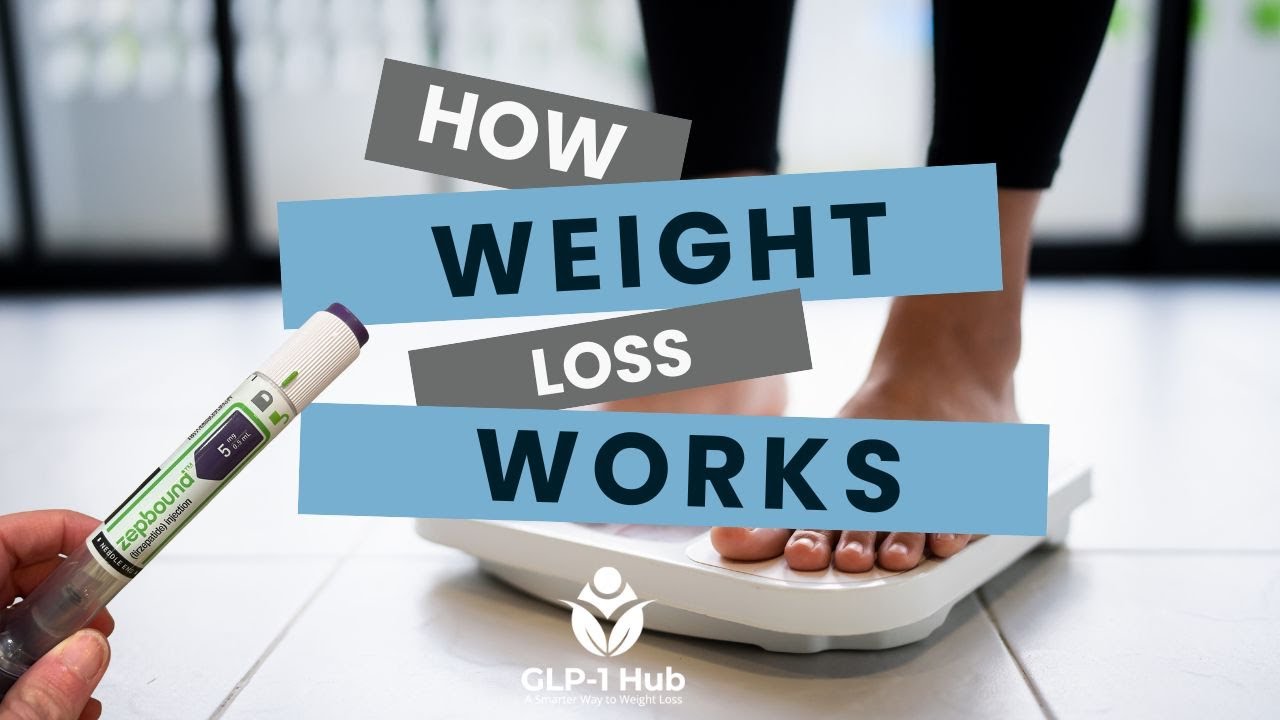
How GLP-1 Medications Actually Work (Weight Loss Explained)
Today’s cheapest GLP-1$39/mo at Wellmedr, sale price.Compare all GLP-1 prices Price read 23 Nov 2026 from the seller’s own page, ranked by price alone. That price is a compounded drug, and compounded drugs are not FDA-approved. Not from the video’s creator.Our summary
In this video, registered dietitian and GLP-1 user the speaker explains why weight loss on a GLP-1 medication does not follow a straight downward line. She says the scale moves in waves, and that a rise or a stall does not mean someone is doing something wrong. She puts a realistic loss at half a pound to 2 pounds a week, up to 8 pounds a month, and says women approaching perimenopause or menopause and people with less to lose will land at the lower end. She adds that losing faster than that is more likely to be water or muscle than fat, and that metabolism slows as a person gets smaller, so loss slows over time.
Published by GLP-1 Hub on YouTube
As published by the channel. Not medical advice, and not an endorsement.
What else the video covers
She then lists causes of short-term gains: water retention after salty restaurant meals, hormonal shifts before a period (2 to 5 pounds, by her account), soreness and inflammation after exercise, constipation, and extra water held with stored carbohydrate (1 to 3 pounds after a pasta meal if someone usually eats low carb). She says she logs her weight once a week, on Friday, and treats the trend as what counts.
For plateaus, she defines one as no loss for four to six weeks, not one week. She advises against cutting calories sharply or exercising intensely, and suggests checking trends, noting non-scale changes such as clothing fit, sleep and labs, and honestly reviewing habits such as water, protein, skipped meals and stress. She closes by warning against comparing yourself with others online, since starting weight, health conditions and methods are unknown, and points viewers to her podcast and website.
Our summary of what is said, in our words. Doses, results and prices are the speaker’s, not advice.
Takeaways
The main points, in the order they come up. Tap a time to play from there.
- 1:33 The speaker says a realistic pace is half a pound to 2 pounds per week, up to 8 pounds a month, and that faster loss is more likely water or muscle.
- 3:38 She explains that metabolism slows as the body gets smaller, so a slower pace in months three or four is not a sign of failure.
- 4:41 She lists causes of temporary scale increases: sodium and water retention, hormones, sore muscles after exercise, constipation, and glycogen.
- 7:48 She logs her weight once a week on Fridays and says the trend matters more than any daily number.
- 8:51 She defines a plateau as no weight loss for four to six weeks, and advises against drastic calorie cuts or intense exercise.
- 10:22 She suggests tracking non-scale changes and honestly reviewing habits like water, protein, meals and stress before changing anything.
Key moments
Tap one to play from there.
What the video says
As stated in the video, not checked by us. Doses and results are the speaker’s, not advice.
- Side effects mentioned
- constipation and muscle loss
Questions this video answers
How much weight should you lose per week on a GLP-1?
The speaker, a registered dietitian, says she wants to see people lose between half a pound and 2 pounds a week, a maximum of 8 pounds a month. She says women approaching perimenopause or menopause and people with less to lose will usually be at the lower end.
Why did the scale go up while taking a GLP-1 medication?
She says common reasons include water retention from salty meals, hormonal changes before a period, soreness after exercise, constipation, and extra water held with stored carbohydrate. She describes these as short-term fluctuations rather than fat gain.
What counts as a weight loss plateau on a GLP-1?
According to the speaker, a plateau means no weight loss for four to six weeks, not just one week. She advises looking at trends first and avoiding drastic calorie cuts or intense exercise.
Why does weight loss slow down on a GLP-1?
She explains that as a person gets smaller, the body needs fewer calories and metabolism slows, so weight loss slows in proportion. She says slow loss can also mean muscle mass is being preserved.
Videos on the same question
The closest videos in the library by what is said in them, not by title.
 The Week 2 GLP-1 Weight Loss Stall: Why Most People Quit HereThe speaker, who presents on the channel, addresses people who started a GLP-1 medication in the new year, lost several pounds in week one, and then saw the scale stall or tick up in week two.
- What a GLP-1 costs at every program we trackToday’s lowest is $39/mo. Every program ranked by price alone. Compounded drugs are not FDA-approved.
 I Lost 150+ lbs on Mounjaro — Here's How I Broke Through Every Weight Loss PlateauThe speaker, who says he lost over 150 lb on GLP-1 medications himself, explains why weight loss stalls on semaglutide or tirzepatide and what he suggests doing about it.
 What Really Happens When You Stop GLP-1 Medications?The channel says she stopped using Mounjaro 2 months ago and is now at maintenance.
 Why GLP-1 Feels Different at 1, 3, and 6 Months (Obesity Doctor)In this video, the speaker, who describes herself as a board-certified obesity medicine physician and weight loss coach, walks through what she commonly sees in patients at one, three, and six months on a GLP-1 medication.
 GLP-1 medications and weight loss: How fast is too fast? | Ohio State Medical CenterIn this short the channel video, a clinician talks about how quickly people lose weight while taking a GLP-1 receptor agonist medication.
 Realistic Weight Loss on GLP-1s: How to get Consistent ResultsThis is an interview on the podcast.
Read next
Our guides closest to what this video covers, with prices checked weekly.
- GLP-1 vs GLP-2 vs GLP-3: what the names mean, and which ones you can actually buy
GLP-1 drugs such as semaglutide act on one receptor. "GLP-2" is used online for tirzepatide (Zepbound, Mounjaro), which acts on two, GIP and GLP-1, and "GLP-3" for retatrutide, which adds the glucagon receptor. Neither nickname is the real name: GLP-2 is a separate gut hormone whose drug, Gattex, treats short bowel syndrome. Retatrutide produced 28.3% mean weight loss at 80 weeks in its phase 3 trial but is not FDA-approved; Lilly plans to file in Q1 2027. Tirzepatide is the strongest option you can buy today.
- GLP-1 hair loss: what is actually going on
Hair shedding on a GLP-1 is real, and the labels now count it: 3.3% of people on Wegovy 2.4 mg and 5.8% on 7.2 mg, against 1% on placebo, most of them women. Wegovy's and Zepbound's labels both say it was associated with weight reduction. Rapid weight loss is a long-recognised trigger for a temporary shedding phase, after bariatric surgery and crash dieting too. Two things make it more likely: how fast you are losing, and whether you eat enough protein and micronutrients.
- Stopping a GLP-1: what the withdrawal trials found, and what a maintenance dose actually is
Two trials have measured what happens when you stop. On semaglutide, people who lost 17.3% over 68 weeks regained two-thirds of it in the year after stopping, ending 5.6% below where they started. On tirzepatide, people who lost 20.9% in 36 weeks regained 14% over the next year on placebo while those who continued lost a further 5.5%. Both labels are explicit that these drugs are for maintaining weight reduction long term, which is a different claim from finishing a course. A maintenance dose is simply the dose you stay on; the labels do not define a lower one to step down to at goal.
Next steps
GLP-1 prices
Find more like it
Dose changeWeigh-in and resultsFood, protein and eatingAlcoholStopping and maintenanceConstipationMuscle loss
Up next
More from this collection









Watched it? See what it costs.
Every GLP-1 program we track, ranked by what actually leaves your account.