




GLP-1 TV · Clinician
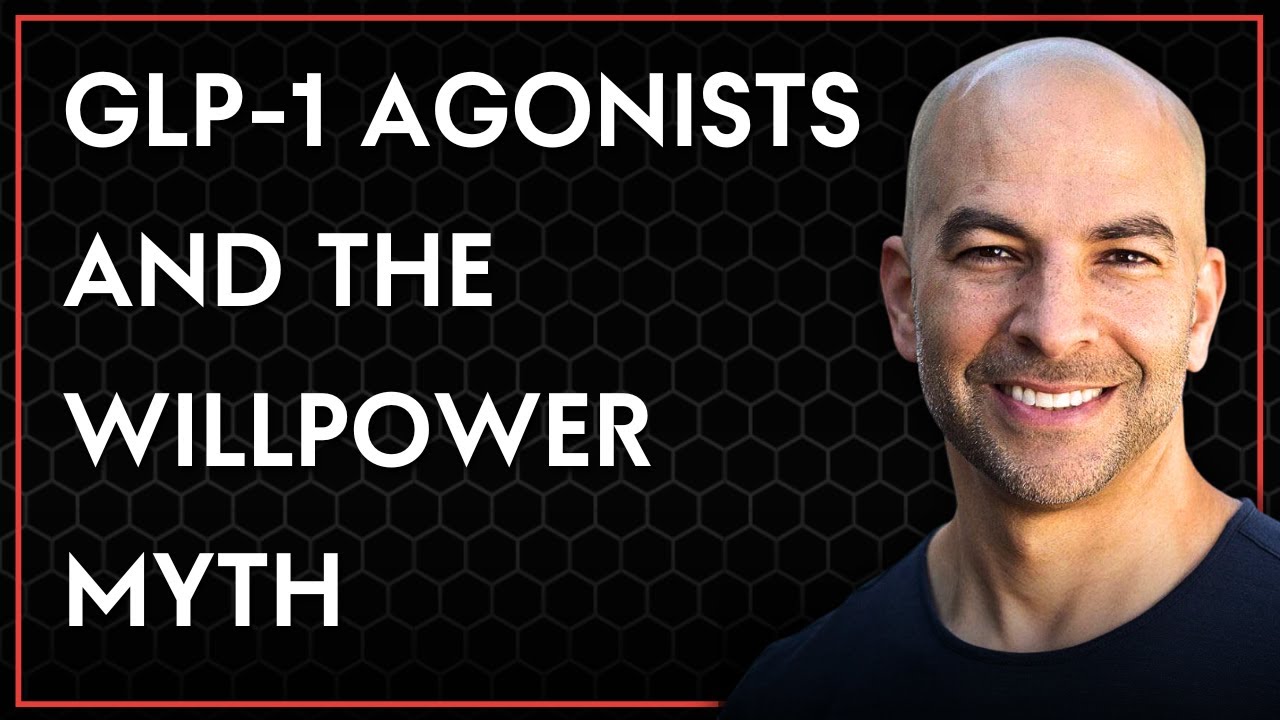
GLP-1 agonists and the willpower myth
Today’s cheapest GLP-1$39/mo at Wellmedr, sale price.Compare all GLP-1 prices Price read 22 Nov 2026 from the seller’s own page, ranked by price alone. That price is a compounded drug, and compounded drugs are not FDA-approved. Not from the video’s creator.Our summary
The speaker, the channel's host, describes a conversation he had the day before with a patient about starting a GLP-1 agonist. He says she is in her early to mid-40s, healthy and active, and by her own estimate about 15 lb overweight. According to him, she has been working hard on exercise and nutrition, has stopped drinking alcohol, eats quite little, and still cannot lose the last 15 pounds.
Published by Peter Attia MD on YouTube
As published by the channel. Not medical advice, and not an endorsement.
What else the video covers
He says he gave up long ago on solving weight management as a strategy, because he has met people who change their weight easily and people who work just as hard and cannot. In his view, the idea that weight is a matter of willpower is wrong. He compares changing weight to changing hair length and color for some people and to changing height for others. He tells her it is not worth starting one of these drugs unless she is willing to stay on them indefinitely, since he expects most people to regain weight after stopping, though not everyone. He says the best case for stopping may be someone who uses the weight loss to start new exercise and eating habits. For her, he suggests finding the minimum effective dose and accepting that she will probably stay on it.
He also covers safety and cost. He says the drugs look safe and may even turn out to be protective, though he does not offer that as a reason to take one, and his early skepticism has eased. Cost is a large issue, and he notes that someone without type 2 diabetes who needs to lose 15 pounds would not qualify for payment help. Her biggest struggle, he says, was feeling like a failure for needing the drug. He disagrees and points to genetics as a strong influence on body shape.
Our summary of what is said, in our words. Doses, results and prices are the speaker’s, not advice.
Takeaways
The main points, in the order they come up. Tap a time to play from there.
- 0:01 The speaker describes a healthy, active patient in her 40s who is working hard on diet and exercise and still cannot lose her last 15 lb.
- 0:34 He says weight differs greatly between people and rejects the idea that struggling with weight is a failure of willpower.
- 1:45 He advises against starting a GLP-1 agonist unless the person is willing to stay on it indefinitely, because he expects most people to regain weight after stopping.
- 2:10 He suggests she find the minimum effective dose and accept that she will probably remain on it.
- 2:42 He says the drugs look safe and may even be protective, and that his early skepticism has eased, while noting cost and lack of coverage without type 2 diabetes.
- 3:43 He tells her that feeling like a failure is not a fair assessment, since genetics strongly shape body habitus and these drugs can counter that pull.
Key moments
Tap one to play from there.
Questions this video answers
Do you have to stay on a GLP-1 drug forever to keep the weight off?
The speaker says he does not think it is worth starting one unless you are willing to stay on it indefinitely, because most people will regain weight after stopping. He adds that this is not true across the board and that better maintenance methods may emerge over time.
Is taking a GLP-1 agonist a sign of failure or weak willpower?
According to the speaker, no. He says people differ in how easily they can change their weight, and he points to genetics as a major influence on body shape. He tells his patient that a drug can help counter that pull.
Who might be able to stop a GLP-1 drug and keep the weight off?
The speaker says the best case may be someone who was not exercising or eating well at the start and uses the weight loss to launch new habits. He says that person might maintain a healthier diet and exercise program after coming off the drug.
Does insurance cover a GLP-1 drug for 15 lb of weight loss?
The speaker says cost is a huge issue and that someone who only needs to lose 15 pounds and does not have type 2 diabetes will not qualify for any payment help. He mentions that some programs may lessen the burden.
Videos on the same question
The closest videos in the library by what is said in them, not by title.
 STOP Doing These 5 Things on Ozempic & MounjaroThe speaker, an internal medicine physician in upstate New York, describes five mistakes he says he commonly sees in patients new to GLP-1 agonist therapy.
- What a GLP-1 costs at every program we trackToday’s lowest is $39/mo. Every program ranked by price alone. Compounded drugs are not FDA-approved.
 Coverage for GLP-1 denied after weight lossThis report follows another speaker, a Sacramento Sheriff's Deputy who says Zepbound improved his sleep and energy and ended his sleep apnea.
 Maximum Dose of your GLP-1 Isn't Working? Here's WhyIn this podcast episode, host Anna Rider, who is introduced as a registered dietitian and GLP-1 user, interviews the speaker, an integrative healing strategist and founder of Canary House.
 86: GLP-1 Medications Explained - Benefits, Risks, What You Need to Know with Dr. Ben BikmanIn this lecture from his Metabolic Classroom series, Professor the channel, who describes himself as a biomedical scientist and professor of cell biology, explains how GLP-1 works and what he sees as the benefits and drawbacks of GLP-1 receptor agonist drugs.
Read next
Our guides closest to what this video covers, with prices checked weekly.
- How to get a GLP-1 covered by insurance, in the order it actually works
There are four gates and most people fight the wrong one first. Before any clinical criterion applies, your employer has to have bought the weight-loss drug category at all, and if they did not, no BMI number and no comorbidity will change the answer. Once past that, the published criteria across the major insurers are strikingly consistent: BMI of 30 or more, or 27 with a weight-related condition, plus a documented period of lifestyle change, plus roughly 5 percent weight loss to stay approved at renewal.
- What is GLP-1? The hormone, how the drugs work, and every GLP-1 medication on the market
GLP-1 stands for glucagon-like peptide-1, a hormone your gut releases after you eat. It tells the pancreas to release insulin when blood sugar is high, holds back glucagon, slows how fast the stomach empties, and acts on the parts of the brain that regulate appetite. GLP-1 drugs copy that hormone but last far longer: a week for the injections, a day for the pills. Seven brands are on the US market, from Ozempic and Mounjaro for type 2 diabetes to Wegovy, Zepbound and Foundayo for weight loss.
- How to get prescribed a GLP-1, and what the label actually requires
Almost every page on this says you need a BMI of 30, or 27 with a weight-related condition. Those numbers are not what the indication says. Wegovy's label describes adults with obesity, or adults with overweight and at least one weight-related comorbid condition, and it separately lists two routes most people have never heard of: reducing cardiovascular risk in adults with established cardiovascular disease, and treating MASH with moderate to advanced liver fibrosis. Whether you qualify is a clinical judgement, and it is a wider door than the BMI number suggests.
Next steps
GLP-1 prices
Find more like it
Exercise and strengthStopping and maintenance
Up next
More from this collection








Watched it? See what it costs.
Every GLP-1 program we track, ranked by what actually leaves your account.