GLP-1 TV · Clinician · views checked Oct 2026
3 Years on Tirzepatide - What Nobody Wants to Admit
Clinician
Our summary
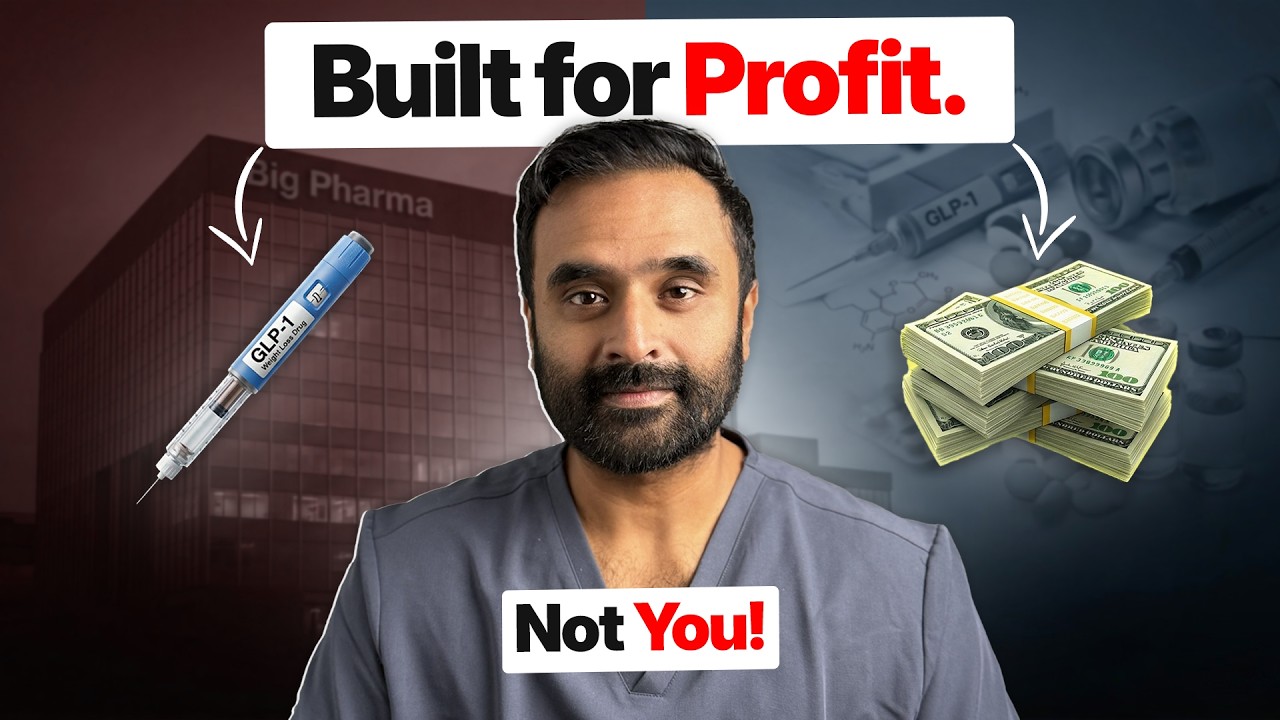
Dr. Kevin Joseph, a doctor of osteopathic medicine, uses this follow-up video to explain where he stands on compounding pharmacies, gray market peptides, and the pricing of GLP-1 medications. He says he does not support Big Pharma pricing and calls charging over a thousand dollars a month a barrier that makes access a privilege. He describes starting tirzepatide about four years ago through a telehealth provider, using a manufacturer coupon that he recalls as roughly 25 or 50 dollars a month. When the coupon expired the price rose to over a thousand dollars a month, so he moved to compounded versions.
General education as published by the channel. Not medical advice, and not an endorsement.
Where tirzepatide costs least today
The three cheapest partner programs for tirzepatide, all in per month, checked weekly.



What else the video covers
He then walks through why he thinks the drugs cost so much. He points to the size of the obesity market, the billions spent on development and failed compounds, and about 20 years of patent exclusivity. He also explains why he thinks insurers often decline to cover obesity drugs: the long-term health benefits may go to a different insurer if the patient switches plans.
On access options, he says compounding pharmacies have improved affordability, but he finds it hypocritical when they market themselves as safer than the gray market while selling compounds such as retatrutide, which he notes is not FDA-approved. He says he now gets most of his own peptides from overseas sources and believes the gray market is safer than before because buyers demand certificates of analysis and testing. He adds that it is still riskier than pharmaceutical or compounding pharmacy sources and that he does not supply peptides to patients. His closing advice is that the right choice depends on insurance, finances, and risk tolerance.
Our summary of what is said, in our words. Doses, results and prices are the speaker’s, not advice.
Takeaways
The main points, in the order they come up. Tap a time to play from there.
- 1:01 Dr. Joseph says he opposes current GLP-1 pricing, arguing that charging over a thousand dollars a month makes access a privilege.
- 1:32 He recalls a manufacturer coupon that made Mounjaro cost about 25 or 50 dollars a month, after which the price rose above a thousand dollars and he switched to compounded tirzepatide.
- 3:34 He explains pricing through the huge obesity market, the cost of drug development and failures, and roughly 20 years of patent exclusivity.
- 5:04 He says insurers often avoid covering obesity drugs because the long-term benefits may accrue to a later insurer.
- 6:06 He credits compounding pharmacies with improving access but criticizes those that market safety while selling non-FDA-approved compounds such as retatrutide.
- 7:36 He says the gray market is safer than before due to consumer demand for testing, but remains riskier than other routes, and that the best option depends on insurance and personal circumstances.
Key moments
From the creator's own chapters. Tap one to play from there.
What the video says
As stated in the video, not checked by us. Doses and results are the speaker’s, not advice.
- Medication
- semaglutide and tirzepatide
- Point in the journey
- Year 3
- Who is speaking
- Clinician, DO (Dr. Kevin Joseph)
Questions this video answers
Why are GLP-1 medications so expensive according to Dr. Kevin Joseph?
He says the market for obesity treatment is enormous, drug development costs billions including failed candidates, and patents give about 20 years of exclusivity. He adds that profit plays a role but the picture is more complicated than greed alone.
Why does insurance often not cover obesity medications?
Dr. Joseph explains that insurers think on a short timeline. The benefits of weight loss, such as fewer heart attacks and hospitalizations, can appear years later, and the patient may have switched to another insurer by then.
Does Dr. Kevin Joseph think the peptide gray market is safe?
He says he believes it is safer than it has ever been because buyers now ask for certificates of analysis and independent testing. He also says it is still inherently riskier than buying from a pharmaceutical company or compounding pharmacy, and he does not provide gray market sourcing to patients.
What options does Dr. Joseph describe for people whose insurance does not cover GLP-1s?
He says that if insurance covers them, going pharmaceutical grade is a no-brainer. Otherwise he describes two realistic routes, compounding pharmacies with regulatory oversight or the gray market with well-vetted sources, and says each has tradeoffs.
Videos on the same question
The closest videos in the library by what is said in them, not by title.
 Compound Tirzepatide: Scott Brunner Tells All | OTP 87This episode of On The Pen is part two of a three-part series on compounded tirzepatide.
 Affordable Weight Loss Has Tradeoffs: The Reality of Compounded GLP-1sMegan, a homeschool mom who says she is not a medical professional, describes her experience with compounded tirzepatide.
 END OF TIRZEPATIDE COMPOUNDING? FDA Removes Zepbound and Mounjaro from Shortage List!In this short video, Dr. Christy Risinger explains what it means that the FDA has taken tirzepatide, sold as Zepbound and Mounjaro, off its drug shortage list.
 GLP1 PRICE CHANGES IN 2026- What you need to know! In this video, Brittany, who says she has lost 115 lb on tirzepatide, goes over recent GLP-1 price changes and insurance coverage news.
 🚨 Mounjaro Coupon 🚨 Future In Doubt? Update from Lilly CFODave, host of On The Pen GLP-1 News, reviews remarks about the Mounjaro copay card made by Eli Lilly CFO Anat Ashkenazi at a JP Morgan conference fireside chat on January 10.
About Dr. Kevin Joseph, DO
Clinician, 98.3K subscribers. 19 of their videos are in GLP-1 TV, 4.2M views between them, mostly on Mounjaro, Ozempic, Retatrutide.
- Where to inject for MAXIMUM GLP-1 Weight Loss | Breaking down the data
- Retatrutide Isn't a Weight Loss Drug — Here's What It Really Does (Weightloss Dr. Explains)
- 2 Years of GLP-1 Mistakes in 7 minutes
Read next
Our guides closest to what this video covers, with prices checked weekly.
- Microdosing GLP-1s: what it saves you, and what it doesn't
Microdosing a GLP-1 does not save money at a compounded seller: none of the compounded programs we track charges less for a smaller dose. Microdosing is not a medical term, and no dose below the label's starting dose has been studied for this. The one microdosing product on our board costs more a month than full-dose compounded tirzepatide at the cheapest seller we track. Where dose really moves the price is the brands; the provider table, per-mg costs and live numbers are below.
- Compounded tirzepatide: what it is, what FDA says now the shortage is over, and what it costs against Zepbound
Compounded tirzepatide is Zepbound's molecule made by a licensed pharmacy rather than Lilly, sold through telehealth programs from $85 a month on our board against Lilly's $299 to $699 ($449 on the KwikPen from 7.5 mg with on-time refills). It is not FDA-approved, and the legal ground under it has shifted: FDA says tirzepatide no longer appears on its shortage list, which was the condition that let pharmacies compound copies of an approved drug at scale. What remains is compounding for individual patients, FDA's list of specific concerns about how these products are dosed, shipped and labelled, and a price gap large enough that most cash buyers take the trade anyway. This page sets all of that out.
- Zepbound vs Mounjaro: one molecule, two labels, and why the label sets your price
Zepbound and Mounjaro are both tirzepatide, made by Lilly, injected weekly at the same six doses from 2.5 to 15 mg. Mounjaro is approved for type 2 diabetes and Lilly's own site says it is not a weight-loss drug; Zepbound is the same molecule approved for obesity and sleep apnoea. That label decides everything downstream: insurers cover Mounjaro for diabetes and refuse it for weight, Zepbound is the box a plan can cover for weight, and Zepbound's cash price runs $299 to $699 by dose, while LillyDirect sells Mounjaro from $499 a month at every strength, against a list price of $1,112.16 per fill.
Find more like it
Cost and insuranceThe trials
Up next
More from this collection



Watched it? See what it costs.
Every GLP-1 program we track, ranked by what actually leaves your account.