




GLP-1 TV · Clinician
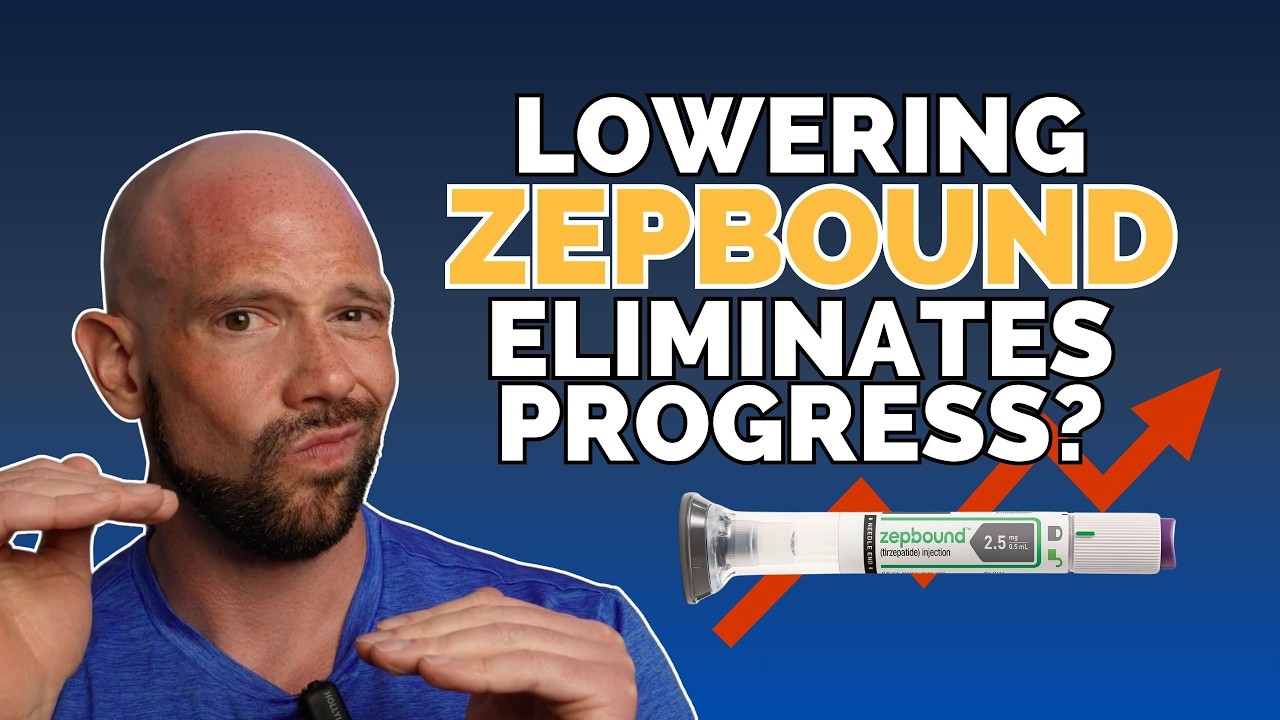
This One Zepbound Dose Mistake Could Erase Months of Progress
Today’s cheapest Zepbound$348/mo at Lemonaid Health, medication and membership billed separately.Compare all Zepbound prices Price read 22 Nov 2026 from the seller’s own page, ranked by price alone. Not from the video’s creator.Our summary
The speaker, who describes himself as a pharmacist and obesity expert, argues that the idea of "graduating" from a GLP-1 medication is a myth promoted by diet culture. He builds his case on the SURMOUNT maintain trial. According to the video, everyone in the trial first took Zepbound for 60 weeks, titrated to about 10 to 15 mg once weekly, and lost roughly 22% of baseline weight on average.
Published by Dr. Dan | Obesity Expert on YouTube
As published by the channel. Not medical advice, and not an endorsement.
What else the video covers
At week 60 the participants were split into three groups for another 52 weeks. He says the group that stayed on 10 to 15 mg kept all of its weight loss, about 22.4% from baseline. The group stepped down to 5 mg once weekly regained about 5.5% of baseline weight, and he describes that trend as still creeping up. The placebo group regained the most, more than half of the weight lost, even though some received a rescue medication. He attributes this to biology rather than willpower, explaining that the hypothalamus and the brain's reward system drive "food noise," which the medication quiets without removing, with stronger control at higher doses.
The speaker then frames the decision as three futures: staying on the full dose, stepping down as a compromise (about 17% loss kept in the study), or stopping altogether, which he says leads to fast regain for most people. He compares obesity to type 1 diabetes and high blood pressure, calls it a chronic disease, and says staying on treatment is not a failure. The video also includes a promotion for his the speaker's another speaker Hub.
Our summary of what is said, in our words. Doses, results and prices are the speaker’s, not advice.
Takeaways
The main points, in the order they come up. Tap a time to play from there.
- 1:33 The speaker says the SURMOUNT maintain trial started with 60 weeks of Zepbound at about 10 to 15 mg weekly, producing an average loss of roughly 22%.
- 2:04 He explains that participants were then split into a full-dose group, a 5 mg weekly group and a placebo group, and followed for another 52 weeks.
- 2:36 According to the video, the full-dose group kept all of its loss, the 5 mg group regained about 5.5%, and the placebo group regained over half.
- 4:06 He attributes the regain to biology, saying GLP-1 medications quiet food noise rather than remove it, and that control is stronger at higher doses.
- 6:40 He lays out three options: stay on the full dose, step down to a lower dose, or stop the medication, each with a different trade-off.
- 9:15 The speaker argues obesity is a chronic disease like hypertension, so he says staying on treatment is not a failure.
Key moments
Tap one to play from there.
What the video says
As stated in the video, not checked by us. Doses and results are the speaker’s, not advice.
- Medication
- Zepbound
Questions this video answers
What happens if you lower your Zepbound dose to 5 mg after losing weight?
According to the video, the SURMOUNT maintain trial group stepped down to 5 mg once weekly regained about 5.5% of baseline weight over 52 weeks. The speaker says they kept most of their loss, about 17% from baseline, but that the trend was still creeping up.
What happens if you stop Zepbound completely?
The speaker says the placebo group in the trial regained over half of the weight they had lost within 52 weeks, even with lifestyle support and some receiving rescue medication. He says the weight comes back fast for most people and attributes this to biology, not weakness.
Why does weight come back after stopping a GLP-1 medication?
The speaker explains that the hypothalamus and the brain's reward system keep producing persistent hunger signals he calls food noise. He says the medication quiets these signals rather than fixing them, so when the dose drops or stops, the signals return, and may be stronger after weight loss.
Videos on the same question
The closest videos in the library by what is said in them, not by title.
 What Happens When You STOP Zepbound? The Weight Regain RealityAccording to the video, the speaker walks through a post hoc analysis of the SURMOUNT-4 trial, which looked at what happens when people stop Zepbound.
- Already on Zepbound? What your next month costs at every programToday’s lowest is $348/mo. Every program ranked by price alone.
 Lowered My Zepbound Dose and This Happened | A Dietitian's own GLP-1 StoryThe speaker, a registered dietitian who says she has used GLP-1 medications for 3 years, describes what happened when she lowered her dose after more than a year of weight maintenance.
 Got Questions About GLP-1s, Zepbound , Wegovy, Foundayo? DOWNSIZED LIVE!In this weekly live Q&A, the hosts of the channel say they are not doctors.
 GLP-1 / Zepbound / Tirzepatide Journey | 6 Month update, the good and the bad!The speaker, who says he is 32, marks six months on a GLP-1 medication that he started on November 3, 2025.
 Zepbound Dosing: Your Doctor Probably Didn't Tell You About This IssueThe host of On The Pen interviews the speaker, a board-certified emergency physician who runs his own clinic.
 Stalled On Zepbound? Don't Make This Mistake (Obesity Doctor FAQ)In this FAQ episode, the speaker answers a viewer who has been on Zepbound for 20 weeks, has stalled out after losing about 5% of body weight, and worries about ending up well short of 15% loss even at the top dose.
Read next
Our guides closest to what this video covers, with prices checked weekly.
- Zepbound dosage chart: every tirzepatide dose, the escalation rule, what each rung lost in the trial, and what it costs
Zepbound has six doses, 2.5 to 15 mg, taken once a week. The label's rule is four weeks at 2.5 mg, then 2.5 mg steps with at least four weeks on each, to a maintenance dose of 5, 10 or 15 mg. In SURMOUNT-1 those three doses lost 15.0, 19.5 and 20.9 percent of body weight over 72 weeks. Direct from Lilly each rung has a price, $299 at 2.5 mg rising to $699 at 10 mg and above, so the chart below carries the dose, the rule, the trial result and the bill in one place, plus the vial and KwikPen concentrations for anyone measuring in units.
- How long do Ozempic, Wegovy and Zepbound take to work? The label calendar and the trial timepoints
GLP-1s act from the first dose, but the labels start low on purpose and step up every 4 weeks, so most people do not reach a full dose for 3 to 5 months. Each dose reaches steady levels in the blood after about 4 to 5 weeks. In the trials, people averaged 10.6% weight loss after 20 weeks of Wegovy's escalation and 20.9% after 36 weeks of Zepbound, with the full trial results at 68 to 72 weeks. For type 2 diabetes, Ozempic's A1C results were measured at week 30.
- Stopping a GLP-1: what the withdrawal trials found, and what a maintenance dose actually is
Two trials have measured what happens when you stop. On semaglutide, people who lost 17.3% over 68 weeks regained two-thirds of it in the year after stopping, ending 5.6% below where they started. On tirzepatide, people who lost 20.9% in 36 weeks regained 14% over the next year on placebo while those who continued lost a further 5.5%. Both labels are explicit that these drugs are for maintaining weight reduction long term, which is a different claim from finishing a course. A maintenance dose is simply the dose you stay on; the labels do not define a lower one to step down to at goal.
Next steps
Find more like it
Dose changeFood noise and cravingsStopping and maintenanceHow it worksThe trials
Up next
More from this collection




Watched it? See what it costs.
Every GLP-1 program we track, ranked by what actually leaves your account.