
GLP-1 TV · Patient story · views checked Oct 2026
SEMAGLUTIDE SERIES | EPISODE 3 | MY FIRST 8 WEEKS EXPERIENCE
Our summary
Sarah Taylor, a creator posting a semaglutide series, covers her first eight weeks on semaglutide. She says she uses semaglutide alone, not Ozempic or Wegovy, with a weekly injection given by a nurse practitioner. She had her 12th shot on the day of recording. She explains that she gained weight in seven to ten pound blocks over about two and a half years, suspects hormones, and felt her doctor did not follow up on test results. A nurse friend suggested this route, and she says the practice called her an ideal candidate after an InBody scan and recent lab work.
One person's experience, in their words. Not medical advice.
Where semaglutide costs least today
The three cheapest partner programs for semaglutide, all in per month, checked weekly. Brand Ozempic and compounded versions are different products; each row says which it is.



What else the video covers
She describes starting at 0.25 and stepping up through 0.5 and 0.75 to 1, spending roughly two weeks at each level, and staying at 1. According to her, she lost 15 pounds in eight weeks, which is below what most people lose but inside the one to three pounds per week range she was told to expect. She reports no side effects such as nausea or headaches. The main changes she noticed were slower digestion, smaller portions, coffee left unfinished for hours, and a shift in when she felt hungry. She says she was told that long-term use helps the stomach adjust, and that treating weight early may lower later health risks.
She also walks through her InBody printouts. At four weeks she says she was down 7.8 pounds, with muscle mass down 2.7 pounds. By the eight-week reading she reports 15.2 pounds lost, 4.1 pounds of skeletal muscle lost, and body fat down 1.7 percent. She adds that grief affected her hydration readings, that she exercised very little in December and January, and that she decides when to increase the dose by noticing when appetite suppression fades.
Our summary of what is said, in our words. Doses, results and prices are the speaker’s, not advice.
Takeaways
The main points, in the order they come up. Tap a time to play from there.
- 1:00 She says her weight rose in seven to ten pound blocks over about two and a half years, and she suspects hormones.
- 8:01 She describes starting semaglutide at 0.25 and moving to 1 within eight weeks, at roughly two weeks per dose.
- 9:13 She reports losing 15 pounds in eight weeks with no side effects, such as nausea or headaches.
- 10:46 She says she noticed slower digestion, smaller portions, and a change in when hunger arrives.
- 17:26 She shares InBody results showing 7.8 pounds lost at four weeks and 15.2 pounds at eight weeks, with muscle and fat changes.
- 27:43 She says she knows it is time to increase the dose when the appetite effect starts to feel weaker.
Key moments
From the creator's own chapters. Tap one to play from there.
What the video says
As stated in the video, not checked by us. Doses and results are the speaker’s, not advice.
- Medication
- semaglutide
- Point in the journey
- Week 8
- Weight loss mentioned
- 15 lb
- Side effects mentioned
- fatigue, headache, muscle loss and low appetite
- Who is speaking
- Patient
Questions this video answers
How much weight did she lose in the first 8 weeks on semaglutide?
Sarah Taylor says she lost 15 pounds in eight weeks, and 15.2 pounds by her scale at the eight-week InBody comparison. She notes this is less than most people lose but within the one to three pounds per week range she was told to expect.
What semaglutide dose schedule does she describe?
She says she started at 0.25 and moved to 0.5, 0.75 and then 1, with about two weeks at each step, and stayed at 1. She says the schedule depends on the person and that someone she knows remains at 0.5.
Did she have side effects in her first 8 weeks on semaglutide?
She reports no side effects, including no nausea and no headaches. She mentions that her diet is made up mostly of whole foods and wonders whether that played a part.
How does she decide when to increase her semaglutide dose?
She says she notices when the initial loss of appetite starts to fade and the dose feels like it could be stronger. If she feels fine and her appetite stays low, she says it is fine to stay at the same dose.
Videos on the same question
The closest videos in the library by what is said in them, not by title.
 Compound Semaglutide Weight Loss Journey || IVIM HEALTH 🩺Miss Arianna, a creator who says she is a mom and a student, shares her weight loss results after about 12 weeks on compounded semaglutide from a provider she names as IVIM Health.
 Compounded Semaglutide | Week 1 & 2 Update | Weight LossIn this update, the creator describes her first two weeks on compounded semaglutide at 10 units, recorded right after her third injection.
 SEMAGLUTIDE: 8 MONTH UPDATE | Weight Loss at Age 49Shelly, who runs the Geek Out of Water channel, gives an 8 month update on taking compounded semaglutide.
 SEMAGLUTIDE || 3 MONTH WEIGHT LOSS UPDATE || Ozempic for WEIGHT LOSS || Wegovy WEIGHT LOSSIn this 3 month update, the creator of the TRT Veteran channel describes his experience with compounded semaglutide.
 Take my Semaglutide shot with me!In this short video, Karli Sine films herself giving a semaglutide injection and talks through her routine.
 My Whole Semaglutide Experience!!!Karli Sine, a hair stylist and mother of four boys from Utah, says she is not a doctor or nurse and describes her full experience with semaglutide.
Read next
Our guides closest to what this video covers, with prices checked weekly.
- Semaglutide side effects, and what compounding does and does not change
Semaglutide's side effects are gastrointestinal: nausea, vomiting, diarrhoea and constipation, worst early and after each dose increase. Those belong to the molecule, so they are the same whether it came in a Novo Nordisk pen or a compounding pharmacy's vial. What compounding changes is everything around the molecule. A compounded drug is not FDA-approved, so the finished product has not been reviewed for safety, effectiveness or manufacturing quality, and the FDA has said the enforcement discretion that allowed 503A pharmacies to compound semaglutide has ended. It also usually arrives as a vial and a syringe rather than a pre-set pen, which moves dose measurement to you.
- Tirzepatide vs semaglutide: the head-to-head result, and what the better one costs
They were finally tested against each other. In SURMOUNT-5, 751 adults with obesity took the maximum tolerated dose of one or the other for 72 weeks: tirzepatide lost 20.2% of body weight, semaglutide 13.7%. That gap is real and it is the whole argument for tirzepatide. The other half of the decision is the bill: compounded tirzepatide runs from $85 a month on our board against $69 for semaglutide, and the branded gap is wider still.
- Semaglutide for weight loss: which version, and what each costs
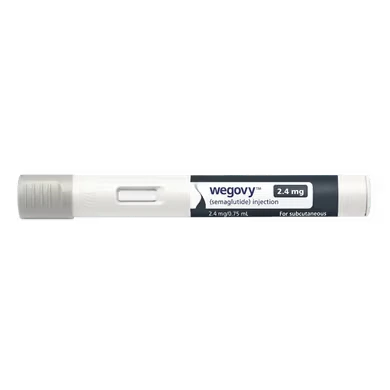
Semaglutide is the molecule. For weight loss the FDA-approved version is Wegovy, sold as a weekly pen and a daily tablet. Ozempic is the same molecule approved for type 2 diabetes, so using it for weight is off-label. Compounded semaglutide is the same molecule from a compounding pharmacy, is not FDA-approved, and is what most cash buyers actually take because it costs a fraction of the brand. All three produce the same side effects. What differs is the approval, the oversight and the price.
Find more like it
Side effectsDose changeWeigh-in and resultsFood, protein and eatingFood noise and cravingsExercise and strengthAlcoholFatigueHeadacheMuscle loss
Up next
More from this collection




Watched it? See what it costs.
Every GLP-1 program we track, ranked by what actually leaves your account.