





GLP-1 TV
COMPOUND SEMAGLUTIDE/TIRZEPATIDE: HOW TO UNDERSTAND YOUR PRESCRIPTION
Today’s cheapest GLP-1$39/mo at Wellmedr, sale price.Compare all GLP-1 prices Price read 22 Nov 2026 from the seller’s own page, ranked by price alone. That price is a compounded drug, and compounded drugs are not FDA-approved. Not from the video’s creator.Our summary
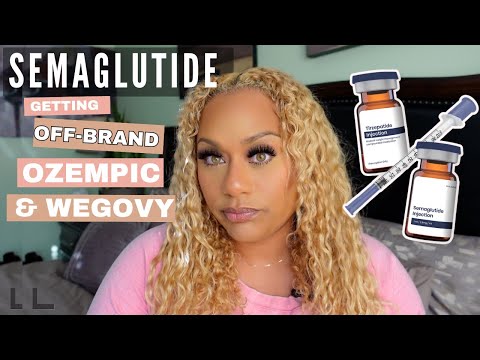
The speaker, who says she is a registered nurse with a 22-year career in cardiovascular, medical surgical and emergency medicine, walks through the compounded tirzepatide order she received. She says she chose compounded medication after trouble with her insurance company, prior authorizations and the GLP-1 shortage, and that she ordered through Amble Health. Her clinician at Amble sent the prescription to Revive compounded pharmacy in Houston, Texas.
Published by KEASHA DIXON on YouTube
As published by the channel. Not medical advice, and not an endorsement.
What else the video covers
She describes the delivery first. It arrives tightly packed and insulated, with ice, a vial and a sticker saying the medication is inside. She points out the highlighted instruction to refrigerate it. The pharmacy also included insulin syringes, which she describes as 31 gauge, 5/16 inch and 100 units. She explains that a higher gauge number means a smaller hole, and that a short needle suits a shallow injection under the skin.
Most of the video covers the label. She says her vial holds tirzepatide at a concentration of 10 mg per 0.5 mL in sterile water, and she stresses that concentration is different from dose. The vial holds 2 mL, or 200 units, which she says gives four doses. Her instructions are to inject 0.5 mL, written as 50 units, subcutaneously once a week. She also tells viewers to record three things from the vial: the date made (3/14/24 on hers), the lot number and the best used by date (9/10/24 on hers). Injection technique is left for her next video.
Our summary of what is said, in our words. Doses, results and prices are the speaker’s, not advice.
Takeaways
The main points, in the order they come up. Tap a time to play from there.
- 1:00 She says the pharmacy sent 31 gauge, 5/16 inch, 100 unit insulin syringes and explains what gauge and length mean.
- 2:03 She shows the insulated package with ice and a vial, and points to the highlighted instruction to refrigerate.
- 2:36 She reads her label, which lists tirzepatide 10 mg diluted in 0.5 mL of sterile water.
- 3:36 She explains that concentration (10 mg per 0.5 mL) is not the same as dose, and that her 2 mL vial gives four doses.
- 4:42 She says her instructions are to draw up 50 units, equal to 0.5 mL, and inject subcutaneously every week.
- 6:47 She advises recording the made date, lot number and best used by date from the vial.
Key moments
Tap one to play from there.
What the video says
As stated in the video, not checked by us. Doses and results are the speaker’s, not advice.
- Medication
- semaglutide and tirzepatide
Questions this video answers
What is the difference between concentration and dose on a compounded tirzepatide label?
The speaker explains that concentration is how much medication is in a given volume, while dose is how much you inject. On her label the concentration is 10 mg per 0.5 mL, and the dose is 0.5 mL, written as 50 units.
How many doses are in a 2 mL vial of compounded tirzepatide?
She says her vial has 2 mL, which equals 200 units. At 50 units per dose, she says that gives four doses.
What size insulin syringe came with the compounded medication?
According to the video, the syringes were 31 gauge, 5/16 inch and 100 units. She says the high gauge number means a very small hole, and the short needle is enough for an injection just under the skin.
What information should you record from a compounded medication vial?
She recommends writing down three numbers: the date the medication was made, the lot number and the best used by date. She says her vial was made 3/14/24 and has a best used by date of 9/10/24.
Videos on the same question
The closest videos in the library by what is said in them, not by title.
 Tirzepatide Injection Process Explained: GLP-1, Tirzepatide, SemaglutideIn this short video, a woman who gives her name as the speaker shows how she gives herself her weekly injection of compounded tirzepatide.
- Already on a GLP-1? What your next month costs at every programToday’s lowest is $39/mo. Every program ranked by price alone. Compounded drugs are not FDA-approved.
 CoreAge Rx Injection Guide - Semaglutide & Tirzepatide Step-by-StepThe narrator says the goal is to make the process simple whether a person is just starting or already on a regular dose.
 Step by Step: How to Inject Tirzepatide & Semaglutide | GLP-1 Guide | Beginner FriendlyIn this beginner-focused walkthrough, the speaker, who describes herself as a 54 year old nurse practitioner, shows how she gives herself a weekly GLP-1 injection from a vial using a syringe.
 How I chose a provider! | PURE Tirzepatide CompoundingThe speaker, who runs Millennial the speaker's Health Spot, explains how she picked a compounding provider for her first compounded tirzepatide order.
 How to reconstitute/mix your compound #tirzepatide #semaglutide #weightlossIn this video, the channel shows how she mixes a 10 milligram vial of tirzepatide that she says she bought from AC Peptides.
 This is why compounded #semaglutide and #tirzepatide are hard to properly dose.According to the video, the host uses a kitchen analogy to explain why compounded semaglutide and tirzepatide doses can look so different from one prescription to the next.
Read next
Our guides closest to what this video covers, with prices checked weekly.
- 503A vs 503B pharmacies: who makes compounded semaglutide and tirzepatide, and how to check yours
A 503A pharmacy is a state-licensed pharmacy that compounds one prescription for one named patient, overseen mainly by its state board of pharmacy. A 503B outsourcing facility registers with FDA, follows the same manufacturing rules as drug factories (cGMP), is inspected by FDA and may make batches without a prescription. Since the shortages ended in 2025, both face tight limits on copying semaglutide and tirzepatide. FDA's records show 19 registered 503B facilities reported a compounded GLP-1 in the last two years.
- Compounded tirzepatide: what it is, what FDA says now the shortage is over, and what it costs against Zepbound
Compounded tirzepatide is Zepbound's molecule made by a licensed pharmacy rather than Lilly, sold through telehealth programs from $69 a month on our board against Lilly's $299 to $699 ($449 on the KwikPen from 7.5 mg with on-time refills). It is not FDA-approved, and the legal ground under it has shifted: FDA says tirzepatide no longer appears on its shortage list, which was the condition that let pharmacies compound copies of an approved drug at scale. What remains is compounding for individual patients, FDA's list of specific concerns about how these products are dosed, shipped and labelled, and a price gap large enough that most cash buyers take the trade anyway. This page sets all of that out.
- The semaglutide dose ladder, and what each step costs
Semaglutide is titrated upward over months rather than started at the target dose, to let gastrointestinal side effects settle. For Wegovy the pen ladder runs 0.25 mg, 0.5 mg, 1 mg, 1.7 mg and 2.4 mg, with a 7.2 mg high-dose strength above it. The part most charts leave out is the money: Novo's own self-pay price is flat at $349 a month across every pen dose from 0.25 to 2.4 mg, so climbing the ladder does not raise the brand price, while many compounded sellers do charge more at higher doses. Here is the ladder, what each step costs at the cheapest verified seller, and which sellers hold one price the whole way.
Next steps
Compounded semaglutide prices
Find more like it
Dose changeInjection techniqueHow it works
Up next
More from this collection





Watched it? See what it costs.
Every GLP-1 program we track, ranked by what actually leaves your account.