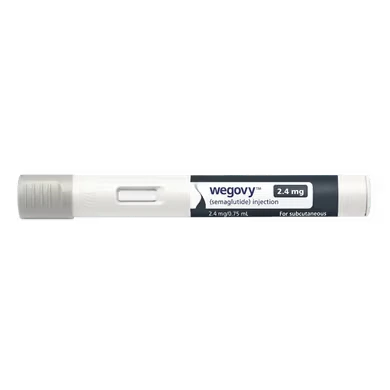

A 503A pharmacy compounds one prescription for one named patient and answers mainly to its state board of pharmacy. A 503B outsourcing facility registers with FDA, manufactures under cGMP, the quality rules drug factories follow, and is inspected by FDA. The names come from two sections of the federal Food, Drug, and Cosmetic Act.12 Both can legally make a compounded drug. Neither makes an FDA-approved one: compounded drugs are not FDA-approved, which means FDA does not check their safety, effectiveness or quality before they are sold.5
Registered 503B outsourcing facilities that reported a compounded semaglutide, tirzepatide or liraglutide product to FDA in the last two years, from FDA's compounded-product file dated 18 September 2026. Fifteen appear in the first-half 2025 reports; six in the first-half 2026 reports.13
If you take compounded semaglutide or tirzepatide, the difference is not academic. Since FDA declared both shortages over in 2025, the rules for who may still make these drugs, and how many, have tightened for both kinds of compounder.8 This page explains the two categories in plain words, shows which 503B facilities have reported GLP-1s to FDA, decodes the label on your vial, and gives you five questions that tell you which pharmacy fills your prescription.
503A vs 503B at a glance
Every row below comes from the statute or from FDA's own pages. Read it as two different legal routes to the same kind of product, not as a ranking.
| 503A compounding pharmacy | 503B outsourcing facility | |
|---|---|---|
| Law | FD&C Act section 503A, 21 U.S.C. 353a, in force since 19981 | FD&C Act section 503B, 21 U.S.C. 353b, created by the Drug Quality and Security Act of 27 November 20134 |
| Who it makes drugs for | An identified individual patient, on a valid prescription1 | Patients on prescriptions, or clinics and hospitals for office use, without a prescription for each unit2 |
| Licence | A state-licensed pharmacy (or a federal facility, or a physician)1 | Registers with FDA every year; it is not required to be a licensed pharmacy under federal law211 |
| Main regulator | The state board of pharmacy; FDA inspects for surveillance or for cause5 | FDA, on a risk-based inspection schedule45 |
| Manufacturing standard | Pharmacy compounding standards; not cGMP5 | Current good manufacturing practice (cGMP), the standard for drug makers45 |
| Adverse-event reports to FDA | Not required by federal law15 | Required2 |
| Product reports to FDA | None | Every June and December, listing what it compounded in the previous six months24 |
| Bulk ingredient (API) rules | API must meet a USP monograph or be a component of an approved drug, from an FDA-registered maker, with a certificate of analysis1 | Only APIs on the 503B bulks list, or drugs on FDA's shortage list at the time29 |
| Copies of approved drugs | Not "regularly or in inordinate amounts"; FDA says four or fewer prescriptions a month of a copy draws no action17 | Not allowed unless the approved drug is on the shortage list2 |
| Shipping out of state | Capped at 5% of its prescriptions unless its state signs an agreement with FDA1 | No federal cap; state licences still apply |
| Label | Your prescription label, under state pharmacy rules | A federally set label: "This is a compounded drug", the facility's name, address and phone, the date compounded and more3 |
Two things surprise most readers. First, "503B" does not mean "approved". FDA inspects the factory, not the finished product, and a 503B drug still skips FDA's premarket review.4 Second, "503A" does not mean "unregulated". A 503A pharmacy holds a state licence, works to pharmacy compounding standards and can be inspected by its board and by FDA.5
What a 503A pharmacy is
Section 503A covers the pharmacy most people picture: a licensed pharmacist in a state-licensed pharmacy preparing a medicine for you. The statute's core condition is that the drug is "compounded for an identified individual patient based on the receipt of a valid prescription order".1 That one phrase sets the shape of the whole business. A 503A pharmacy fills prescriptions, one patient at a time, and may only prepare limited quantities ahead of time based on the prescriptions it usually receives.1
Its day-to-day regulator is the state board of pharmacy in the state where it sits, plus every other state it ships into that requires a non-resident licence. FDA keeps the right to inspect, and does so for surveillance or when it has a reason, but it does not run a routine schedule for 503A pharmacies the way it does for 503B facilities.5
The limits that matter for GLP-1s
- No regular copying. A 503A pharmacy may not compound "regularly or in inordinate amounts" any drug that is essentially a copy of a commercially available product.1 Once a shortage ends, FDA generally treats the brand as commercially available again.7
- Four a month. FDA has said it does not intend to act against a compounder that fills four or fewer prescriptions of a copy in a calendar month.7
- A documented difference. The copy rule does not apply where the prescriber determines and documents that a change produces a significant difference for an identified patient.7 Different strengths, added ingredients and dosage forms are where this argument gets made, and FDA has said that semaglutide combined with vitamin B12 at strengths within 10% of the approved products may still count as a copy.7
- Five percent out of state. Unless its home state has signed a memorandum of understanding with FDA, a 503A pharmacy may ship compounded drugs across state lines only up to 5% of its total prescriptions.1
What a 503B outsourcing facility is
Congress created the 503B category in the Drug Quality and Security Act, signed on 27 November 2013.4 The law defines an outsourcing facility as a facility at one address that compounds sterile drugs, has elected to register, and meets every requirement of the section.2 It does not have to be a licensed pharmacy, and it may or may not work from individual prescriptions.2
What it gets in exchange for registering is scale: it can make batches for clinics and hospitals as "office use" stock. What it gives up is the lighter pharmacy rulebook. A 503B facility:
- registers with FDA every year and pays an annual fee; a facility that does not re-register between 1 October and 31 December drops off the list on 1 January;11
- manufactures under cGMP, the regulations that apply to drug companies;45
- is inspected by FDA on a risk-based schedule that weighs compliance history, recalls and the risk of the drugs it makes;24
- reports its products to FDA each June and December, which is why its compounded drugs can carry a National Drug Code and appear in FDA's directory;213
- labels every product to a federal format (the full list is in the label section below).3
The 503B rule that decides the GLP-1 question is about ingredients. An outsourcing facility may compound from a bulk active ingredient only if that ingredient is on FDA's 503B bulks list, or if the drug it makes is on FDA's shortage list at the time it is compounded, distributed and dispensed.29
Who may still compound semaglutide and tirzepatide
Short answer: both kinds of compounder face hard limits, and neither has the broad permission the shortage years gave them. FDA's 1 April 2026 update says plainly that tirzepatide and semaglutide do not appear on the 503B bulks list or on FDA's drug shortage list.7
The dates, from FDA's own page
| Date | What FDA did or said |
|---|---|
| 19 Dec 2024 | Issued a new decision that the tirzepatide injection shortage is resolved, after a court sent the October 2024 decision back for review8 |
| 21 Feb 2025 | Determined the semaglutide injection shortage is resolved8 |
| Mar 2025 | Grace period for tirzepatide ended for 503A pharmacies after a court denied an injunction; 503B facilities had until 19 March 20258 |
| Apr to May 2025 | Grace period for semaglutide injection ended for 503A pharmacies; 503B facilities had until 22 May 20258 |
| 1 Apr 2026 | Restated the 503A and 503B conditions, including the four-a-month position and the B12 example; neither drug on either list7 |
| 30 Apr 2026 | Proposed to exclude semaglutide, tirzepatide and liraglutide from the 503B bulks list, finding no clinical need9 |
| 26 Jun 2026 | Extended the comment period on that proposal to 30 July 202610 |
| 15 Oct 2026 | No final notice in the Federal Register when we searched it; the exclusion is still a proposal (our check) |
Most pages still give 29 June 2026 as the comment deadline. That was the original date in FDA's announcement;9 the Federal Register notice of 26 June moved it to 30 July.10 FDA said it will consider the comments before making a final determination.9
What that leaves each kind of compounder
A 503A pharmacy can still fill an individual prescription for compounded semaglutide or tirzepatide, but not as a routine copy of Wegovy, Ozempic, Zepbound or Mounjaro. It needs either a documented prescriber determination that the patient needs a significant difference, or volumes inside FDA's four-a-month position.7 That is why so many compounded GLP-1 prescriptions now name a different strength, an added ingredient or a different form than the brand.
A 503B facility cannot compound semaglutide or tirzepatide from bulk API while neither drug is on the bulks list or the shortage list.79 If FDA finalizes the April 2026 proposal, that position becomes permanent unless a future shortage reopens it.9
None of this is a statement about any particular pharmacy or program, and FDA's page notes it may still act on other grounds, such as quality.8 It is the frame inside which every compounded GLP-1 sold in the US is now made.
The 503B facilities that reported compounded GLP-1s to FDA
Outsourcing facilities that assign NDCs report what they compounded each June and December, and FDA's directory keeps compounded products reported within the last two years.13 We cross-checked that file (dated 18 September 2026) against FDA's registered outsourcing facility list. Nineteen registered facilities reported a compounded semaglutide, tirzepatide or liraglutide product. Each name links to our page for that facility, which carries FDA's full registration and inspection record; the last column links to the products it reported.
| Facility (FDA name) | Location | GLP-1s in its reports | Report periods | Registered since | Last FDA inspection | Products |
|---|---|---|---|---|---|---|
| AnazaoHealth Corporation | Las Vegas, NV | Tirzepatide | H1 2025 | Sep 2014 | Aug 2025 | 2 |
| Annovex Pharma, Inc. | Lorton, VA | Semaglutide, tirzepatide | H1 2025 | Oct 2021 | Jun 2026 | 5 |
| Apollo Care | Columbia, MO | Semaglutide, tirzepatide | H2 2024, H2 2025, H1 2026 | Sep 2017 | Jul 2026 | 8 |
| Apothecary Pharma, LLC | Cary, NC | Tirzepatide | H1 2026 | Sep 2024 | Sep 2026 | 5 |
| BPI Labs LLC | Largo, FL | Semaglutide, tirzepatide, liraglutide | H2 2024 to H1 2026 | Mar 2019 | Apr 2026 | 14 |
| Delta Pharma Inc. | Ripley, MS | Semaglutide | H1 2025 | Aug 2014 | Nov 2025 | 1 |
| Eagle Pharma | Birmingham, AL | Semaglutide | H1 2025 | Jun 2015 | Sep 2026 | 2 |
| Empower Pharma | Houston, TX | Semaglutide, tirzepatide | H1 2025 | Jul 2016 | Nov 2025 | 4 |
| Fagron Sterile Services | Wichita, KS | Semaglutide | H2 2024, H1 2025 | Oct 2015 | Aug 2025 | 2 |
| Hybrid Pharma, LLC | Deerfield Beach (state listed by FDA as CA) | Semaglutide, tirzepatide | H2 2024 to H1 2026 | Jan 2015 | Aug 2026 | 4 |
| MedisourceRx | Los Alamitos, CA | Semaglutide | H2 2024, H1 2025 | Feb 2017 | Jun 2025 | 1 |
| Olympia Pharmaceuticals | Orlando, FL | Liraglutide | H1 2026 | Mar 2014 | Sep 2026 | 1 |
| OurPharma LLC | Fayetteville, AR | Semaglutide | H2 2024, H1 2025 | Mar 2019 | Aug 2026 | 3 |
| PGRrx LLC | Exton, PA | Tirzepatide | H1 2026 | Dec 2024 | Not yet inspected | 1 |
| PQ Pharmacy LLC | Brooksville, FL | Semaglutide, tirzepatide, liraglutide | H2 2024 to H2 2025 | Oct 2020 | Jun 2026 | 7 |
| Signature Rx | Delray Beach, FL | Semaglutide | H1 2025 | Oct 2023 | Not yet inspected | 1 |
| Tailstorm Health Inc. | Chandler, AZ | Semaglutide, tirzepatide | H2 2024, H1 2025 | Oct 2019 | Aug 2026 | 11 |
| Turbare Manufacturing | Conway, AR | Semaglutide | H1 2025 | Jun 2023 | May 2026 | 2 |
| Wells Pharma of Houston, LLC | Houston, TX | Semaglutide | H1 2025 | Mar 2020 | Apr 2026 | 1 |
Sources: FDA's compounded NDC directory file (18 September 2026) and FDA's registered outsourcing facility table (update of 30 September 2026), both read on 14 October 2026. "H1 2025" is the report covering January to June 2025. A report lists what a facility compounded in that period; it does not say who bought it, which telehealth program sold it, or whether a product is still made. Inspection dates are FDA's, and our facility pages print FDA's full record for each.
What the reports show
- The count fell after the shortages ended. Fifteen of the nineteen facilities appear in the first-half 2025 reports, the period that ran into the semaglutide grace-period end in May 2025. Four appear in the second-half 2025 reports and six in the first-half 2026 reports.
- Semaglutide nearly dropped out. Fourteen facilities reported semaglutide in the first-half 2025 reports; two did in the first-half 2026 reports.
- The 2026 tirzepatide entries are mostly combinations. In the first-half 2026 reports, tirzepatide appears alongside vitamin B12, glycine or pyridoxine (vitamin B6) in several entries. FDA has said a combination at strengths close to the approved drug may still be treated as essentially a copy;7 whether a given product qualifies is for FDA, not for us.
- Liraglutide shows up. Three facilities reported compounded liraglutide, the molecule in Saxenda and Victoza, and FDA's April 2026 proposal covers it too.9
An NDC on a compounded product is a reporting number, not an approval. FDA says inclusion in the directory does not mean FDA has verified the information or that the product is FDA-approved.13 Every product behind the table is on our GLP-1 supplier registry, with its strength, form and reporting period.
All registered 503B facilities, by state
FDA's table is the only official list of outsourcing facilities, and it changes weekly.11 As we read it on 14 October 2026 (FDA's update of 30 September 2026), it held 98 facilities. Texas and Florida together hold a third of them.
| State | Registered 503B facilities |
|---|---|
| Texas | 18 |
| Florida | 15 |
| New Jersey | 8 |
| California | 8 |
| Pennsylvania | 5 |
| Colorado, Tennessee | 4 each |
| Arkansas, Missouri, Nevada, Ohio | 3 each |
| Alabama, Arizona, Connecticut, New York, Oklahoma, South Carolina | 2 each |
| Eleven other states and Puerto Rico, plus one row with no state | 1 each |
- 57 of the 98 have been inspected; 41 have not yet been. FDA adds a facility to its inspection list once it registers and plans to inspect within a reasonable time after production starts, so a new registrant often shows "Not yet inspected".11
- 26 registered for the first time in 2025 or 2026. Ten have been on the list since before 2015.
- 92 of 98 told FDA they intend to compound sterile drugs from bulk substances. FDA notes it has not verified that column.11
Two terms in FDA's table trip people up. A Form FDA 483 lists what investigators observed during an inspection; FDA says it is not a final agency determination that anything broke the law.11 And "Open" means FDA has not yet decided whether further action will follow.11 Neither is a verdict. FDA's table also leaves out state board actions entirely, so a full check means looking at the state board too.11 The whole list, searchable, is on our outsourcing facility tracker, and the rest of FDA's GLP-1 record is on the safety hub.
The pharmacy names people search for
Four pharmacy names come up again and again in GLP-1 searches: Empower (about 40,500 searches a month), Strive (27,100), Hallandale (18,100) and Olympia (14,800). Here is what each says about itself and how that lines up with FDA's list. We describe registration and location only; nothing here rates any of them.
| Pharmacy | What it says it is | On FDA's 503B list? | Where |
|---|---|---|---|
| Empower | A 503A pharmacy and a 503B outsourcing facility; says it is licensed to ship nationwide, including Puerto Rico17 | Yes, as "Empower Pharma", Houston, TX, and "Empower Clinic Services New Jersey", East Windsor, NJ12 | Houston, TX |
| Olympia | Both a 503A compounding pharmacy and an FDA-registered 503B outsourcing facility18 | Yes, as "Olympia Pharmaceuticals", Orlando, FL12 | Orlando, FL |
| Strive | A compounding pharmacy whose compounded medications all require a patient-specific prescription19 | No Strive facility on the list as of 14 October 2026 (our check) | Locations in Arizona, Virginia, Texas, California, Missouri and Florida20 |
| Hallandale | A "503A designated pharmacy" working to USP 797, with PCAB accreditation21 | No Hallandale facility on the list as of 14 October 2026 (our check) | Fort Lauderdale, FL22 |
The practical point: a pharmacy name alone does not tell you whether your vial came from its 503A pharmacy or its 503B facility, because two of these four run both. The label does, and so does asking (both covered below). Neither Empower Pharma nor Olympia Pharmaceuticals reported compounded semaglutide in the first-half 2026 reports, per the table above.
State boards, PCAB and other checks
State boards of pharmacy. For a 503A pharmacy, the state board is the main regulator.5 It issues the licence, inspects, and posts discipline. A pharmacy shipping to you across state lines usually also needs a non-resident licence from your state, so the two boards to check are the pharmacy's home state and yours. Most boards run a free online licence lookup by pharmacy name.
FDA, for 503B. Search the facility's name on FDA's registered outsourcing facility list, or on our version of it. A facility that stops re-registering falls off on 1 January.11 Remember that the list shows FDA actions only, not state ones.11
PCAB accreditation. PCAB is a private accreditation for compounding pharmacies, now run by ACHC, not a government licence. ACHC describes it as a benchmark for compounding practice and notes that pharmacies are regulated by FDA federally and by state boards locally.16 Accreditation means an outside surveyor has checked the pharmacy against published standards; its absence does not make a pharmacy unlicensed. Ask for it, and confirm it with ACHC directly.
FDA's own advice. FDA tells patients to get a prescription from their doctor and fill it at a state-licensed pharmacy.15 That sentence is the floor for any compounded GLP-1, whichever kind of compounder makes it.
How to read the label on a compounded GLP-1 vial
The label is the fastest way to know who made your drug. The two kinds of compounder label differently, and the difference is visible.
A 503B label
The statute fixes what an outsourcing facility's label must show.3 Look for each of these:
| On the label | What it tells you |
|---|---|
| "This is a compounded drug" (or a similar statement) | It is not the brand, and it is not FDA-approved35 |
| The facility's name, address and phone number | Who made it; check that name and city on FDA's list3 |
| Established name, dosage form and strength | The molecule (semaglutide or tirzepatide) and its concentration per mL3 |
| Date compounded, storage and handling | How fresh it is and how to keep it3 |
| NDC number, if assigned | A reporting number you can search in FDA's directory; not an approval313 |
| "Not for resale", and "Office Use Only" if it was not made on a prescription for you | Office-use stock is meant to be given in a clinic, not resold3 |
| Active and inactive ingredients | Whether anything else is in the vial, such as B123 |
A 503A label
A 503A drug arrives as your prescription, so the label is a pharmacy prescription label set by state rules: your name, the prescriber, the pharmacy's name and address, a prescription number, the drug and strength, directions from your prescriber and a beyond-use date. If the label shows a pharmacy name and an Rx number made out to you, and no "This is a compounded drug" statement in the federal format, it is most likely a 503A fill. If unsure, the pharmacy can tell you which of its licences it filled your order under.
What to check on any label
- The pharmacy exists and made it. FDA has seen compounded semaglutide and tirzepatide with labels naming pharmacies that do not exist, and labels naming real pharmacies that did not make the product.14 Call the pharmacy on the label using a number you looked up yourself.
- Spelling and addresses. FDA lists spelling errors on the label and wrong pharmacy addresses among the signs to watch for.15
- The active ingredient. FDA says salt forms such as semaglutide sodium and semaglutide acetate are different active ingredients from the one in the approved drugs.14 The label or the pharmacy should tell you which one you have.
- Multi-dose vials. FDA generally recommends using multi-dose sterile vials within 28 days of first use.14 Any question about how much to draw or inject goes to your prescriber or the compounder, which FDA also tells patients to contact about label instructions.15
- Cold on arrival. FDA recommends not using an injectable GLP-1 that arrives warm or without adequate refrigeration.14
Our guides on whether compounded semaglutide is safe and on compounded tirzepatide cover the clinical side; this page stays with who makes it.
How to ask your program which pharmacy fills it
Most people buy compounded GLP-1s through a telehealth program, and the program, not you, picks the pharmacy. FDA notes that people buying this way may not know which compounder made their drug.6 Good programs answer this in one message. Send these five questions before your first order:
- Which pharmacy will fill my prescription, and in which state is it licensed? Ask for the legal name, not a brand name.
- Is it a 503A pharmacy or a 503B outsourcing facility? If 503B, check the name on FDA's list. If 503A, check the state board licence, and your own state's non-resident licence if it ships to you.
- Is the active ingredient the base molecule or a salt form, and is anything added? The answer should match what the label will say.
- Is the pharmacy accredited (PCAB or similar)? Not required, but a useful extra check.
- If the pharmacy changes, will you tell me first? Programs sometimes switch pharmacies, and the label is the only other way you would know.
Keep the answers with the date. When your first vial arrives, match the pharmacy name, address and active ingredient on the label to what you were told. For the wider checklist on any GLP-1 seller, see how to check a GLP-1 seller.
Does 503A or 503B change the price?
Not in a way you can see. Programs quote one monthly price and rarely say which kind of compounder fills it, and the price is set by the program, not the pharmacy. What changes price is the molecule, the plan length and any membership fee. Today the cheapest compounded semaglutide we can verify is $69 a month all in, and the cheapest compounded tirzepatide is $85.
Live chart · checked 3 Oct 2026
Every semaglutide price we track, all in
21 programs, cheapest first: the monthly price plus any membership fee, read off each seller's own page. One program priced above three times the median is left off the chart to keep it readable. The full ranking
That chart mixes brand and compounded semaglutide, because both are what people compare. For the approved drugs, the lowest all-in Wegovy we track is $208 a month and the lowest Zepbound is $348. Whatever separates those figures from the compounded ones is what you pay for an FDA-approved finished product. Prices across the market since we started tracking:
The GLP-1 Price Index · 15 Oct 2026
Semaglutide cash prices since we started tracking
modeled reconstruction observed median middle half of programs
The median all-in monthly price across the programs quoting that day, with the cheapest and dearest. How the index is built
And the live ranking, re-checked weekly, for the molecule most compounded GLP-1 users take:
For tirzepatide, the same comparison lives on the tirzepatide ranking, and the compounded molecule pages are compounded semaglutide and compounded tirzepatide.
The short version
503A is a pharmacy filling your prescription under a state licence. 503B is an FDA-registered facility manufacturing under cGMP and FDA inspection. Both make drugs FDA has not approved, and since 2025 both face tight limits on semaglutide and tirzepatide: 503A pharmacies on routine copies, 503B facilities on bulk ingredients, with FDA's proposal to make the 503B limit permanent still pending as of 15 October 2026. The reports FDA collects show the number of 503B facilities making GLP-1s shrinking from fifteen to six in a year. Whatever your program uses, you are entitled to know the pharmacy's name, licence and type, and the vial label should confirm it.