




GLP-1 TV
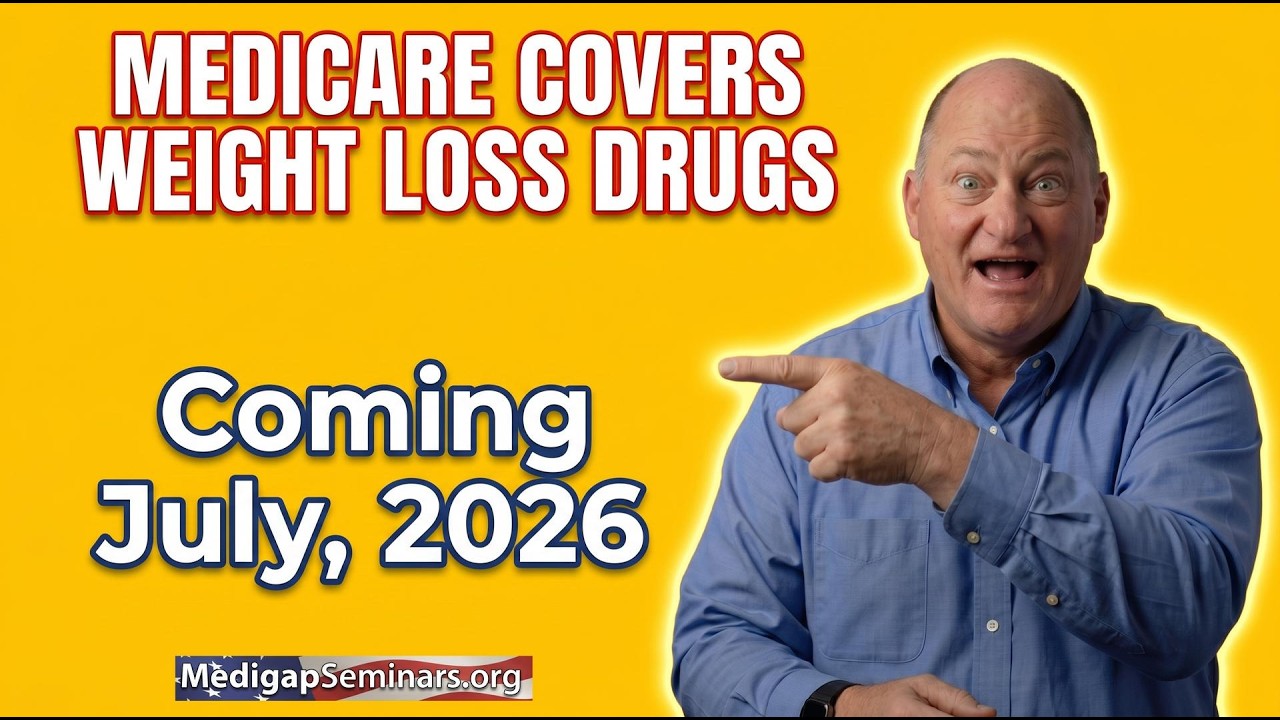
Medicare Will Now Cover Weight Loss Drugs for $50 — But There's a Catch
Today’s cheapest GLP-1$39/mo at Wellmedr, sale price.Compare all GLP-1 prices Price read 22 Nov 2026 from the seller’s own page, ranked by price alone. That price is a compounded drug, and compounded drugs are not FDA-approved. Not from the video’s creator.Our summary
According to the video, CMS has announced a temporary Medicare GLP-1 Bridge program scheduled to start July 1, 2026 and expected to run through December 31, 2027. The speaker says it is meant to give limited access to certain GLP-1 weight loss drugs, such as Wegovy and Zepbound, ahead of a larger planned Medicare model called the Balance, expected in 2027. He explains that Medicare has generally not covered these drugs for weight loss alone because of a 2003 law, though they may be covered under Part D when prescribed for conditions like type 2 diabetes, cardiovascular disease or obstructive sleep apnea.
Published by MedigapSeminars.org on YouTube
As published by the channel. Not medical advice, and not an endorsement.
What else the video covers
The speaker says eligible people would pay about $50 per month, compared with roughly $1,000 per month without coverage. Reported eligibility centers on Part D enrollment plus a BMI of 35 or higher, or a BMI of 27 or higher with a condition such as high blood pressure. He stresses that prior authorization, documentation and lifestyle counseling are expected. He also says the $50 copay generally does not count toward Part D out-of-pocket spending, and that low-income subsidy help apparently does not apply. According to him, the program should not directly raise Part B or ordinary Part D premiums during the bridge period, but moving these drugs into standard Part D later could.
The video also covers medical cautions and next steps. The speaker says the drugs can cause side effects and that, in his view, muscle and bone loss come from reduced eating and malnutrition rather than the drugs directly. He suggests talking to a doctor, checking BMI and current drug coverage, and watching for guidance, since 2027 Part D plan choice may matter.
Our summary of what is said, in our words. Doses, results and prices are the speaker’s, not advice.
Takeaways
The main points, in the order they come up. Tap a time to play from there.
- 2:00 The speaker says Medicare generally does not cover GLP-1 drugs for weight loss alone because of a 2003 law, though covered conditions can qualify.
- 3:07 He describes the Bridge as a temporary demonstration running July 1, 2026 through December 31, 2027, not a permanent law change.
- 4:08 He says reported eligibility is a BMI of 35 or higher, or 27 or higher with a condition such as high blood pressure, with prior authorization likely.
- 7:41 The $50 monthly copay reportedly does not count toward Part D out-of-pocket spending or apply to low-income subsidy help.
- 9:44 He says the Bridge should not directly raise Part B or ordinary Part D premiums, but later standard Part D coverage could affect them.
- 12:51 He advises preparing by talking to a doctor, knowing your BMI, and noting that 2027 Part D plan choice may matter.
Key moments
Tap one to play from there.
- 0:00 Breaking Medicare News: $50 GLP-1 Weight Loss Drugs
- 0:49 What Is the Medicare GLP-1 Bridge Program?
- 1:28 The Hidden Catch Most Headlines Ignore
- 2:10 Why Medicare Usually Does NOT Cover Weight Loss Drugs
- 2:57 How CMS Is Working Around the Medicare Law
- 3:26 Temporary Program vs Permanent Medicare Coverage
- 4:02 Who Actually Qualifies for $50 Wegovy or Zepbound?
- 4:40 The Biggest Misunderstanding About Eligibility
What the video says
As stated in the video, not checked by us. Doses and results are the speaker’s, not advice.
- Medication
- Ozempic, Wegovy, Zepbound and Mounjaro
- Side effects mentioned
- muscle loss
Questions this video answers
How much will Medicare charge for Wegovy and Zepbound under the GLP-1 Bridge program?
According to the video, eligible beneficiaries would pay about $50 per month, compared with more than $1,000 per month without insurance support. The speaker says this copay generally does not count toward Part D out-of-pocket spending.
Who qualifies for the Medicare GLP-1 Bridge program?
The speaker says eligibility appears to be for people enrolled in Part D, standalone or through an Advantage plan, with a BMI of 35 or higher, or 27 or higher with a condition like high blood pressure. He adds that prior authorization, physician documentation and lifestyle counseling are expected.
When does the Medicare GLP-1 Bridge program start and is it permanent?
The video says it is scheduled to start July 1, 2026 and is expected to run through December 31, 2027. The speaker says it is a temporary demonstration, and that permanent coverage would likely need congressional approval.
Will the Medicare GLP-1 Bridge raise my Medicare premiums?
According to the speaker, CMS says Part D plans do not carry the risk, so it should not directly raise Part B or ordinary Part D premiums during the bridge period. He says premiums could be affected later if these drugs move into standard Part D.
Videos on the same question
The closest videos in the library by what is said in them, not by title.
 Medicare's New GLP-1 Rule: The BMI Surprise You Need to KnowIn this podcast episode, host Anna Reisdorf, a registered dietitian, talks with the speaker, a physician assistant who works in obesity medicine, about the Medicare GLP-1 bridge program that starts July 1st, 2026.
- What a GLP-1 costs at every program we trackToday’s lowest is $39/mo. Every program ranked by price alone. Compounded drugs are not FDA-approved.
 Medicare Finally Covers Weight Loss Meds —Weight Loss Doctor Explains The GLP-1 Bridge ProgramThe speaker, who describes herself as a board-certified internal medicine and obesity medicine doctor, explains a new Medicare program called the Medicare GLP1 bridge.
 Medicare GLP-1 Coverage ExplainedIn this episode of the Weekly Dose podcast from On The Pen, the speaker explains two separate federal programs that he says are often confused: the Medicare GLP-1 Bridge Program and the Balance Model.
 Medicare GLP-1 Bridge Has a BIG Catch: Who Gets Left Behind?The creator explains a catch in the Medicare GLP-1 Bridge Program, which she says launched in July 2026 as a temporary demonstration.
 GLP-1 Drugs Are About to Destroy Medicare CostsAccording to the video, Medicare will begin covering weight loss drugs such as Wegovy and Zepbound in July 2026 through a temporary route, and the speaker argues this could change the math behind Medicare premiums.
 Medicare GLP-1 Bridge ProgramThe speaker, who describes herself as a board-certified family medicine and obesity medicine physician, introduces the Medicare GLP-1 Bridge Program.
Read next
Our guides closest to what this video covers, with prices checked weekly.
- Does Medicare cover GLP-1s? Ozempic, Wegovy and Zepbound, route by route
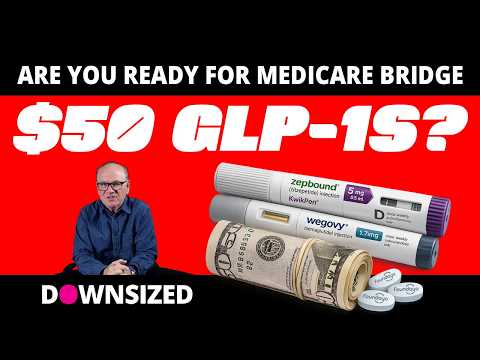
Yes, by two different routes. Medicare drug plans (Part D, including Medicare Advantage plans with drug coverage) cover Ozempic and Mounjaro for type 2 diabetes. For weight loss, the Medicare GLP-1 Bridge covers Wegovy (pen or pill), the Zepbound KwikPen and Foundayo for a $50 monthly copay from 1 July 2026 to 31 December 2027, if you meet CMS's BMI criteria. The catch: the Bridge runs outside Part D, so that $50 never counts toward your deductible or out-of-pocket cap.
- How to get a GLP-1 covered by insurance, in the order it actually works
There are four gates and most people fight the wrong one first. Before any clinical criterion applies, your employer has to have bought the weight-loss drug category at all, and if they did not, no BMI number and no comorbidity will change the answer. Once past that, the published criteria across the major insurers are strikingly consistent: BMI of 30 or more, or 27 with a weight-related condition, plus a documented period of lifestyle change, plus roughly 5 percent weight loss to stay approved at renewal.
- Does Medicaid cover GLP-1s? It depends which state, and on why
For type 2 diabetes, effectively yes everywhere: state Medicaid programmes must cover FDA-approved drugs for medically accepted indications, so Ozempic and Mounjaro are covered for blood sugar, almost always behind prior authorisation. For obesity it is a patchwork. As of January 2026 only 13 state Medicaid programmes covered GLP-1s for weight under fee-for-service. That is changing: CMS's BALANCE model began rolling out to state Medicaid programmes on 1 May 2026, but joining is voluntary for each state, and Medicaid out-of-pocket costs stay limited to nominal amounts under federal law.
Next steps
Wegovy prices
Find more like it
Weigh-in and resultsCost and insuranceExercise and strengthMuscle loss
Up next
More from this collection









Watched it? See what it costs.
Every GLP-1 program we track, ranked by what actually leaves your account.