GLP-1 TV · Patient story · views checked Oct 2026
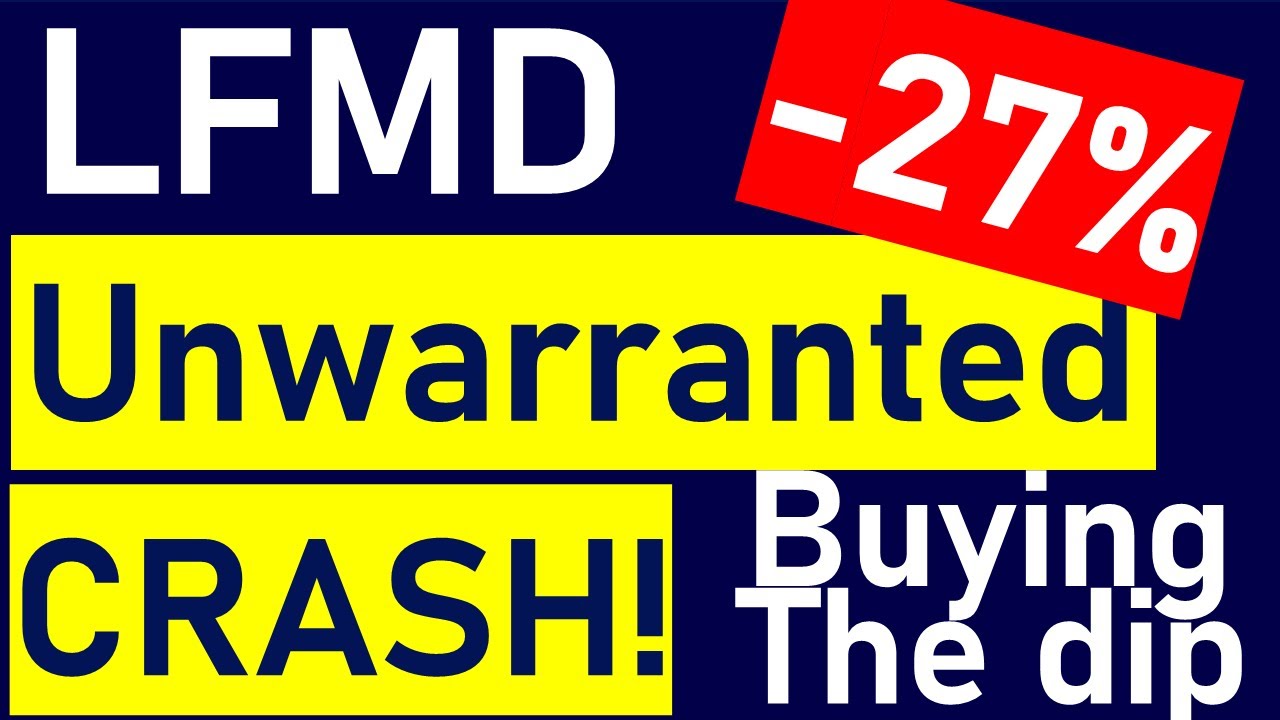
LifeMD Crashes -27% on GLP-1 Fears... Why I'm Buying The Dip! (LFMD Stock Analysis)
Patient story
Our summary
The creator of the Beat The Denominator channel explains why they bought LifeMD (LFMD) after the stock fell 27% on a Friday. They say the drop followed news that the FDA considers semaglutide no longer in shortage, which led investors to worry about LifeMD's ability to sell compounded semaglutide. According to the video, Hims & Hers fell 25% the same day, and LifeMD erased its year-to-date gain of 58%. The speaker adds that the FDA said two hours later it would not act against compounders for a while, and that compounding for specific patient needs remains allowed with documentation.
One person's experience, in their words. Not medical advice.
Where semaglutide costs least today
The three cheapest partner programs for semaglutide, all in per month, checked weekly.



What else the video covers
The speaker argues that GLP-1s are only a medium-sized part of LifeMD's business. They describe a doctor subscription model at $39 and $99 a month, a newly launched pharmacy licensed in 33 states, and a men's health brand called Rex MD. They say the last call cited $70 million of ED pill sales at 80% gross margins and 75,000 GLP-1 subscribers, which they estimate at about $75 million a year if each pays $100. They say LifeMD sells mostly branded GLP-1s and tries to get insurance to cover them, including through diabetes or other conditions, whereas Hims is entirely out of pocket and compounded.
The last section covers valuation. The speaker says LifeMD looks cheaper when valued as if it sells its WorkSimply software unit, with the medical business growing at 53% forward revenue versus 29% with WorkSimply included. They say this gives a growth-adjusted figure of 0.02, call the stock undervalued, and describe it as a speculative side position at about $5 a share. They state this is entertainment, not investment advice.
Our summary of what is said, in our words. Doses, results and prices are the speaker’s, not advice.
Takeaways
The main points, in the order they come up. Tap a time to play from there.
- 0:00 The speaker says LifeMD fell 27% and Hims fell 25% on the FDA shortage news, and that the drop was unwarranted.
- 1:00 The speaker says the FDA later signaled it would not act against compounders for now, and that patient-specific compounding stays allowed with documentation.
- 2:30 The speaker describes LifeMD's doctor subscription plans at $39 and $99 a month and its new pharmacy licensed in 33 states.
- 6:12 The speaker cites $70 million of ED pill sales at 80% gross margins and 75,000 GLP-1 subscribers from the last call.
- 7:43 The speaker says LifeMD sells mostly branded GLP-1s and works to get insurance coverage, unlike Hims, which is out of pocket and compounded.
- 12:15 The speaker values LifeMD as if WorkSimply is sold, citing 53% forward revenue growth and a 0.02 growth-adjusted figure, and calls it a speculative side position.
Key moments
From the creator's own chapters. Tap one to play from there.
What the video says
As stated in the video, not checked by us. Doses and results are the speaker’s, not advice.
- Medication
- semaglutide
- Prices mentioned
- $39 a month and $99 a month
- Who is speaking
- Patient
Questions this video answers
Why did LifeMD stock drop 27% in February 2025?
According to the video, the stock fell after the FDA considered semaglutide no longer in shortage, which raised concerns about LifeMD selling compounded versions. The speaker says Hims fell 25% the same day and that LifeMD erased its 58% gain for the year.
How is LifeMD's GLP-1 business different from Hims & Hers?
The speaker says LifeMD sells mostly branded GLP-1s such as Zepbound, Ozempic, Wegovy and Saxenda and tries to get insurance to cover them. Hims, in the speaker's description, is entirely out of pocket and sells compounded versions.
How many GLP-1 subscribers does LifeMD have?
The speaker says the last call mentioned 75,000 GLP-1 subscribers. Assuming each pays an average of $100, they estimate roughly a $75 million annual run rate.
Can compounded GLP-1s still be made after the shortage ends?
The speaker says compounding remains allowed for a specific patient need, as long as it is documented and proven. They say companies like LifeMD and Hims could still compound in certain cases.
Videos on the same question
The closest videos in the library by what is said in them, not by title.
 LIFEMD CEO: NOT Just A GLP-1 Company, They Are HealthCare Platform ($LFMD Impact Stock)In this interview, Tim of Alpha Wolf Capital talks with Justin Shriber, CEO of LifeMD, about how the company describes itself and where it is heading in 2026.
 HIMS: Compound Semaglutide OUT, Branded InThe host of On The Pen opens this March 9 live stream with news that Novo Nordisk and Hims & Hers have reached a deal.
 Hims Stock Down -11% as GLP-1 Shortage Ends for Drug that Hims STILL DOESN'T SELL and NEVER SOLD!The creator of the Beat The Denominator channel says Hims stock fell 11% after the FDA moved tirzepatide off its drug shortage list, even though, according to the video, Hims does not sell tirzepatide and never has.
 Geoff Cook (Noom CEO) - The future of compounded GLP-1sGeoff Cook, CEO of Noom, is interviewed on the Hims House podcast about Noom's shift from a behavior change app toward medicated plans.
About Beat The Denominator
Patient story, 23.9K subscribers. 5 of their videos are in GLP-1 TV, 13.4K views between them, mostly on Ozempic, Mounjaro.
- Hims Stock Down -11% as GLP-1 Shortage Ends for Drug that Hims STILL DOESN'T SELL and NEVER SOLD!
- Hims & Lilly's Tirzepatide: Perfect Match? What if Cmpnded Sema clients all switch to LLY's Tirze...
- Deep Dive on GLP-1s: Hims, Lilly, and Novo Nordisk. Are GLP-1s A Bigger Story Than Just Weight Loss?
Read next
Our guides closest to what this video covers, with prices checked weekly.
- Is LifeMD legit for weight loss? The program fee, the drug prices, and the reviews
Yes. As of October 2026 LifeMD is a real telehealth company: affiliated licensed providers prescribe branded GLP-1s such as Wegovy and Zepbound, its pages carry a LegitScript seal, it scores 3.9 on Trustpilot from 4,270 reviews, and FDA's warning-letter database lists no letter to it. The catch is cost. The weight program is $39 for the first month and $149 a month after that. The drug is billed on top: Wegovy pen from $199, Zepbound vial from $299.
- Microdosing GLP-1s: what it saves you, and what it doesn't
Microdosing a GLP-1 does not save money at a compounded seller: none of the compounded programs we track charges less for a smaller dose. Microdosing is not a medical term, and no dose below the label's starting dose has been studied for this. The one microdosing product on our board costs more a month than full-dose compounded tirzepatide at the cheapest seller we track. Where dose really moves the price is the brands; the provider table, per-mg costs and live numbers are below.
- Compounded tirzepatide: what it is, what FDA says now the shortage is over, and what it costs against Zepbound
Compounded tirzepatide is Zepbound's molecule made by a licensed pharmacy rather than Lilly, sold through telehealth programs from $85 a month on our board against Lilly's $299 to $699 ($449 on the KwikPen from 7.5 mg with on-time refills). It is not FDA-approved, and the legal ground under it has shifted: FDA says tirzepatide no longer appears on its shortage list, which was the condition that let pharmacies compound copies of an approved drug at scale. What remains is compounding for individual patients, FDA's list of specific concerns about how these products are dosed, shipped and labelled, and a price gap large enough that most cash buyers take the trade anyway. This page sets all of that out.
Find more like it
Cost and insuranceExercise and strength


Watched it? See what it costs.
Every GLP-1 program we track, ranked by what actually leaves your account.