
GLP-1 TV · Clinician
The Perimenopause Masterclass: Anxiety, Brain Fog, Broken Sleep, Weight Gain & GLP-1s
Today’s cheapest GLP-1$41/mo at Wellmedr, sale price.Compare all GLP-1 prices Price read 13 Nov 2026 from the seller’s own page, ranked by price alone. That price is a compounded drug, and compounded drugs are not FDA-approved. Not from the video’s creator.Our summary
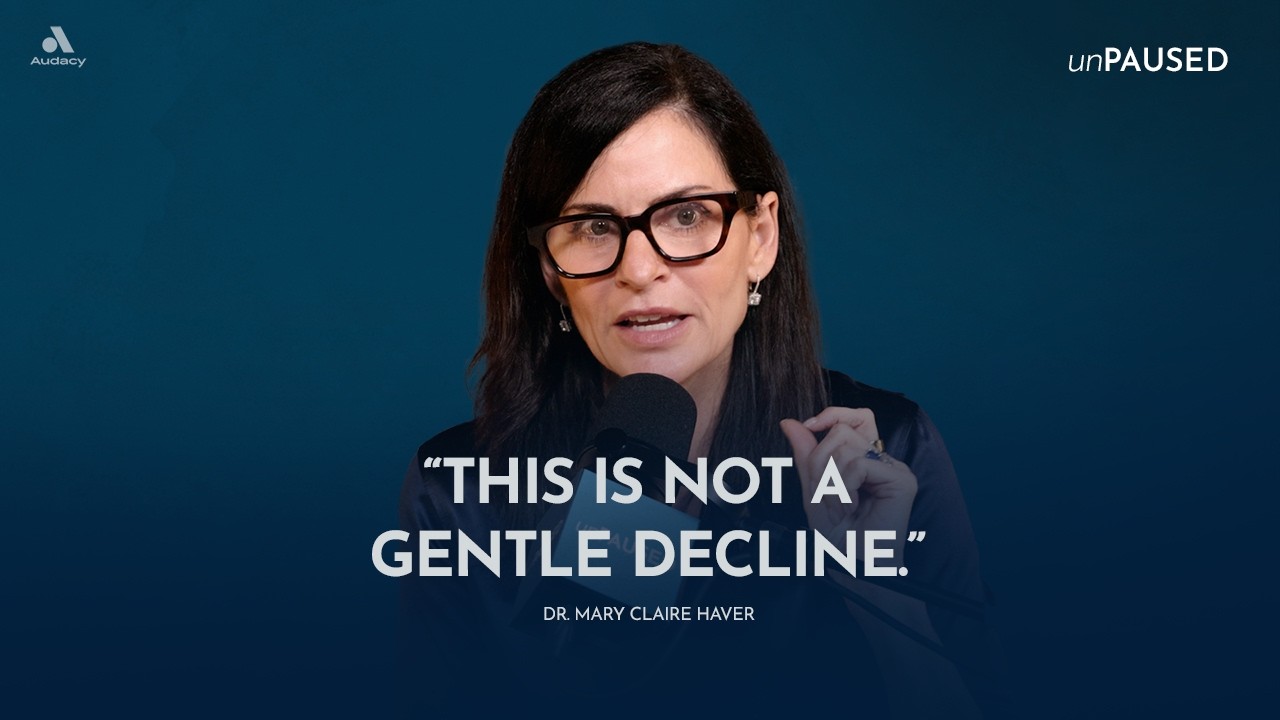
The speaker, who describes herself as a board-certified obstetrician and gynecologist and certified menopause practitioner, uses this episode of her podcast Unpaused to explain perimenopause. She says it is a distinct phase lasting 7 to 10 years before periods stop, with wildly fluctuating hormones. She says it often starts in the brain, with anxiety, depression, brain fog, poor sleep and a sense of not feeling like oneself, before cycles become irregular. She argues that a single blood, urine or saliva test is not useful for diagnosis, and that medicine has missed this phase because of a male default in research and training.
Published by Dr. Mary Claire Haver, MD on YouTube
As published by the channel. Not medical advice, and not an endorsement.
What else the video covers
She then covers body effects: bone loss that she says accelerates in perimenopause, a roughly 20% rise in LDL, stiffer arteries, and what she calls the metabolic syndrome of menopause, including a rise in visceral fat. She says doctors should look at hormone changes before prescribing antidepressants, statins or sedatives. She lists five labs she thinks women should know (fasting insulin and glucose, ferritin, vitamin D, Lp(a) and high-sensitivity CRP) and says hormone therapy helps but does not replace strength training, protein, sleep and stress care.
The GLP-1 segment runs from about 55:32 to 61:38. She says she was skeptical at first, worried about muscle loss, and changed her view after reading the research and following another speaker and another physician. In her clinic, she says, patients get a body scan, protein and resistance training guidance, a baseline bone density test before starting, and are counseled to come off or adjust the medication if muscle loss exceeds 10%. She calls GLP-1 therapy one tool among many and says it is not suitable for everyone. The video includes sponsor reads and promotion of her book.
Our summary of what is said, in our words. Doses, results and prices are the speaker’s, not advice.
Takeaways
The main points, in the order they come up. Tap a time to play from there.
- 0:02 The speaker says perimenopause is its own phase lasting 7 to 10 years, often starting in the brain with anxiety, brain fog and poor sleep before periods change.
- 21:57 She says a rise in belly fat, insulin resistance and LDL can come from estrogen loss across the menopause transition, not from letting yourself go.
- 44:00 She says hormone therapy is helpful but is not enough without strength training, adequate protein and other lifestyle changes.
- 46:30 She lists five labs she recommends knowing: fasting insulin and glucose, ferritin, vitamin D, Lp(a) and high-sensitivity CRP.
- 55:32 She describes how her clinic uses GLP-1 medications, with body scans, protein and resistance training, and a baseline bone density test first.
- 63:08 Her closing advice includes finding a menopause-trained provider, walking after dinner, tracking protein and committing to one change for three months.
Key moments
Tap one to play from there.
- 0:00 What Is Perimenopause? (And Why No One Talks About It)
- 1:30 “I Don’t Feel Myself”: The First Warning Signs
- 3:30 Hormonal Chaos Explained (Not a Slow Decline)
- 5:45 Why Symptoms Start Before Your Period Changes
- 7:00 The Medical System Failure in Women’s Health
- 9:00 Why Women Get Misdiagnosed (Anxiety, Sleep, Weight Gain)
- 12:00 The Hidden Health Risks: Heart Disease & Missed Signals
- 15:00 Why Doctors Aren’t Trained for Perimenopause
What the video says
As stated in the video, not checked by us. Doses and results are the speaker’s, not advice.
- Side effects mentioned
- fatigue and muscle loss
Questions this video answers
Does the speaker recommend GLP-1 medications during perimenopause?
She says she uses them appropriately in her clinic and has seen them work well for patients with lifelong weight struggles or insulin resistance. She also says they are not for everyone and are only one tool alongside resistance training, protein, sleep and stress care.
How does the speaker try to protect muscle and bone on a GLP-1?
She says her clinic body scans every patient, counsels on protein and resistance training, and recommends a baseline bone density test before starting. She says patients losing more than 10% of muscle mass are counseled to come off the medication or adjust the dose.
Why does belly fat increase in perimenopause according to this video?
She says estrogen loss, worsening insulin resistance, more inflammation and poor sleep all push fat toward the abdomen. She says visceral fat can double or triple across the transition.
Which blood tests does she suggest for midlife women?
She names fasting insulin and fasting glucose, ferritin, vitamin D, lipoprotein(a) and high-sensitivity C-reactive protein. She says a one-time hormone test is not very helpful in perimenopause.
Videos on the same question
The closest videos in the library by what is said in them, not by title.
 5 Things I Wish I Knew Before Starting a GLP-1 After Menopause | Plus Week 25 Weigh-in UpdateThe channel, a therapist and artist who shares her GLP-1 experience on YouTube, lists five things she wishes she had known before starting a GLP-1 medication as a perimenopausal or postmenopausal woman.
 I Used Tirzepatide for 6 Months (Perimenopause Weight Loss Story)The speaker, who describes herself as a certified nutritionist in perimenopause, reviews about six and a half months on a compounded GLP-1 that she calls tirzepatide.
 Top 5 Menopause GLP-1 Weight Loss Tips | Wegovy vs. ZepboundThe speaker presents five tips for women in menopause who are using a GLP-1 medication such as Wegovy or Zepbound and have hit a weight loss plateau.
 GLP-1 Fatigue Is Real: How I Finally Got My Energy BackThe speaker, a 54-year-old creator who says she has lost over 50 lbs and kept it off for more than 2 years, explains how she dealt with fatigue on a GLP-1.
Read next
Our guides closest to what this video covers, with prices checked weekly.
- GLP-1s for PCOS: what the guideline allows, what the trials show, and what it costs
No GLP-1 is FDA approved for PCOS. The 2023 International PCOS Guideline says liraglutide and semaglutide could be considered for higher weight in adults with PCOS, alongside lifestyle changes. The trials agree on weight: a 2026 review of 11 randomized trials showed a modest BMI drop. Effects on periods, hair growth and hormones are less certain, and the guideline keeps fertility use to research settings. Stop semaglutide 2 months before trying to conceive.
- GLP-1 vs GLP-2 vs GLP-3: what the names mean, and which ones you can actually buy
GLP-1 drugs such as semaglutide act on one receptor. "GLP-2" is used online for tirzepatide (Zepbound, Mounjaro), which acts on two, GIP and GLP-1, and "GLP-3" for retatrutide, which adds the glucagon receptor. Neither nickname is the real name: GLP-2 is a separate gut hormone whose drug, Gattex, treats short bowel syndrome. Retatrutide produced 28.3% mean weight loss at 80 weeks in its phase 3 trial but is not FDA-approved; Lilly plans to file in Q1 2027. Tirzepatide is the strongest option you can buy today.
- Stopping a GLP-1: what the withdrawal trials found, and what a maintenance dose actually is
Two trials have measured what happens when you stop. On semaglutide, people who lost 17.3% over 68 weeks regained two-thirds of it in the year after stopping, ending 5.6% below where they started. On tirzepatide, people who lost 20.9% in 36 weeks regained 14% over the next year on placebo while those who continued lost a further 5.5%. Both labels are explicit that these drugs are for maintaining weight reduction long term, which is a different claim from finishing a course. A maintenance dose is simply the dose you stay on; the labels do not define a lower one to step down to at goal.
Next steps
GLP-1 prices
Find more like it
Dose changeWeigh-in and resultsFood, protein and eatingMood and mental healthCost and insuranceExercise and strengthStopping and maintenanceHow it worksThe trialsFatigue
Up next
More from this collection










Watched it? See what it costs.
Every GLP-1 program we track, ranked by what actually leaves your account.