
No GLP-1 is FDA approved to treat PCOS, but the 2023 International PCOS Guideline says liraglutide and semaglutide "could be considered, in addition to active lifestyle intervention, for the management of higher weight in adults with PCOS".1 The trials agree that they lower weight. Whether they also fix irregular periods, excess hair or high androgens is far less certain: a 2026 review of 11 randomized trials judged the evidence "insufficient to draw conclusion" on hirsutism and menstrual regularity.2
So a GLP-1 for PCOS is, in practice, a weight medicine prescribed to someone who has PCOS. If your weight meets the label, it is on-label for that reason; the PCOS symptoms are the hoped-for side benefit. Below is what the guideline allows, what the studies showed, strongest first, the pregnancy rules that matter more in PCOS than almost anywhere else, and what it costs.
Is any GLP-1 approved for PCOS?
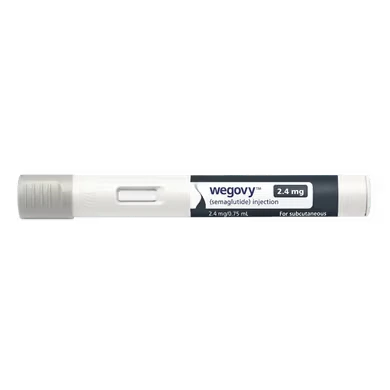
No. Read the indications on the two labels most people ask about and PCOS is not among them:
| Medicine | What the label says it is for | PCOS listed? |
|---|---|---|
| Wegovy (semaglutide) | Weight reduction in adults with obesity, or with overweight plus "at least one weight-related comorbid condition"; also heart risk reduction and MASH liver disease3 | No |
| Zepbound (tirzepatide) | Weight reduction in adults with obesity, or with overweight plus "at least one weight-related comorbid condition"; also obstructive sleep apnea with obesity5 | No |
| Metformin (for comparison) | Type 2 diabetes; the US Office on Women's Health says it "is not approved by the FDA to treat PCOS symptoms"7 | No |
That puts GLP-1s in the same place as metformin, which doctors have prescribed for PCOS for years without a PCOS label. Compounded semaglutide and tirzepatide have no FDA label at all. Whether your plan pays depends on the indication your prescriber writes and your plan's own rules, so ask the plan, not the pharmacy.
What the international PCOS guideline says
On GLP-1s, the 2023 International Evidence-based Guideline for the Assessment and Management of PCOS says:
| Guideline point | Exact wording |
|---|---|
| 4.5.1 Weight | Liraglutide, semaglutide and orlistat "could be considered, in addition to active lifestyle intervention, for the management of higher weight in adults with PCOS as per general population guidelines"1 |
| 4.5.2 Contraception | Prescribers "should ensure concurrent effective contraception when pregnancy is possible for women who take GLP-1 receptor agonists, as pregnancy safety data are lacking"1 |
| 4.5.3 Side effects | "Gradual dose escalation for GLP-1 receptor agonists is recommended to reduce gastrointestinal adverse effects"1 |
| 4.5.4 Long-term use | The decision should weigh "the potential need for long-term use in weight management, given the high risk for weight regain after discontinuation and the lack of long-term safety data"1 |
| 5.9.1 Fertility | "We recommend using anti-obesity agents in PCOS for reproductive outcomes only in research settings to establish the efficacy and safety."11 |
Two things stand out. The recommendation is for weight, not for PCOS as such, and it applies "as per general population guidelines", so the same weight thresholds apply as for anyone else. And the guideline is explicit that using these drugs to get pregnant belongs in a trial, not a routine prescription. Tirzepatide is not named in it.
What the trials show, strongest evidence first
| Study | What it pooled | Result | The catch |
|---|---|---|---|
| Forslund 2026, Eur J Endocrinol | 11 randomized trials, GLP-1 against placebo, lifestyle, the pill, anti-androgens or metformin2 | BMI down 1.38 kg/m2 more than control; no difference in LDL cholesterol or triglycerides2 | "Low certainty"; too little evidence on glucose, insulin, hair growth and periods; no study looked at quality of life or mental health2 |
| Goldberg 2024, Obes Rev (the guideline's own review) | 11 trials of weight medicines in PCOS, 996 participants4 | "Liraglutide, semaglutide and orlistat appeared superior to placebo" for body measurements4 | "Published data examining the effects of anti-obesity agents in women with PCOS are very limited"4 |
| Austregésilo 2024, J Diabetes Complications | 4 randomized trials against placebo, 176 participants6 | Waist down 5.16 cm and BMI down 2.42 versus placebo, plus lower triglycerides and total testosterone6 | Small; no difference in insulin resistance (HOMA-IR); 49 of 112 with side-effect data had mild effects such as nausea6 |
| Zhou 2023, BMC Endocr Disord | 11 randomized trials, 840 patients8 | Natural pregnancy rate higher (risk ratio 1.72) and periods more regular8 | No difference in total or IVF pregnancy rate; the period result varied hugely between trials (I2 95.6%)8 |
The reviews disagree on periods, and the reason is in the table: they pooled different sets of small trials, mostly of older drugs. In the placebo review, 58% of participants took liraglutide and 13% semaglutide.6 The one thing every review agrees on is weight.
Tirzepatide and semaglutide: the first PCOS trials
The newer, stronger drugs have only started to be tested in PCOS specifically.
- Tirzepatide (the molecule in Zepbound and Mounjaro). A 2026 randomized trial gave 60 women with PCOS and overweight either metformin alone or metformin plus tirzepatide 5 mg weekly for 16 weeks. Weight fell by 10.4 kg with the combination and 1.7 kg on metformin alone, and "menstrual cycle recovery and total pregnancy rate were higher" in the combination group.10 It was open-label, in one country, and used a low dose for four months.
- Semaglutide (the molecule in Ozempic and Wegovy). A 2026 pilot study followed 20 women with PCOS, obesity and prediabetes on metformin plus semaglutide 0.25 to 0.5 mg weekly for 6 months, and "60 % of the patients treated" became pregnant.12 There was no comparison group, so it cannot say how many would have conceived anyway.
Neither study changes the guideline's position on fertility. They are reasons to watch for larger trials, not proof.
Why weight loss matters so much in PCOS
PCOS is common: the World Health Organization says it "affects an estimated 10–13% of reproductive-aged women" and that up to 70% of those affected do not know they have it.9 The US Office on Women's Health says losing weight "may help to lower your blood glucose levels, improve the way your body uses insulin, and help your hormones reach normal levels", and puts the target plainly: "Even a 10% loss in body weight (for example, a 150-pound woman losing 15 pounds) can help make your menstrual cycle more regular and improve your chances of getting pregnant."7
A GLP-1 is one way to get there. It does not replace the other PCOS treatments: WHO notes that the combined pill "can help regulate the menstrual cycle and may reduce acne or excess facial and body hair".9 If you take the pill alongside a GLP-1, the next section matters.
Pregnancy, fertility and the pill
The Office on Women's Health calls PCOS "one of the most common causes of infertility in women", and losing weight can improve the chances of pregnancy.7 That is good news if you want to conceive and a risk if you do not. Three label and guideline rules apply:
| Situation | What the source says |
|---|---|
| On any GLP-1 and pregnancy is possible | The guideline says prescribers "should ensure concurrent effective contraception", because "pregnancy safety data are lacking"1 |
| On the pill and starting tirzepatide | Zepbound's label says to "switch to a non-oral contraceptive method, or add a barrier method of contraception for 4 weeks after initiation" and for 4 weeks after each dose increase5 |
| Planning a pregnancy on semaglutide | Wegovy's label says to stop "at least 2 months before they plan to become pregnant"3 |
| Pregnant on tirzepatide | Zepbound's label says "weight loss is not recommended during pregnancy" and to stop "when a pregnancy is recognized"5 |
Our GLP-1 and birth control guide works out the backup windows dose by dose and covers the patch, ring, implant and IUD, which no GLP-1 affects.
Questions to ask before you start
- Am I being prescribed this for weight (on-label) or for PCOS symptoms (off-label), and does that change what my plan pays?35
- Should I stay on metformin or the pill alongside it?79
- If I am on the pill, which molecule am I getting, and do I need backup after each dose step?5
- How slowly will my dose go up to limit nausea?1
- If I want to get pregnant in the next year, when do I stop, and what happens to my weight after?13
The last question matters: the guideline flags "the high risk for weight regain after discontinuation".1 Our guide to stopping a GLP-1 has the trial numbers on what happens next. A program that cannot answer the first three is selling a medicine, not care; the telehealth programs guide sets out what a monthly price usually covers.
What it costs
PCOS does not change the price. On our board today the cheapest cash GLP-1 program is $69 a month, compounded semaglutide starts at $69, compounded tirzepatide at $85, and the middle program is $158. A licensed clinician decides whether you qualify, and compounded versions are not FDA approved.
For one molecule, the ranked lists are at cheapest semaglutide and cheapest tirzepatide, each checked against the sellers' own pages.