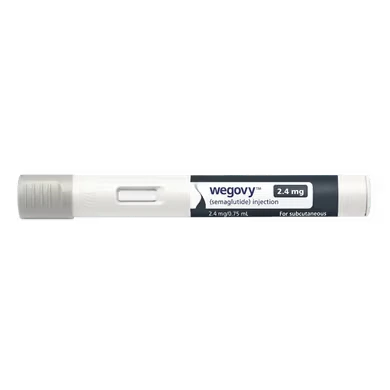

It depends on the molecule. Tirzepatide (Zepbound, Mounjaro) and orforglipron (Foundayo) can make the birth control pill less reliable, and their labels say to "switch to a non-oral contraceptive method, or add a barrier method of contraception for 4 weeks after initiation" and for 4 weeks after each dose increase (30 days for Foundayo).146 Semaglutide (Ozempic, Wegovy, Rybelsus) has no such rule: in the label's interaction studies there were "no clinically significant differences" in the levels of the pill hormones ethinyl estradiol and levonorgestrel.37
Only pills are in question. The tirzepatide label says plainly that "hormonal contraceptives that are not administered orally should not be affected",1 which covers the patch, the ring, the shot and the hormonal IUD and implant. The copper IUD contains no hormone at all. If you would rather not count weeks, a non-oral method takes the problem away.
Which GLP-1s affect the pill
| Medicine (molecule) | Pill rule on the label | How long | Basis |
|---|---|---|---|
| Zepbound (tirzepatide injection) | Switch to a non-oral method or add a barrier method1 | 4 weeks after starting, and 4 weeks after each dose increase | Measured drop in pill hormones after a first dose2 |
| Mounjaro (tirzepatide injection) | Same rule4 | 4 weeks after starting, and 4 weeks after each dose increase | Same molecule, same study |
| Foundayo (orforglipron tablet) | Same rule, plus "use effective contraception during treatment"6 | 30 days after starting, and 30 days after each dose increase | Precaution: not tested with the pill in a trial6 |
| Ozempic, Wegovy (semaglutide injection) | No backup rule | Not applicable | No clinically significant change in pill hormones3 |
| Wegovy pill, Ozempic pill, Rybelsus (oral semaglutide) | No backup rule | Not applicable | Same finding on the tablet label7 |
| Compounded tirzepatide or semaglutide | No FDA label of its own | Ask the prescriber which label rule they apply | Same molecules as the brands above |
A 2024 pharmacists' review reached the same split. Of the six interaction studies it reviewed, the one on tirzepatide "showed a statistically significant reduction" in pill hormone levels, while "the remaining 5 studies involving GLP-1 RAs did not show a statistically or clinically significant difference".5
Why tirzepatide is different
All of these medicines slow how fast the stomach empties, and a pill swallowed while the stomach is slow is absorbed later and less sharply. For tirzepatide, the label says the delay "is largest after the first dose and diminishes over time."1 That is why the rule is tied to starting and to each dose increase rather than to the whole course.
The label gives the numbers from one study: after a single 5 mg dose of tirzepatide, the peak levels of the pill's hormones fell by 59%, 66% and 55%, total exposure (the area under the curve) fell by 20%, 21% and 23%, and the peak arrived 2.5 to 4.5 hours later.2 The pill in that study was a combined pill with ethinyl estradiol and norgestimate.
Whether that is enough to let a pregnancy through has not been tested. A 2026 review points out that "a fall in peak concentration cannot be equated with reduced efficacy" and that no equivalent data exist for other progestogens, including those used in menopausal hormone therapy.8 The label rule is a precaution against an untested risk, and it is the rule your prescriber will follow.
How long you need backup, worked out from the label
The windows add up because each dose increase starts a new one. Zepbound starts at 2.5 mg for 4 weeks, moves to 5 mg, and may then rise in 2.5 mg steps "after at least 4 weeks on the current dose".9 Foundayo starts at 0.8 mg and may step up "after at least 30 days on the current dosage" through 2.5, 5.5, 9, 14.5 and 17.2 mg.11
| Medicine | Dose steps on the label | Backup window each time | If the dose rises at the fastest pace the label allows, to the top dose |
|---|---|---|---|
| Zepbound or Mounjaro | Start at 2.5 mg, then 5, 7.5, 10, 12.5 and 15 mg9 | 4 weeks14 | 6 windows back to back: about the first 24 weeks |
| Foundayo | Start at 0.8 mg, then 2.5, 5.5, 9, 14.5 and 17.2 mg11 | 30 days6 | 6 windows back to back: about the first 180 days |
Most people do not climb to the top dose on the fastest schedule, and your prescriber sets the pace. The practical point is simpler: count 4 weeks (or 30 days) from every new dose, not just from the first one. Once you stay on the same dose past that window, the label's rule no longer applies until the next increase.
What counts as backup
The labels give two options: move to a method you do not swallow, or add a barrier method such as condoms on top of the pill.16
| Method | Taken by mouth? | Affected by tirzepatide or Foundayo? |
|---|---|---|
| Implant | No | No1 |
| Hormonal IUD | No | No1 |
| Copper IUD | No | No (no hormone) |
| Shot | No | No1 |
| Patch or ring | No | No1 |
| Combined pill or mini pill | Yes | Yes, in the label windows16 |
| Condoms | No | No; the labels' add-on during the windows |
The methods no GLP-1 touches include the most reliable ones. ACOG calls the IUD and the implant "the most effective forms of reversible birth control available": "fewer than 1 in 100 women using an IUD or implant will get pregnant" in the first year, and over time they are "20 times more effective than birth control pills, the patch, or the ring."10 A 2026 clinical review on GLP-1s lands in the same place: "non-oral hormonal methods and long-acting reversible contraception may represent more reliable options during treatment".12
Vomiting and diarrhea: a second reason to plan
Nausea, vomiting and diarrhea are among the most common side effects on these labels, and Zepbound's dose steps exist "to reduce the risk of gastrointestinal adverse reactions".9 The 2026 review flags that "gastrointestinal side effects may theoretically compromise the absorption of oral contraceptives."12 If you vomit or have severe diarrhea soon after taking a pill, check your pill's own instructions or ask a pharmacist, and tell your prescriber if the gut effects go on. Our guide to nausea, constipation and diarrhea on a GLP-1 covers what the labels say about managing them.
The "Ozempic babies" question
The phrase is about unplanned pregnancies in people who start a GLP-1. Two mechanisms are documented. One is the pill interaction above, which the labels pin to tirzepatide and orforglipron. The other is fertility itself: in women with polycystic ovary syndrome (PCOS), the 2026 review says GLP-1s "improve fertility ... through weight reduction and enhanced insulin sensitivity" and that "meta-analyses demonstrated significantly higher spontaneous pregnancy rates."12 If you were relying on irregular cycles or on weight-related infertility, that may stop being true once the weight comes off.
Planning a pregnancy, or pregnant already
| Medicine | Label instruction |
|---|---|
| Wegovy | Stop "at least 2 months before they plan to become pregnant to account for the long half-life of semaglutide"13 |
| Ozempic | Stop "at least 2 months before a planned pregnancy due to the long washout period for semaglutide"14 |
| Zepbound | Stop "when a pregnancy is recognized"; "weight loss is not recommended during pregnancy"15 |
| Foundayo | "Use effective contraception during treatment"6 |
The labels are cautious because the human data are thin: for tirzepatide, the data "are insufficient to evaluate for a drug-related risk of major birth defects, miscarriage, or other adverse maternal or fetal outcomes."15 The largest studies so far are observational and come mostly from women with type 2 diabetes:
- A 2024 study across the Nordic countries, the US and Israel compared GLP-1 exposure around conception with insulin and reported an adjusted relative risk of major malformations of 0.95 (95% CI 0.72 to 1.26). Its authors called that "reassuring" but said "confirmation from other studies is needed".16
- A 2026 US claims study of 3,572 pregnancies compared continuing a GLP-1 into the first trimester with stopping. Risks "were not definitively higher" with continuing, but the estimates for malformations and small-for-age babies "were compatible with both no increased risk and clinically relevant differences in risk."17
Neither study can tell you a GLP-1 is safe in pregnancy, and neither label says so. If you become pregnant on one, the Zepbound, Wegovy and Foundayo labels all say to stop it once the pregnancy is recognized,15136 so tell your prescriber straight away. If you are breastfeeding, the Wegovy label says breastfeeding is "not recommended during treatment with WEGOVY tablets".13
Questions to ask before you start
- Which molecule am I getting, and does its label have a pill rule?136
- If it is tirzepatide or Foundayo, when are my dose increases, so I know when each backup window starts and ends?911
- Would a non-oral method suit me better for the whole course?12
- If my medicine is compounded, which brand label's rule does the prescriber follow?
- If I want to get pregnant in the next year, when should I stop?131415
A program that cannot answer the first two is selling the medicine, not the care around it. Our telehealth programs guide sets out what a monthly price usually covers, and the Zepbound dosage chart lays out the dose steps.
What it costs
Birth control does not change what the medicine costs, but the molecule choice now carries an extra consideration. On our board today the cheapest cash GLP-1 program is $69 a month, compounded tirzepatide starts at $85, and the middle program is $158. A licensed clinician decides whether you qualify and which medicine fits.
For one molecule, the ranked lists are at cheapest tirzepatide and cheapest semaglutide, both checked against the sellers' own pages. For the full side-effect tables, see Zepbound side effects and Mounjaro side effects.