





GLP-1 TV · News & media
Ozempic, Wegovy trials show positive results for Dementia, alcohol addiction
Today’s cheapest semaglutide$39/mo at Wellmedr, sale price.Compare all semaglutide prices Price read 22 Nov 2026 from the seller’s own page, ranked by price alone. That price is a compounded drug, and compounded drugs are not FDA-approved. Not from the video’s creator.Our summary
In this CNBC interview, the speaker, a CNBC contributor and former FDA commissioner, discusses early signs that Ozempic and Wegovy type drugs may help with conditions beyond weight loss, specifically Alzheimer's disease and alcohol addiction. He says positive results in these areas could give providers a broader reason to prescribe the drugs, even within the narrow indications currently on the market.
Published by CNBC Television on YouTube
As published by the channel. Not medical advice, and not an endorsement.
What else the video covers
On Alzheimer's, the speaker says the drugs have been studied for years, with a question of whether they reduce inflammation, especially in the brain. He mentions two Novo trials, called evoke and evoke plus, that are randomizing 3,700 patients to placebo and are expected to read out in 2026. He also cites animal studies from the NIH and small university studies. He notes the exact way these drugs reduce inflammation is not clear, and that weight loss itself has long been linked to lower Alzheimer's risk. One university is also checking whether the drugs reduce tau and amyloid plaque.
For alcohol and other addictions, the speaker describes a different pathway. He says the drugs act centrally on the mesolimbic dopamine pathway, the brain's pleasure-seeking circuit, and may reduce cravings in the same way they reduce food cravings. He says animal studies in rats addicted to cocaine, opioids and alcohol suggested reduced addictive behavior. Asked whether feeling sick explains this, he says patients are titrated slowly, some have fullness, nausea or vomiting at first because the drugs slow gastric emptying, and most adjust over time, though some cannot tolerate them.
Our summary of what is said, in our words. Doses, results and prices are the speaker’s, not advice.
Takeaways
The main points, in the order they come up. Tap a time to play from there.
- 0:30 The speaker says two Novo trials, evoke and evoke plus, are randomizing 3,700 patients to placebo for Alzheimer's, with results expected in 2026.
- 1:30 He says the exact way these drugs reduce inflammation is not clear, though effects on metabolic pathways may contribute.
- 2:00 He notes that obesity predicts Alzheimer's risk, so weight loss alone may be part of the pathway, and one university is studying tau and amyloid plaque.
- 2:33 He explains that addiction effects may come from the drugs acting on the mesolimbic dopamine pathway, which also drives food craving.
- 3:03 He says patients are titrated slowly, and early fullness, nausea or vomiting from slowed gastric emptying usually eases as the body adjusts, though some patients cannot tolerate the drugs.
- 4:34 He says animal studies in rats addicted to cocaine, opioids and alcohol suggested these drugs reduce addictive behavior.
Key moments
Tap one to play from there.
What the video says
As stated in the video, not checked by us. Doses and results are the speaker’s, not advice.
- Medication
- Ozempic and Wegovy
- Side effects mentioned
- nausea
Questions this video answers
Can Ozempic or Wegovy help with Alzheimer's disease?
According to the speaker, this is still being studied. He says Novo's evoke and evoke plus trials are randomizing 3,700 patients to placebo, with results expected in 2026, and that animal studies from the NIH have suggested a possible benefit.
Why might Ozempic and Wegovy reduce alcohol cravings?
The speaker says the drugs act centrally on the mesolimbic dopamine pathway, the brain's pleasure-seeking circuit. He explains the open question is whether the same pathway that reduces food cravings also affects alcohol and other addictive behaviors.
Do these drugs reduce drinking because they make people feel sick?
The speaker says some people feel full, nauseated or vomit when they first start, because the drugs slow gastric emptying. He says most adjust over time with slow titration, and he ties the addiction question to the dopamine pathway and animal studies rather than nausea.
Do animal studies show GLP-1 drugs reduce addiction?
The speaker says animal studies in rats addicted to cocaine, opioids and alcohol suggested that giving these drugs reduced addictive behavior. He presents this as early research, not a proven human effect.
Videos on the same question
The closest videos in the library by what is said in them, not by title.
 Ozempic and Wegovy may reduce alcohol cravings, some users sayIn this segment from August 2023, a host interviews the speaker, who is introduced as the founder of the Unlimited Health Institute, a preventative medicine practice based in California.
- Already on semaglutide? What your next month costs at every programToday’s lowest is $39/mo. Every program ranked by price alone. Compounded drugs are not FDA-approved.
 Can weight loss drugs like Ozempic and Wegovy treat alcohol addiction?This segment reports that doctors are seeing a possible extra effect from weight loss drugs like Ozempic and Wegovy: reduced cravings for alcohol.
 Can Ozempic End Addiction? | Dhruv Khullar | TEDIn this TED talk, the speaker, a doctor, opens with a patient he calls Mary.
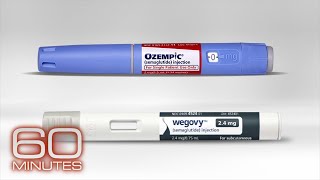 Doctors explain how Wegovy and Ozempic work | 60 MinutesIn this segment, the speaker, who specializes in weight management at Brigham and Women's Hospital in Boston, explains how the anti-obesity medication Wegovy and the diabetes drug Ozempic work.
Read next
Our guides closest to what this video covers, with prices checked weekly.
- Ozempic side effects, and the ones that actually make people stop
The common Ozempic side effects are gastrointestinal: nausea, vomiting, diarrhoea and constipation. They cluster in the first weeks and after each dose increase, which is why the drug is titrated slowly rather than started at the dose that does the work. Ozempic also carries a boxed warning for thyroid C-cell tumour risk, and the label for Wegovy, the same molecule, advises against combining it with another GLP-1. The practical thing nobody tells you: most people who quit do it during titration, and what decides whether that costs them money is the seller's pause and refund terms, not the sticker price.
- Ozempic for weight loss, and where the ladder runs out
Ozempic is approved for type 2 diabetes, not for weight loss. Taking it to lose weight is off-label, which is legal, extremely common, and a prescriber's decision. The consequence nobody mentions is the ceiling: Ozempic's doses stop at 2 mg while Wegovy, the same molecule approved for weight, goes to 2.4 mg with a 7.2 mg strength above that. Someone using Ozempic for weight eventually runs out of ladder, and switching brand is the usual answer.
- Mounjaro vs Ozempic, and the trial everyone quotes about it
Mounjaro is tirzepatide and Ozempic is semaglutide: different molecules, not two brands of the same drug. Both are approved for type 2 diabetes, and the weight-loss versions are Zepbound and Wegovy. In the one head-to-head trial, SURMOUNT-5, tirzepatide produced 20.2% mean body-weight loss at 72 weeks against semaglutide's 13.7%. The detail almost every page omits: that trial dosed semaglutide to 2.4 mg in people without diabetes, which is the Wegovy range. Ozempic tops out at 2 mg. The famous result did not test Ozempic's dose range.
Next steps
Ozempic prices
Find more like it
Side effectsWeigh-in and resultsAlcoholHow it worksThe trialsNausea
Up next
More from this collection




Watched it? See what it costs.
Every GLP-1 program we track, ranked by what actually leaves your account.