
GLP-1 TV · Clinician
How do GLP-1 Drugs (Ozempic, Mounjaro, Zepbound) Work?
Today’s cheapest GLP-1$39/mo at Wellmedr, sale price.Compare all GLP-1 prices Price read 22 Nov 2026 from the seller’s own page, ranked by price alone. That price is a compounded drug, and compounded drugs are not FDA-approved. Not from the video’s creator.Our summary
In this short explainer, the channel describes how GLP-1 drugs work, using Ozempic, Mounjaro and Zepbound as the examples in the title. He starts with the hormone itself. GLP-1 stands for glucagon like peptide 1, and he says its level changes through the day: less is released when the stomach is empty and more when the stomach is full.
Published by Dr. Rob Swanda on YouTube
As published by the channel. Not medical advice, and not an endorsement.
What else the video covers
According to the video, a rise in GLP-1 has two main effects. In the pancreas, it prompts more insulin to be secreted, which lowers blood glucose. In the brain, it affects satiety, so a person recognizes that they are full and does not want to eat as much.
The second half covers the medications. The speaker explains that GLP-1 agonists mimic the natural hormone and bind to GLP-1 receptors in the pancreas, the brain and other parts of the body. In the pancreas they increase insulin secretion and lower blood glucose, which he says helps people who want to manage diabetes. In the brain they act on the same satiety signal, which he says helps people who want to manage their weight. The video ends by pointing viewers to a free webinar on metabolism linked in the description. It is a basic overview and does not cover doses, side effects or specific results.
Our summary of what is said, in our words. Doses, results and prices are the speaker’s, not advice.
Takeaways
The main points, in the order they come up. Tap a time to play from there.
- 0:00 The speaker explains that GLP-1 is glucagon like peptide 1, a hormone whose release rises when the stomach is full and falls when it is empty.
- 0:31 He says higher GLP-1 in the pancreas increases insulin secretion, which lowers blood glucose.
- 0:31 He says higher GLP-1 in the brain affects satiety, so a person feels full and wants to eat less.
- 1:02 GLP-1 agonists mimic the hormone and bind to GLP-1 receptors in the pancreas, the brain and other parts of the body.
- 1:02 According to the video, the pancreatic effect lowers blood glucose and is useful for people managing diabetes.
- 1:38 He says the effect on satiety in the brain is what helps people who want to manage their weight.
What the video says
As stated in the video, not checked by us. Doses and results are the speaker’s, not advice.
- Medication
- Ozempic, Zepbound and Mounjaro
Questions this video answers
What is GLP-1 and when is it released?
The video says GLP-1 stands for glucagon like peptide 1, a hormone whose level changes during the day. The speaker explains that less is released when the stomach is empty and more is released when the stomach is full.
How do GLP-1 drugs lower blood sugar?
According to the speaker, GLP-1 agonists mimic the natural hormone and bind to GLP-1 receptors on the pancreas. This increases insulin secretion and lowers blood glucose, which he says helps people who want to manage diabetes.
How do GLP-1 drugs help with weight management?
The speaker explains that the drugs bind to GLP-1 receptors in the brain and act on satiety, so a person feels full and does not want to eat as much. He says this is what helps people who want to manage their weight.
Videos on the same question
The closest videos in the library by what is said in them, not by title.
 42: What is GLP-1, What Does It Do, and Where Does It Come From with Dr. Ben BikmanIn this episode of his Metabolic Classroom series, the channel explains GLP-1 and the other incretin hormones made in the small intestine: GIP, peptide YY and cholecystokinin.
- What a GLP-1 costs at every program we trackToday’s lowest is $39/mo. Every program ranked by price alone. Compounded drugs are not FDA-approved.
 How Does Mounjaro Work? GIP and GLP-1 ExplainedAccording to the video, Mounjaro is a newly FDA approved diabetes medication injected once a week.
 What is a GLP-1 agonist, and how does it work? | Ohio State Medical CenterIn this short video from the channel, a clinician explains what a GLP-1 receptor agonist is and how it works.
 Ozempic: A Neurosurgeon's Honest AssessmentAccording to the video, the speaker, a neurosurgeon with over 25 years of clinical experience, explains that GLP-1 medications such as Ozempic act on brain circuits for hunger, craving and reward, not only on the stomach.
 Doctor Explains: GLP-1 Effects on the Brain That We Can't IgnoreThe doctor explains that GLP-1 medications such as Wegovy, Ozempic, Mounjaro and Zepbound act in the brain as well as the gut.
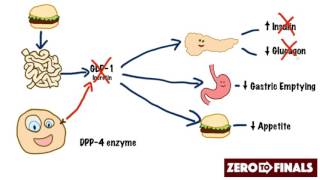 How does sitagliptin work? DPP-4 inhibitors and GLP-1 mimeticsIn this short explainer from the channel, the presenter, the speaker, describes two types of medication used in the treatment of type 2 diabetes: DPP-4 inhibitors and GLP-1 mimetics.
Read next
Our guides closest to what this video covers, with prices checked weekly.
- What is GLP-1? The hormone, how the drugs work, and every GLP-1 medication on the market
GLP-1 stands for glucagon-like peptide-1, a hormone your gut releases after you eat. It tells the pancreas to release insulin when blood sugar is high, holds back glucagon, slows how fast the stomach empties, and acts on the parts of the brain that regulate appetite. GLP-1 drugs copy that hormone but last far longer: a week for the injections, a day for the pills. Seven brands are on the US market, from Ozempic and Mounjaro for type 2 diabetes to Wegovy, Zepbound and Foundayo for weight loss.
- GLP-1 vs GLP-2 vs GLP-3: what the names mean, and which ones you can actually buy
GLP-1 drugs such as semaglutide act on one receptor. "GLP-2" is used online for tirzepatide (Zepbound, Mounjaro), which acts on two, GIP and GLP-1, and "GLP-3" for retatrutide, which adds the glucagon receptor. Neither nickname is the real name: GLP-2 is a separate gut hormone whose drug, Gattex, treats short bowel syndrome. Retatrutide produced 28.3% mean weight loss at 80 weeks in its phase 3 trial but is not FDA-approved; Lilly plans to file in Q1 2027. Tirzepatide is the strongest option you can buy today.
- GLP-1 constipation, nausea, diarrhoea and fatigue: the label numbers, and what the labels say to do
The four gut effects are the four most common side effects of every GLP-1, and the labels put numbers on them. On Wegovy 2.4 mg: nausea 44%, diarrhoea 30%, constipation 24%, vomiting 24%, fatigue 11%, against 16%, 16%, 11%, 6% and 5% on placebo. On Zepbound at 15 mg: nausea 28%, diarrhoea 23%, constipation 11%, vomiting 13%, fatigue 7%. They cluster around dose increases, they are the reason 6.8% of Wegovy patients and up to 6.7% of Zepbound patients stopped, and both labels prescribe the same fix: climb slower.
Next steps
Ozempic prices
Find more like it
Dose changeHow it works
Up next
More from this collection







Watched it? See what it costs.
Every GLP-1 program we track, ranked by what actually leaves your account.