




GLP-1 TV · Clinician
Ozempic Dose Increase: When to Go From 0.25 mg to 0.5 mg
Today’s cheapest semaglutide$39/mo at Wellmedr, sale price.Compare all semaglutide prices Price read 22 Nov 2026 from the seller’s own page, ranked by price alone. That price is a compounded drug, and compounded drugs are not FDA-approved. Not from the video’s creator.Our summary
According to the video from the channel the channel, Ozempic is a prescription medication for type 2 diabetes that has been shown to lower blood sugar and A1C and can lead to weight loss. The narrator says it is also linked to gastrointestinal side effects such as nausea, vomiting, diarrhea and abdominal pain, and that in clinical trials up to 15% of patients on the full dose had to stop treatment because of them. The video presents dose escalation as the response to this problem.
Published by Pharmacist Online on YouTube
As published by the channel. Not medical advice, and not an endorsement.
What else the video covers
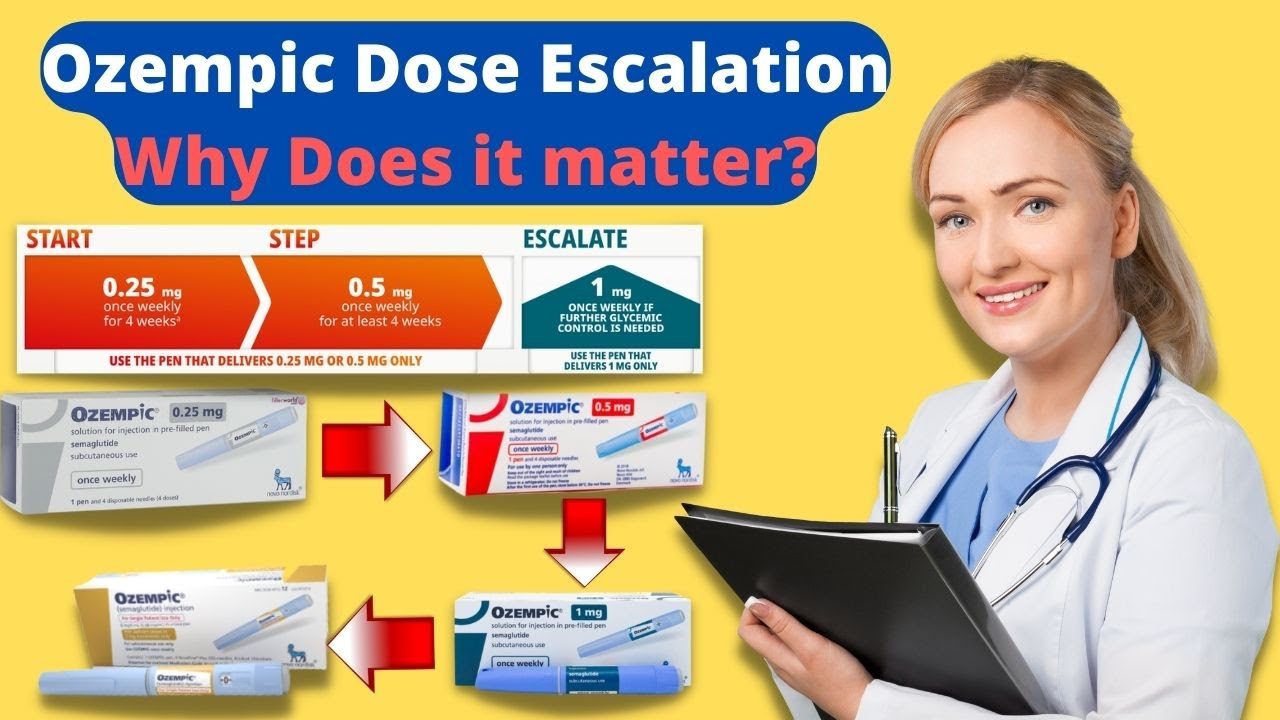
The narrator explains that dose escalation means starting at a low dose and raising it over time so the body can adjust before reaching the full dose. As described, the starting dose is 0.25 mg once a week for the first month, given as a subcutaneous injection in the abdomen, thigh or upper arm. It then rises to 0.5 mg once weekly for the second month, and to 1 mg once weekly for the third month, depending on blood sugar control and tolerability. For weight loss, the narrator says a doctor may increase the dose further, to 2 mg or 2.4 mg, raising the weekly dose slowly over a month.
The video describes Ozempic as a GLP-1 receptor agonist that works mainly by slowing gastric emptying, which increases fullness after eating. The narrator says nausea, bloating or abdominal discomfort are normal in the first few weeks and that some of these effects fade with time. The video closes by saying that, because gastrointestinal effects are common with semaglutide, the recommendation is to start at 0.25 mg and move to 0.5 mg and 1 mg over four weeks to assess efficacy and tolerability before going to the maximum recommended dose.
Our summary of what is said, in our words. Doses, results and prices are the speaker’s, not advice.
Takeaways
The main points, in the order they come up. Tap a time to play from there.
- 0:00 The narrator says Ozempic is prescribed for type 2 diabetes and is linked to nausea, vomiting, diarrhea and abdominal pain, with up to 15% of patients on the full dose stopping in clinical trials.
- 0:31 According to the video, dose escalation means starting low and increasing over time so the body can get used to the medication.
- 0:31 The narrator describes 0.25 mg once weekly for the first month, 0.5 mg weekly for the second month, and 1 mg weekly for the third month, depending on blood sugar control and tolerability.
- 1:02 The video says that for weight loss a doctor may raise the dose further to 2 mg or 2.4 mg, increasing slowly over a month.
- 1:02 The narrator explains that Ozempic, a GLP-1 receptor agonist, mainly slows gastric emptying, which increases fullness after eating.
- 1:33 According to the video, mild stomach side effects in the first few weeks are normal and some fade with time.
Key moments
Tap one to play from there.
What the video says
As stated in the video, not checked by us. Doses and results are the speaker’s, not advice.
- Medication
- Ozempic
- Side effects mentioned
- nausea
Questions this video answers
When do you go from 0.25 mg to 0.5 mg on Ozempic?
According to the video, the starting dose is 0.25 mg once a week for the first month, then the dose is increased to 0.5 mg once weekly for the second month. The narrator adds that increases depend on blood sugar control and tolerability.
Why does Ozempic start at such a low dose?
The video explains that dose escalation gives the body time to get used to the medication before reaching the full dose. The narrator links this to gastrointestinal side effects, saying up to 15% of patients on the full dose stopped treatment in clinical trials.
Where is Ozempic injected, according to this video?
The narrator says it is given once a week as a subcutaneous injection in the abdomen, thigh or upper arm.
What side effects does the video say are normal when starting Ozempic?
The narrator says nausea, bloating or abdominal discomfort are normal for the first few weeks after starting, and that some of these go away with time. The video also lists vomiting, diarrhea and abdominal pain as associated gastrointestinal effects.
Videos on the same question
The closest videos in the library by what is said in them, not by title.
 Ozempic Full Review - Tutorial, Side EffectsIn this review, the speaker, who describes himself as a board-certified diabetes PA practicing in southern California, covers Ozempic as an injected type 2 diabetes medication in the GLP-1 class.
- Already on semaglutide? What your next month costs at every programToday’s lowest is $39/mo. Every program ranked by price alone. Compounded drugs are not FDA-approved.
 Ozempic: How Does It Work?Endocrinologist ExplainsIn this interview from the channel, an endocrinologist, introduced as the speaker, explains how Ozempic works.
 Ozempic Dose Increase Schedule: 0.25 mg to 2 mgThis short video walks through how the speaker says Ozempic dosing is increased over time.
 Ozempic - Uses, dose, benefits and side effectsIn this video, the speaker, who describes himself as a certified diabetes specialist and endocrinologist, gives an overview of Ozempic (semaglutide).
 This is what happens when you stop taking OzempicThis segment asks what happens when a person stops taking Ozempic.
 What Taking Ozempic for Two Months ACTUALLY Looks Like (This Gets VERY Real…)In this episode of the channel's series, she checks in with her friend another speaker at the two-month mark of taking Ozempic.
Read next
Our guides closest to what this video covers, with prices checked weekly.
- Ozempic side effects, and the ones that actually make people stop
The common Ozempic side effects are gastrointestinal: nausea, vomiting, diarrhoea and constipation. They cluster in the first weeks and after each dose increase, which is why the drug is titrated slowly rather than started at the dose that does the work. Ozempic also carries a boxed warning for thyroid C-cell tumour risk, and the label for Wegovy, the same molecule, advises against combining it with another GLP-1. The practical thing nobody tells you: most people who quit do it during titration, and what decides whether that costs them money is the seller's pause and refund terms, not the sticker price.
- Ozempic for weight loss, and where the ladder runs out
Ozempic is approved for type 2 diabetes, not for weight loss. Taking it to lose weight is off-label, which is legal, extremely common, and a prescriber's decision. The consequence nobody mentions is the ceiling: Ozempic's doses stop at 2 mg while Wegovy, the same molecule approved for weight, goes to 2.4 mg with a 7.2 mg strength above that. Someone using Ozempic for weight eventually runs out of ladder, and switching brand is the usual answer.
- Ozempic dosage chart: 0.25 mg to 2 mg, every pen, the missed-dose rule, and what each dose costs
Ozempic starts at 0.25 mg once a week for four weeks, then goes to 0.5 mg. If more blood sugar control is needed after at least four weeks, it can go to 1 mg, and after four more weeks to 2 mg, the maximum. Paying cash through NovoCare it is $199 for each of the first two months, then $349 a month up to 1 mg and $499 at 2 mg.
Next steps
Ozempic prices
Find more like it
Side effectsDose changeHow it worksNausea
Up next
More from this collection




Watched it? See what it costs.
Every GLP-1 program we track, ranked by what actually leaves your account.