





GLP-1 TV
Step-by-Step Guide to Semaglutide Injection Preparation
Today’s cheapest semaglutide$39/mo at Wellmedr, sale price.Compare all semaglutide prices Price read 22 Nov 2026 from the seller’s own page, ranked by price alone. That price is a compounded drug, and compounded drugs are not FDA-approved. Not from the video’s creator.Our summary
According to the video, from the channel, the presenter walks through mixing a 5 mg vial of powdered semaglutide with bacteriostatic water at home. The presenter opens by describing semaglutide as a GLP-1 receptor agonist that increases insulin secretion and suppresses appetite. They say it is approved for type 2 diabetes and chronic weight management, and that the goal of the video is to help viewers mix it properly and confidently.
Published by Trust Aesthetics on YouTube
As published by the channel. Not medical advice, and not an endorsement.
What else the video covers
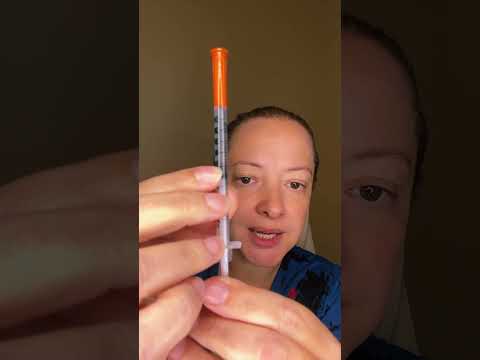
On the amount of water, the presenter first says 1.5 mL of bacteriostatic water is advised for a 5 mg vial, and stresses following the guidance of the prescribing professional. In the hands-on demonstration, however, they draw up and inject 2 mL into the vial. The steps shown are: gather supplies including a 3 mL syringe, wash hands, wipe the vial top, draw the water while tapping out bubbles, and inject it slowly into the middle of the vial to avoid bubbles. They then swirl gently and check through the glass that no particles remain.
With 2 mL of water, the presenter says the 10 mark on an insulin syringe gives 250 micrograms, or 0.25 mL. They describe drawing from the upside down vial, pinching tissue on the side or stomach, injecting, and rotating sites even though the dose is weekly. For escalation, they describe 10 units for weeks 1 through 4 and 20 units (0.5 mg) for weeks 4 through 8. They say patients can step back down if the dose feels like too much, and 40 units is 1 mg. They give a maximum of 2.4 mg per week and say they doubt their patients will reach it. The transcript ends mid sentence.
Our summary of what is said, in our words. Doses, results and prices are the speaker’s, not advice.
Takeaways
The main points, in the order they come up. Tap a time to play from there.
- 0:00 The presenter introduces semaglutide as a GLP-1 receptor agonist sold as a powder that must be mixed with bacteriostatic water.
- 1:34 He says 1.5 mL of bacteriostatic water is advised for a 5 mg vial and tells viewers to follow their prescriber's guidance.
- 2:05 The demonstration lists supplies and steps, including hand washing, wiping the vial top, and drawing bacteriostatic water into a 3 mL syringe.
- 3:07 The presenter draws 2 mL of water, tapping out bubbles, and injects it slowly into the middle of the vial before checking for particles.
- 4:40 With 2 mL of water, he says 10 units on a 100 unit insulin syringe equals 250 micrograms, or 0.25 mL.
- 5:42 He describes pinching tissue on the side or stomach to inject and rotating injection sites each week.
Key moments
Tap one to play from there.
What the video says
As stated in the video, not checked by us. Doses and results are the speaker’s, not advice.
- Medication
- semaglutide
- Side effects mentioned
- nausea
Questions this video answers
How much bacteriostatic water do you mix with 5 mg of semaglutide?
The presenter first says 1.5 mL is advised for a 5 mg vial, and tells viewers to follow their prescriber's instructions. In the demonstration he instead uses 2 mL, and his dose figures of 10 units for 250 micrograms are based on that 2 mL mix.
How many units on an insulin syringe is 0.25 mg of semaglutide?
According to the video, after mixing 5 mg of semaglutide with 2 mL of bacteriostatic water, 10 units on a 100 unit insulin syringe equals 250 micrograms, or 0.25 mL. He says 20 units gives 0.5 mg and 40 units gives 1 mg.
How do you mix semaglutide powder with bacteriostatic water?
The presenter wipes the vial top, draws the water into a syringe while removing bubbles, and injects it slowly into the middle of the vial to avoid bubbles. He then mixes it gently and checks through the glass that no crystals or particles remain.
Where do you inject semaglutide and how often should you change the site?
The presenter says many people inject into the side or stomach, pinching the tissue moderately tightly before inserting the needle. He advises moving the injection site each time, even though the injection is once a week.
Videos on the same question
The closest videos in the library by what is said in them, not by title.
 How to Safely Mix and Draw Up SemaglutideIn this video from Wittmer Rejuvenation Clinic, the speaker, who introduces herself as an RN at the clinic, walks through how to mix and draw up semaglutide.
- Already on semaglutide? What your next month costs at every programToday’s lowest is $39/mo. Every program ranked by price alone. Compounded drugs are not FDA-approved.
 How to reconstitute semaglutideIn this short demonstration, the channel walks through how to prepare semaglutide that arrives as a powder.
 SEMAGLUTIDE INJECTIONThis short instructional video from the channel walks through how to inject semaglutide from a vial using an insulin syringe.
 Semaglutide dosesAccording to the video from the channel, a single vial of semaglutide holds enough medication for the first seven doses, even though the amount of liquid looks small.
 How to Use Compounded Sublingual SemaglutideIn this 1:29 video, the speaker, who says he is a pharmacist and the owner of the channel, gives four tips for people using compounded sublingual semaglutide.
Read next
Our guides closest to what this video covers, with prices checked weekly.
- Semaglutide side effects, and what compounding does and does not change
Semaglutide's side effects are gastrointestinal: nausea, vomiting, diarrhoea and constipation, worst early and after each dose increase. Those figures come from trials of Novo Nordisk's products. No trial has measured them for a compounding pharmacy's vial. What compounding changes is everything around the molecule. A compounded drug is not FDA-approved, so the finished product has not been reviewed for safety, effectiveness or manufacturing quality, and the FDA has said the enforcement discretion that allowed 503A pharmacies to compound semaglutide has ended. It also usually arrives as a vial and a syringe rather than a pre-set pen, which moves dose measurement to you.
- The semaglutide dose ladder, and what each step costs
Semaglutide is titrated upward over months rather than started at the target dose, to let gastrointestinal side effects settle. For Wegovy the pen ladder runs 0.25 mg, 0.5 mg, 1 mg, 1.7 mg and 2.4 mg, with a 7.2 mg high-dose strength above it. The part most charts leave out is the money: Novo's own self-pay price is flat at $349 a month across every pen dose from 0.25 to 2.4 mg, so climbing the ladder does not raise the brand price, while many compounded sellers do charge more at higher doses. Here is the ladder, what each step costs at the cheapest verified seller, and which sellers hold one price the whole way.
- How much semaglutide costs: $39 compounded, $149 to $499 from Novo, $25 or $50 covered, by dose and by year
Semaglutide costs $39 to $299 a month compounded on our board, $149 to $299 for Novo's Wegovy pill, $349 for the Wegovy pen at any standard dose, and $349 or $499 for the Ozempic pen. With a commercial plan that covers it, Novo's card takes it to $25 a month; on Medicare, the GLP-1 Bridge charges $50. List price, before any discount, runs to $1,349.02 a box. Below: every route, the cost per dose and per mg, and the real yearly bill.
Next steps
Compounded semaglutide prices
Find more like it
Dose changeFood noise and cravingsInjection techniqueHow it worksNausea
Up next
More from this collection




Watched it? See what it costs.
Every GLP-1 program we track, ranked by what actually leaves your account.