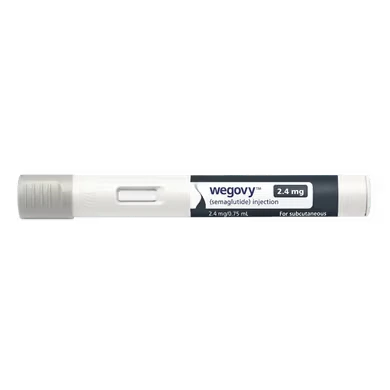

No generic tirzepatide exists in the United States, under any name. Zepbound and Mounjaro are the only FDA-approved tirzepatide products, both belong to Eli Lilly, and FDA's own patent listing puts the earliest realistic generic at May 13, 2036. What you can buy today, legally, is Lilly's brand at its self-pay price, from $299 a month for Zepbound, or compounded tirzepatide, which is not FDA-approved and starts at $119 a month on our board. Below: the patents and exclusivity dates as FDA lists them, the dated timeline, where compounding stands now, and every cheaper route priced from today's data.
Is there a generic Zepbound or Mounjaro?
No. "Tirzepatide" is the generic name, the non-brand name of the molecule, and it is the active ingredient in both brands. A generic drug is something else: a separate product that FDA approves as a copy of the brand. FDA's definition is short: "Generic drugs are FDA-approved copies of brand drugs."8 A company that wants to sell one files an abbreviated application, an ANDA, and has to show its product "is pharmaceutically equivalent and bioequivalent to the brand name drug it references".8
For tirzepatide, nobody has. FDA's Orange Book, the register of approved drugs and their patents, lists Mounjaro with tirzepatide as its active ingredient, as the reference listed drug, and with one applicant holder: Eli Lilly.7 Zepbound's listing names the same molecule.1 Mounjaro was approved on May 13, 2022 as a new molecular entity,5 and Zepbound on November 8, 2023 for chronic weight management.6 Those are the two products. There is no third.
So when a website sells "generic tirzepatide", it is selling one of two things: compounded tirzepatide made by a pharmacy (legal under narrow rules, not FDA-approved, covered below), or a product with no legal standing at all. FDA lists "makes claims such as the compounded drug is the same as an FDA-approved drug" among its red flags for telehealth sellers.11 A seller that calls its vial a generic is making that claim.
Why there is no generic: the patents, as FDA lists them
A brand drug is protected by two separate walls, and FDA says plainly they are not the same thing: "Patents and exclusivity work in a similar fashion but are distinct from one another and governed by different statutes."4 Patents come from the Patent and Trademark Office and get listed in the Orange Book. Exclusivity is a fixed period FDA grants on approval. A generic has to clear both.
Here is every patent Lilly has listed against tirzepatide, read from the Orange Book pages for Zepbound and Mounjaro today. "Molecule" means the patent claims the drug substance itself.
| US patent | Expires | What the Orange Book marks it as | Listed for |
|---|---|---|---|
| 9,474,780 | May 13, 2036 | drug substance (the molecule) and drug product | Zepbound and Mounjaro |
| 11,357,820 | June 14, 2039 | drug product (the formulation) | Zepbound and Mounjaro |
| 12,453,756 | June 14, 2039 | drug product | Zepbound and Mounjaro |
| 12,629,404 | June 14, 2039 | drug product, plus a use code | Zepbound and Mounjaro |
| 11,918,623 | June 14, 2039 | method of use | Zepbound |
| 12,453,755 | June 14, 2039 | method of use | Mounjaro |
| 12,343,382 | July 22, 2039 | method of use | Zepbound and Mounjaro |
| 12,453,758 | July 22, 2039 | method of use | Zepbound |
| 12,616,740 | July 22, 2039 | method of use | Zepbound and Mounjaro |
| 12,295,987 | December 30, 2041 | method of use | Mounjaro |
Ten patents, eight on each listing.12 The one that decides the question is the first row. US 9,474,780 claims tirzepatide itself, so no company can sell a copy of the molecule in the US before May 13, 2036 without beating that patent in court or getting Lilly's permission. The 2039 patents cover the formulation and specific ways of using the drug, so a copy launched in 2036 would still have to avoid or defeat those.
Two cautions about reading this table. First, the list grows: five of the eight patents on Zepbound's page were submitted to FDA between July 2025 and June 2026,1 so a later read may show more rows and later dates. Second, FDA itself warns that the Orange Book is not the whole story: "Orange Book users should not rely on an Orange Book patent listing, regardless of when first published, to determine the range of patent claims that may be asserted by an NDA holder or patent owner."3 Lilly may hold patents that are not listed there.
Exclusivity: the clock that runs out first
FDA describes exclusivity as "certain delays and prohibitions on approval of competitor drugs" that attach when a drug is approved.4 It is shorter than a patent. A brand-new molecule gets five years, and a new clinical investigation (a new use, a new population) gets three.4 Tirzepatide's periods, from the same Orange Book pages:
| Ends | Exclusivity | On which listing |
|---|---|---|
| November 8, 2026 | NP, new product (three years from Zepbound's approval) | Zepbound1 |
| May 13, 2027 | NCE, new chemical entity (five years from Mounjaro's approval) | Zepbound and Mounjaro12 |
| October 18, 2027 | M-82, labelling changes tied to clinical studies | Zepbound1 |
| December 20, 2027 | I-958, the obstructive sleep apnea indication | Zepbound1 |
| December 19, 2028 | NPP, new patient population | Mounjaro2 |
Expect headlines in November 2026 and May 2027 claiming generic tirzepatide is "coming". It is not. When an exclusivity period ends, FDA's own bar lifts, but the patents in the table above still stand, and they run years longer. Exclusivity is the shorter wall; the patent is the one that holds.
When will tirzepatide be generic? The timeline
Everything that has happened to tirzepatide's legal status, and every date that could change it, in order. The past rows are FDA's dated statements; the future rows are the Orange Book's expiry dates.
| Date | What happened, or happens | Source |
|---|---|---|
| May 13, 2022 | Mounjaro approved, as a new molecular entity | Drugs@FDA5 |
| November 8, 2023 | Zepbound approved for chronic weight management | FDA6 |
| October 2, 2024 | FDA first determines the tirzepatide shortage is resolved; that decision is later sent back for re-evaluation in litigation | FDA9 |
| December 19, 2024 | FDA re-evaluates and again finds the tirzepatide injection shortage resolved | FDA9 |
| February 18, 2025 | End of FDA's grace period for state-licensed 503A pharmacies, held open until a court ruled | FDA9 |
| March 5, 2025 | District court denies the compounders' preliminary injunction; the 503A grace period is over | FDA9 |
| March 19, 2025 | End of the grace period for 503B outsourcing facilities | FDA9 |
| April 1, 2026 | FDA reminds compounders of the per-patient and "essentially a copy" rules | FDA9 |
| April 30, 2026 | FDA proposes keeping tirzepatide off the 503B bulks list; comments closed June 29, 2026 | FDA10 |
| November 8, 2026 | Zepbound's new-product exclusivity ends | Orange Book1 |
| May 13, 2027 | Five-year new chemical entity exclusivity ends | Orange Book12 |
| December 19, 2028 | Last exclusivity listed (Mounjaro, new patient population) ends | Orange Book2 |
| May 13, 2036 | Molecule patent 9,474,780 expires: the earliest realistic generic | Orange Book12 |
| June 14 and July 22, 2039 | Formulation and use patents expire | Orange Book12 |
| December 30, 2041 | Last listed Mounjaro use patent expires | Orange Book2 |
Three things can move the 2036 date. A generic company can challenge a patent: FDA's rules even reward the first to do so successfully, with 180 days of "Patent Challenge" exclusivity, which "is for ANDAs only".4 A win in court would bring the date forward. In the other direction, pediatric exclusivity adds "a 6-month period of exclusivity" to "all existing patents and exclusivity" when it is granted,4 and new patents keep arriving on the listings. A settlement in which Lilly licenses an earlier entry date is the other way it could come sooner. Plan on 2036. Treat anything earlier as a possibility, not a promise.
Compounded tirzepatide is not a generic
The difference is approval. A generic goes through FDA review as an equivalent of the brand, and "Generic drug companies do not need to repeat the costly clinical trials" only because they prove that equivalence.8 Compounded tirzepatide goes through no FDA review as a finished product. FDA's words on its compounding page: "Compounded drugs are not approved by FDA."9 Its consumer warning puts the consequence plainly: unapproved versions "do not undergo FDA's review for safety, effectiveness and quality before they are marketed."11
| A generic (none exists yet) | Compounded tirzepatide | Zepbound or Mounjaro | |
|---|---|---|---|
| FDA-approved product | yes, through an ANDA | no | yes, through an NDA |
| Who makes it | any approved generic maker | a 503A pharmacy or 503B facility | Eli Lilly |
| Shown equivalent to the brand | yes, bioequivalence | no | it is the brand |
| Can you buy it now | no, not before 2036 on today's patents | yes, on a prescription | yes |
| Cash price | none | from $119/mo on our board | Zepbound from $299/mo at LillyDirect |
Is compounded tirzepatide still legal now the shortage is over?
Yes, within narrow limits that have only tightened since the shortage ended. During the shortage, pharmacies could make copies of tirzepatide at scale because the brand could not meet demand. FDA declared that shortage resolved on December 19, 2024, gave state-licensed pharmacies until February 18, 2025 and outsourcing facilities until March 19, 2025 to wind down, and a court refused to stop it on March 5, 2025.9 For 503A pharmacies, in FDA's words, "the period of enforcement discretion described below has ended."9
What is left, as FDA restated on April 1, 2026:9
- 503A pharmacies (state-licensed, the kind most telehealth programs use) may compound only "for an individual patient based on receipt of a prescription", and may not regularly make what FDA calls "essentially a copy" of the brand. The exception is when "a prescriber determines and documents the compounded drug product contains a change that produces a significant difference" for that patient. That is why so many compounded tirzepatide products now come at an unusual strength or with an added ingredient.
- A small-volume safe harbour. FDA "does not intend to take action" against a pharmacy for making copies if it "fills four or fewer prescriptions of that compounded drug product during a calendar month".
- 503B outsourcing facilities generally need the ingredient on the 503B bulks list or the drug on the shortage list, and FDA states that "Tirzepatide and semaglutide do not currently appear on the 503B bulks list or on FDA's drug shortage list." On April 30, 2026 it proposed keeping tirzepatide off that list for good, "finding no clinical need", and said it "will consider submitted comments before making a final determination".10
So the honest answer: a licensed pharmacy filling an individual prescription, with a documented clinical reason for the difference, is operating inside FDA's stated rules. A company mass-producing an exact copy and calling it generic is not. The compounded tirzepatide guide covers the product itself in depth: the two pharmacy types, FDA's dosing and shipping concerns, and the vial-versus-pen trade.
Lilly's own lower-cost routes
The cheapest FDA-approved tirzepatide is Lilly's own, sold direct. LillyDirect prices Zepbound self-pay, on both the multi-dose KwikPen and the single-dose vial, from "$299/month" at the starting strength and "$399/month" at the next, then "$449/month" for the higher strengths "when you refill within 45 days".12 Miss that window and LillyDirect's footnote applies: "$499 for 7.5mg, $699 for 10mg, $699 for 12.5mg, and $699 for 15mg".12 Which strength you are on is your prescriber's decision, not ours; the point for budgeting is that the price rises with it until it flattens.
| Lilly route | What Lilly publishes | Who it is for |
|---|---|---|
| Zepbound self-pay, LillyDirect | $299, $399, then $449 a month refilled within 45 days ($499 to $699 otherwise) | anyone paying cash with a prescription12 |
| Zepbound at a pharmacy, no programme | list price $499 to $1,086.37 per fill | what you avoid by using self-pay13 |
| Zepbound savings card | as low as $25 | commercial insurance that covers Zepbound; "Governmental beneficiaries excluded"13 |
| Medicare GLP-1 Bridge | $50 a month | eligible Medicare Part D patients on the Zepbound KwikPen or Foundayo for weight management16 |
| Mounjaro self-pay, LillyDirect | "Starting at $499/month" | cash buyers prescribed Mounjaro15 |
| Mounjaro at a pharmacy, no programme | list price $1,112.16 per fill | what you avoid by using self-pay14 |
For many people searching "generic Mounjaro", the useful fact is the Zepbound row: same molecule, and Lilly's Zepbound self-pay starts below Mounjaro's self-pay floor. Whether a Zepbound prescription fits your situation depends on what each drug is approved for, and that is a question for the prescriber. The Medicare row is the cheapest of all for those who qualify, with Lilly's own caveat that "Certain plan types excluded" and eligibility runs on Medicare's clinical criteria.16 The Zepbound cost without insurance guide works through each strength and the yearly total.
The cheapest legal tirzepatide right now
Waiting for a generic means paying brand or compounded prices for roughly nine and a half more years. Here is what each legal route costs today, with every program price read from the seller's own page and filled live from our board:
| Route | Paying cash, per month | FDA-approved product? |
|---|---|---|
| Compounded tirzepatide, cheapest program on our board | $119 | no |
| Compounded tirzepatide, middle of our board | $169 | no |
| Zepbound self-pay, direct from Lilly | $299 to $449 refilled on time | yes |
| Zepbound through a telehealth program on our board | from $358 | yes |
| Medicare GLP-1 Bridge, if eligible | $50 | yes |
Two readings of that table. On the brand side, Lilly's own $299 starting price beats every telehealth Zepbound program on our board. On the compounded side, the cheapest compounded program costs less than Lilly's lowest self-pay price.
Every compounded tirzepatide program we track, cheapest first:
And the programs that prescribe brand Zepbound:
Over a full year, the cheapest compounded program comes to about $1,400. Zepbound self-pay at the $449 on-time KwikPen price is $5,388 a year once you reach the higher strengths, and $8,388 at the regular $699. That is the real cost of waiting for a generic, and why most cash buyers do not wait. The cheapest tirzepatide page keeps this ranking current between visits.
How to spot a fake "generic"
The word "generic" is a tell. Because no approved generic exists, a product sold under that label is either compounded tirzepatide described loosely or something worse. FDA has seen the worse: "FDA is aware of fraudulent compounded semaglutide and tirzepatide marketed in the U.S. that contain false information on the product label."11 Its red-flag list for online sellers includes three that apply directly:11
- the seller "makes claims such as the compounded drug is the same as an FDA-approved drug";
- it "offers medicine at deep discounts or prices that seem too good to be true";
- it "does not require a screening and prescription by a licensed doctor before providing medicine".
A legitimate compounded program requires a prescriber consultation, names the pharmacy that fills the vial, and calls its product compounded, not generic. The ten-minute check is in how to tell if a GLP-1 seller is legit.
The short version
Generic tirzepatide does not exist, and on FDA's own patent listing the earliest realistic date is May 13, 2036. The exclusivity dates in November 2026 and May 2027 will make news and change nothing at the pharmacy counter. Until then you have three legal ways to get the molecule: Lilly's brand at the self-pay price (from $299 a month for Zepbound), $50 a month through Medicare's Bridge if you qualify, or a licensed pharmacy's compounded version from $119 a month, which trades FDA review of the finished product for the lower price.