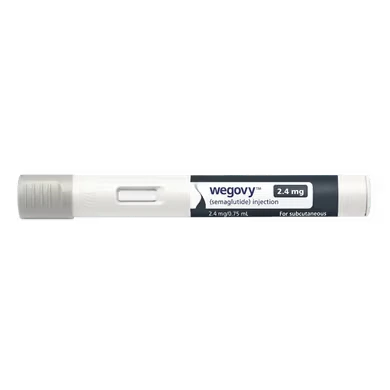

Retatrutide is not FDA-approved, has no price, and cannot legally be bought for human use anywhere in the world today. It is Eli Lilly's experimental once-weekly injection, and in its largest phase 3 trial the top dose produced 28.3% average weight loss at 80 weeks on Lilly's preferred measure, or 25.0% counting everyone who was randomized. Lilly says it plans to submit it to FDA in the first quarter of 2027. Below: what the drug is, every trial result with the exact figures, the filing timeline in Lilly's own words, what FDA says about the vials sold online, how it compares with tirzepatide and semaglutide, and what you can take now at today's prices.
What retatrutide is
Lilly describes it in one sentence that appears in every release: "Retatrutide is an investigational, once-weekly, triple hormone receptor agonist."4 The phase 2 paper gives the three targets: it "is an agonist of the glucose-dependent insulinotropic polypeptide, glucagon-like peptide 1, and glucagon receptors."1 Its lab code was LY3437943, and you will still see that name on trial listings.110
The receptor count is the easiest way to place it next to the drugs you already know:
| Molecule | Receptors it activates | Brand names | FDA-approved for weight? |
|---|---|---|---|
| Semaglutide | GLP-1 | Wegovy, Ozempic | yes (Wegovy) |
| Tirzepatide | GIP and GLP-1 | Zepbound, Mounjaro | yes (Zepbound) |
| Retatrutide | GIP, GLP-1 and glucagon | none yet | no, investigational |
Online you will see it called "GLP-3". That is a nickname that counts receptors, not a drug class; the GLP-1 vs GLP-2 vs GLP-3 guide untangles the naming. The glucagon piece is what is new: tirzepatide already covers the other two.
The trial results, as published
Before the numbers, one detail most write-ups blur. Lilly reports two figures for each trial. The efficacy estimand counts people while they stayed on the drug. The treatment-regimen estimand counts everyone who was randomized, including those who stopped, which is what the journals lead with. The second number is always lower. Both are real; they answer different questions. We label which one each figure is.
Phase 2 (NEJM, 2023): the first signal
338 adults with obesity or overweight, no diabetes, 48 weeks.1 Least-squares mean weight change by dose:1
| Dose | Week 24 | Week 48 |
|---|---|---|
| 1 mg | -7.2% | -8.7% |
| 4 mg (combined) | -12.9% | -17.1% |
| 8 mg (combined) | -17.3% | -22.8% |
| 12 mg | -17.5% | -24.2% |
| Placebo | -1.6% | -2.1% |
At 48 weeks on 12 mg, 100% of participants had lost at least 5%, 93% at least 10% and 83% at least 15%, against 27%, 9% and 2% on placebo.1 Those numbers are why the phase 3 program exists.
TRIUMPH-1 (NEJM, September 2026): the pivotal obesity trial
2,339 adults with obesity or overweight and no diabetes, randomized to 4 mg, 9 mg, 12 mg or placebo for 80 weeks.3 This is the trial behind the 28.3% headline.
| Dose | Efficacy estimand (Lilly, May 2026) | Treatment-regimen estimand (NEJM) |
|---|---|---|
| 4 mg | -19.0% (47.2 lbs) | -17.6% |
| 9 mg | -25.9% (64.4 lbs) | -23.7% |
| 12 mg | -28.3% (70.3 lbs) | -25.0% |
| Placebo | -2.2% | -3.9% |
Sources: Lilly's topline release2 and the NEJM abstract.3 On the efficacy estimand, 45.3% of people on 12 mg lost 30% or more of their body weight.2 A pre-specified extension followed people with a starting BMI of 35 or more who stayed on the top dose to 104 weeks: they "lost an average of 85.0 lbs (30.3%)."2 The same trial included people with knee osteoarthritis and sleep apnea; Lilly reports knee pain scores fell "by up to 4.3 points (73.1%)" and the apnea-hypopnea index "by up to 36.1 events per hour (60.6%)".7
TRIUMPH-2 (The Lancet, September 2026): obesity with type 2 diabetes
1,152 adults with type 2 diabetes and a BMI of 27 or more, 80 weeks.5 People with diabetes lose less on every drug in this class, and the pattern held here:
| Dose | Efficacy estimand (Lilly) | Treatment-regimen estimand (Lancet) |
|---|---|---|
| 4 mg | -12.7% (29.8 lbs) | -11.9% |
| 9 mg | -19.1% (45.4 lbs) | -16.8% |
| 12 mg | -20.8% (49.6 lbs) | -18.8% |
| Placebo | -4.0% | -5.1% |
Lilly reported "A1C reductions of up to an average of 1.6%".4 Among those starting at a BMI of 35 or higher, the 12 mg group "lost an average of 60.8 lbs (23.4%)".8
TRIUMPH-3, TRIUMPH-4 and TRANSCEND-T2D-1
- TRIUMPH-3 (severe obesity plus established heart disease, 80 weeks): participants "lost up to an average of 55.8 lbs (22.6%)".4 It was not powered as a heart-outcomes trial; for the broader cardiac event count Lilly reported a hazard ratio of 0.82, with a 95% confidence interval of 0.55 to 1.22, which crosses 1.4 The dedicated outcomes study, TRIUMPH-Outcomes, runs to 2029.9
- TRIUMPH-4 (obesity plus knee osteoarthritis, 68 weeks, the first phase 3 to read out): 12 mg produced "28.7% of their body weight" on the efficacy estimand,6 and -23.7% on the treatment-regimen estimand against -4.6% on placebo.6
- TRANSCEND-T2D-1 (type 2 diabetes, 40 weeks): "A1C reductions of up to 2.0% from a baseline of 7.9%", and 16.8% weight loss on 12 mg, "with weight loss not yet plateauing at 40 weeks."7
Side effects reported so far
The pattern is the familiar one for this drug class, mostly stomach and gut effects that rise with dose, plus one signal that is less familiar. From TRIUMPH-1, as Lilly reported them:2
| Adverse event | 4 mg | 9 mg | 12 mg | Placebo |
|---|---|---|---|---|
| Nausea | 28.6% | 38.4% | 42.4% | 14.8% |
| Diarrhea | 25.2% | 34.1% | 32.0% | 13.5% |
| Constipation | 23.8% | 25.9% | 26.1% | 10.9% |
| Vomiting | 10.6% | 22.8% | 25.3% | 4.8% |
| Dysesthesia (abnormal skin sensation) | 5.1% | 12.3% | 12.5% | 0.9% |
| Stopped because of side effects | 4.1% | 6.9% | 11.3% | 4.9% |
Dysesthesia is the one to watch. In TRIUMPH-4 it reached 20.9% on 12 mg against 0.7% on placebo, and 18.2% of people on 12 mg stopped because of side effects against 4.0% on placebo.6 TRIUMPH-2 found that "Hypotension and dysesthesia were more frequent with retatrutide than with placebo".5 The phase 2 paper also noted "Dose-dependent increases in heart rate peaked at 24 weeks and declined thereafter."1 None of this has been through an FDA label review yet; the label, if one comes, will be the authoritative list.
Is retatrutide FDA-approved?
No. Lilly's August 2026 statement is unambiguous: "No medicine containing retatrutide has yet been approved for human use by any regulatory agency in the world. It cannot be sold to consumers."12 FDA's own page says retatrutide is not a component of any FDA-approved drug and has "not been found safe and effective for any condition."11
Lilly's stated filing plan
After TRIUMPH-2 and TRIUMPH-3, Lilly said it "plans to subsequently submit retatrutide in Q1 2027 for U.S. approval", once it finishes the manufacturing data package (Chemistry, Manufacturing, and Controls) the application requires.4 It repeated the Q1 2027 plan on September 29, 2026.8 That is a submission date, not an approval date. Lilly has not published an expected approval date, and FDA does not announce one before it acts.
For scale only: FDA's published goal is to "Review and act on 90 percent of standard NME NDA and original BLA submissions within 10 months of the 60-day filing date."16 That goal is FDA's general target for any new molecule, not a commitment about this one, and it starts only once FDA accepts a filing.
The drug-or-biologic dispute
One open question could shape the filing. Lilly plans a Biologics License Application (BLA); FDA classified retatrutide as a drug, which would mean a New Drug Application (NDA) instead. BioSpace reports that Lilly sued FDA in September 2024, and explains the stakes: "BLAs confer upon the drugmaker 12 years of market exclusivity. An NDA would provide Lilly with just five years."14 FDA's protein definition turns on 40 or more alpha amino acids, and "Retatrutide has 41 amino acids, according to Lilly's complaint."14 A court vacated FDA's decision and sent part of it back to the agency, and "Lilly has appealed the decision."14 We are not predicting the outcome; it is the one item on the path to a filing that is not purely a data question.
When will retatrutide be available?
Every date below is a published fact: a release date, a journal date, or a date ClinicalTrials.gov lists for a trial. Future rows are labelled as plans or estimates by the people who own them.
| Date | What happened, or is planned | Source |
|---|---|---|
| June 2023 | Phase 2 results published in NEJM (online June 26, print August 10) | NEJM1 |
| 2023 | TRIUMPH phase 3 program begins; more than 5,800 participants enrolled | Lilly6 |
| September 2024 | Lilly sues FDA over retatrutide's drug-or-biologic classification | BioSpace14 |
| December 11, 2025 | TRIUMPH-4 topline: first positive phase 3 | Lilly6 |
| May 21, 2026 | TRIUMPH-1 topline: 28.3% at 80 weeks on 12 mg (efficacy estimand) | Lilly2 |
| June 6, 2026 | TRIUMPH-1 knee pain and sleep apnea results, TRANSCEND-T2D-1 results | Lilly7 |
| July 23, 2026 | TRIUMPH-2 and TRIUMPH-3 topline; Lilly announces a Q1 2027 submission plan | Lilly4 |
| August 2026 | Single-patient expanded access opens, by physician request only | Lilly Medical13 |
| August 12, 2026 | Lilly files six lawsuits against U.S. sellers of unapproved retatrutide | Lilly12 |
| September 29, 2026 | TRIUMPH-1 published in NEJM, TRIUMPH-2 in The Lancet | NEJM3, Lancet5, Lilly8 |
| November 2026 (estimated) | TRIUMPH-5, retatrutide against tirzepatide, primary completion | ClinicalTrials.gov9 |
| Q1 2027 (planned) | Lilly's planned FDA submission | Lilly48 |
| July 2027 to October 2028 (estimated) | TRIUMPH-8, TRIUMPH-7 (chronic low back pain), TRIUMPH-6 (keeping weight off) and TRIUMPH-9 primary completions | ClinicalTrials.gov9 |
| February 2029 (estimated) | TRIUMPH-Outcomes (heart and kidney outcomes) primary completion | ClinicalTrials.gov9 |
The plain reading: no approval in 2026, and none possible before Lilly files in 2027. After that, timing is FDA's call.
How much will retatrutide cost?
No price exists. Lilly has not announced one, and as AJMC put it in August 2026, "Retatrutide hasn't been approved by the FDA, hasn't been priced, and doesn't even have a brand name yet".15 Any figure you see quoted as "the retatrutide price" is either a guess or the price of an illegal research vial, and we do not print either.
The only legal route that exists today costs nothing, and almost nobody qualifies. Lilly says it "provides products at no cost through the expanded access program."13 To be considered, all of these must apply:13
- "Refractory obesity, defined as BMI ≥ 35 kg/m2 despite adherence to and tolerance of treatment with highest available dose of chronic weight management therapy."
- "Two or more serious or life-threatening obesity-related complications for which the patient is currently receiving standard of care."
- Being "Unable to participate in an ongoing clinical trial of retatrutide or a similar/comparable investigational medicine".
"Requests are initiated by the treating physician on behalf of the patient", Lilly does not take requests from patients directly, and "Direct to patient shipping is not available from Lilly."13 The program also has an end date built in: it "will end after potential FDA approval and commercial availability."13
Can you buy retatrutide online legally?
No. Websites selling vials labelled "for research use only" or "not for human consumption" are selling an unapproved drug, and FDA has said so in writing. Its words:11
- "Retatrutide and cagrilintide cannot be used in compounding under federal law." So no licensed pharmacy can legally make it for you, and a telehealth program offering "compounded retatrutide" is offering something FDA says cannot exist.
- "FDA has warned companies that have illegally sold unapproved drugs containing semaglutide, tirzepatide, retatrutide, survodutide or mazdutide that are falsely labeled “for research purposes” or “not for human consumption.” These products have been sold directly to consumers for human use with dosing instructions."
- "The agency urges consumers not to purchase these products which are of unknown quality and may be harmful to their health."
FDA lists who it has warned so far: "Telehealth companies for marketing unapproved drugs such as retatrutide", "Active pharmaceutical ingredient distributors for selling retatrutide and other GLP-1 drugs to compounders", and "Outsourcing facilities for repackaging retatrutide."11
Lilly has gone to court. On August 12, 2026 it filed six lawsuits, targeting "compounding pharmacies, medical spas, and online sellers that falsely claim their drugs are for "research-use only" when they are actually intended for human use", referred "more than 200 individuals and entities to FDA", and reported "more than 14,000 websites, advertisements, social media posts and product listings that unlawfully market retatrutide in over 100 countries".12 Its chief medical officer: "What is being sold on the black market is not a medicine – it is entirely unverified, unapproved and not worth the risk."12
The practical problem is not only legal. Nothing in a research vial has been checked by anyone you can hold to account: not its identity, its strength, its sterility, or what else is in it. The trial figures on this page came from Lilly's manufactured drug under medical supervision. A vial from a website is not that drug, so none of those numbers transfer to it. We do not name or link any seller of research retatrutide, and we never will.
The legal ways to get retatrutide before approval are a Lilly clinical trial or physician-requested expanded access. Most TRIUMPH trials have finished enrolling: ClinicalTrials.gov lists the remaining ones as "ACTIVE_NOT_RECRUITING".9 Your clinician can tell you whether any open Lilly study fits you.
Retatrutide vs tirzepatide vs semaglutide
The honest answer to "retatrutide vs tirzepatide" today: they have not yet been compared head to head in a published trial. That trial exists. TRIUMPH-5's stated purpose is "to evaluate the efficacy and safety of retatrutide compared to tirzepatide in adults who have obesity",10 and ClinicalTrials.gov lists its primary completion as November 2026, an estimate.9 Until it reports, every comparison is cross-trial.
The table below is not head to head. Each row is a different trial, run in different years, on different people, for a different length of time. To keep it as fair as it can be, every figure is the treatment-regimen estimand, the one that counts everyone randomized, and each is the top dose in a trial of adults with obesity and without diabetes.
| Drug, top dose | Trial | Length | Average weight change | Placebo |
|---|---|---|---|---|
| Retatrutide 12 mg | TRIUMPH-1, phase 3 | 80 weeks | -25.0% | -3.9%3 |
| Retatrutide 12 mg | Phase 2 | 48 weeks | -24.2% | -2.1%1 |
| Tirzepatide 15 mg | SURMOUNT-1, phase 3 | 72 weeks | -20.9% | -3.1%17 |
| Semaglutide 2.4 mg | STEP 1, phase 3 | 68 weeks | -14.9% | -2.4%18 |
The phase 2 row is a least-squares mean from a smaller trial, so it sits less firmly than the phase 3 rows.1 The one real head-to-head trial in this group is tirzepatide against semaglutide: in SURMOUNT-5, at 72 weeks, weight change was "-20.2%" with tirzepatide and "-13.7%" with semaglutide.19
Three differences that matter more than the headline gap:
- Trial length. TRIUMPH-1 ran 80 weeks, eight longer than SURMOUNT-1 and twelve longer than STEP 1. In retatrutide's own diabetes study, weight was "not yet plateauing at 40 weeks",7 so length alone moves these numbers.
- Side-effect rates. Dysesthesia has appeared in every retatrutide phase 3 release, at up to 20.9% in TRIUMPH-4.6 Whether it is a bigger issue than with tirzepatide is exactly what TRIUMPH-5 is positioned to show.
- Availability. Tirzepatide and semaglutide have FDA labels, prices, insurance pathways and years of post-approval use. Retatrutide has none of those yet.
What to take now: tirzepatide at today's prices
If you are reading about retatrutide because you want the strongest weight-loss drug available today, the answer on published numbers is tirzepatide, the molecule retatrutide builds on, which beat semaglutide head to head in SURMOUNT-5.19 It is FDA-approved for weight as Zepbound, which Lilly describes as an "injectable once-weekly prescription medicine that may help adults with obesity to lose weight and keep it off".20 Whether it fits you is a prescriber's decision. What it costs today:
| Route | Paying cash, per month | FDA-approved product? |
|---|---|---|
| Compounded tirzepatide, cheapest program on our board | $119 | no |
| Compounded tirzepatide, middle of our board | $169 | no |
| Zepbound through a telehealth program on our board | from $358 | yes |
| Zepbound self-pay, direct from Lilly (LillyDirect) | from $299, with the higher strengths at $499 to $699 if not refilled within 45 days | yes |
LillyDirect lists Zepbound self-pay "Starting at $299/month", and its footnote gives the regular prices when a refill misses the 45-day window: "$499 for 7.5mg, $699 for 10mg, $699 for 12.5mg, and $699 for 15mg".20 On the brand side, Lilly's own $299 starting price beats every telehealth Zepbound program on our board. Compounded tirzepatide is legal when a licensed pharmacy fills an individual prescription, but it is not an FDA-approved product; the compounded tirzepatide guide explains the rules and the trade-offs.
Every compounded and brand tirzepatide program we track, cheapest first:
And the programs that prescribe brand Zepbound:
Over a year, the cheapest compounded program on our board comes to about $1,400. If retatrutide is approved and priced later, the board will show it the day a partner program lists it, and the tirzepatide vs semaglutide guide covers the decision you can make today.
The short version
Retatrutide posted the largest average weight loss of any drug on this page: 28.3% on Lilly's efficacy measure and 25.0% counting everyone randomized, at 80 weeks on 12 mg. It is also unapproved, unpriced, and illegal to sell for human use. Lilly plans to file with FDA in Q1 2027, its head-to-head trial against tirzepatide is due to finish in late 2026, and until both land, the strongest legal option is tirzepatide, compounded from $119 a month on our board or Zepbound from $299 a month at LillyDirect.