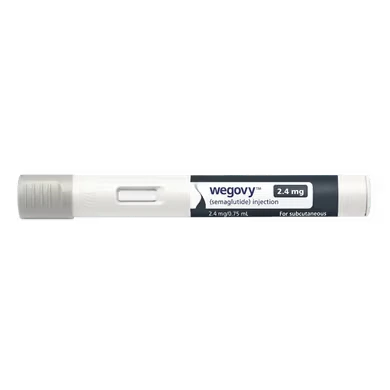

Six GLP-1 brands are FDA approved to lower the risk of a heart attack, stroke or cardiovascular death: Wegovy, Ozempic, Rybelsus, Mounjaro, Trulicity and Victoza. Wegovy is the only one approved for that in people without diabetes, after the SELECT trial cut those events from 8.0% on placebo to 6.5% (hazard ratio 0.80).12 The other five carry the heart indication for adults with type 2 diabetes.34578 Zepbound, the tirzepatide brand for weight, has no heart indication yet; its outcomes trial in obesity lists October 2027 for results.912
Doctors call the outcome these trials count "MACE", short for major adverse cardiovascular events: cardiovascular death, a non-fatal heart attack or a non-fatal stroke.1 A hazard ratio of 0.80 means about 20% fewer first events over the trial, relative to placebo. The table below is every brand, what its label says and the trial behind it.
Which GLP-1s have an FDA heart indication?
| Brand (molecule) | Who the heart indication covers | Outcomes trial | Result for MACE |
|---|---|---|---|
| Wegovy injection and tablets (semaglutide) | Adults with established heart disease and obesity or overweight, no diabetes needed1 | SELECT, 17,604 people, vs placebo1 | 6.5% vs 8.0%, hazard ratio 0.802 |
| Ozempic injection (semaglutide) | Adults with type 2 diabetes and established heart disease; a separate kidney indication includes cardiovascular death3 | SUSTAIN 6, 3,297 people, vs placebo3 | Hazard ratio 0.743 |
| Rybelsus and Ozempic tablets (oral semaglutide) | Adults with type 2 diabetes at high risk of these events4 | Trial 7, 9,650 people, vs placebo4 | Hazard ratio 0.864 |
| Mounjaro (tirzepatide) | Adults with type 2 diabetes at high risk of these events5 | SURPASS-CVOT, 13,299 people, vs Trulicity5 | Hazard ratio 0.92 vs Trulicity: as good, not proven better5 |
| Trulicity (dulaglutide) | Adults with type 2 diabetes and heart disease or multiple risk factors7 | REWIND, 9,901 people, vs placebo7 | 12.0% vs 13.4%, hazard ratio 0.887 |
| Victoza (liraglutide) | Adults with type 2 diabetes and established heart disease8 | LEADER, vs placebo8 | 13.0% vs 14.9%, hazard ratio 0.878 |
| Zepbound (tirzepatide) | None: approved for weight and obstructive sleep apnea only9 | SURMOUNT-MMO, 15,374 people, results listed October 202712 | Not yet reported12 |
Two things the table makes plain. First, the indication follows the brand and the population that was studied, not the molecule: semaglutide sold as Wegovy has a heart claim for people without diabetes, while the same molecule sold as Ozempic has one only with diabetes.13 Second, tirzepatide's heart evidence today is in diabetes, measured against another GLP-1 rather than placebo.5
The SELECT trial: Wegovy in people without diabetes
SELECT is the trial most people mean when they ask about GLP-1 heart benefits. It enrolled people "45 years of age or older who had preexisting cardiovascular disease and a body-mass index ... of 27 or greater but no history of diabetes."2 On the label, established disease means a prior heart attack, a prior stroke or peripheral arterial disease, and anyone with type 1 or type 2 diabetes was excluded.1 Everyone got Wegovy 2.4 mg or placebo weekly on top of their usual heart care, and the median follow-up was 41.8 months.1
- Main result: a first heart attack, stroke or cardiovascular death in 569 of 8,803 people on semaglutide (6.5%) against 701 of 8,801 on placebo (8.0%), hazard ratio 0.80.2
- Who stopped: side effects led 16.6% of the semaglutide group to stop the drug for good, against 8.2% on placebo.2
- Who paid for it: Novo Nordisk, the maker of Wegovy.2
The label's own table splits the result by component, and the parts did not move equally. Fatal or non-fatal heart attacks: 2.8% on Wegovy vs 3.8% on placebo, hazard ratio 0.72. Cardiovascular death alone: 2.5% vs 3.0%, hazard ratio 0.85, with a confidence interval running from 0.71 to 1.01, so on its own it is not a proven reduction.1 Wegovy tablets carry the same heart indication as the injection.1
Ozempic, Rybelsus, Trulicity and Victoza: the diabetes trials
Before SELECT, every GLP-1 heart claim came from people with type 2 diabetes, and those trials are why Ozempic, Rybelsus, Trulicity and Victoza carry one.
- Ozempic, SUSTAIN 6. 3,297 people with type 2 diabetes and atherosclerotic heart disease, followed at least 2 years; hazard ratio for a first event 0.74.3 Ozempic also has a kidney indication in type 2 diabetes with chronic kidney disease that counts cardiovascular death.3
- Rybelsus, oral semaglutide. 9,650 people with type 2 diabetes and heart disease or chronic kidney disease took a 14 mg tablet daily or placebo; hazard ratio 0.86.4
- Victoza, LEADER. A first event in 13.0% on liraglutide vs 14.9% on placebo, hazard ratio 0.87, and 0.85 for death from any cause.8
- Trulicity, REWIND. 9,901 people with type 2 diabetes and heart disease or multiple risk factors, median follow-up 5.4 years; a first event in 12.0% vs 13.4%, hazard ratio 0.88.7 Its label is the broadest of the diabetes group because it includes people with risk factors and no established disease.7
Mounjaro and Zepbound: where tirzepatide stands
Lilly tested Mounjaro against Trulicity, not against placebo. In SURPASS-CVOT, a first heart attack, stroke or cardiovascular death happened in 12.2% on tirzepatide and 13.1% on dulaglutide, hazard ratio 0.92; that met the bar for "noninferiority" but not superiority (P = 0.09).6 The label puts it the same way: "Superiority to dulaglutide was not established."5 Because Trulicity itself lowers these events, matching it was enough for Mounjaro to gain a heart indication in type 2 diabetes.57 The trial reported more gastrointestinal side effects on tirzepatide.6
Zepbound is a different label. It is approved for weight reduction and for moderate to severe obstructive sleep apnea, with no heart indication.9 The trial that could change that is SURMOUNT-MMO: 15,374 adults with obesity, a primary outcome of death from any cause, heart attack, stroke, coronary revascularization or heart failure events, no longer recruiting, with primary completion listed for October 2027.12 Until it reports, nobody can say from a trial whether Zepbound protects the heart in people without diabetes.
Heart failure: what STEP-HFpEF and SUMMIT found
Both makers also ran trials in heart failure with preserved ejection fraction (HFpEF), the stiff-heart kind common in people with obesity. Heart failure is not among the indications on either brand's label.19
| Trial | Who | What changed | Funder |
|---|---|---|---|
| STEP-HFpEF, semaglutide 2.4 mg, 52 weeks | 529 people with HFpEF and a BMI of 30 or more10 | Symptom score up 16.6 points vs 8.7 on placebo; weight down 13.3% vs 2.6%; 6-minute walk up 21.5 m vs 1.2 m10 | Novo Nordisk10 |
| SUMMIT, tirzepatide up to 15 mg, median 104 weeks | 731 people with HFpEF and a BMI of 30 or more11 | Cardiovascular death or worsening heart failure 9.9% vs 15.3% (hazard ratio 0.62); worsening heart failure 8.0% vs 14.2%11 | Eli Lilly11 |
One detail in SUMMIT is easy to miss: cardiovascular deaths were few, 8 on tirzepatide and 5 on placebo, so the trial cannot tell whether death itself changed; the drop came from heart failure events.11
Compounded semaglutide and tirzepatide
None of these trials used a compounded product, and compounded semaglutide or tirzepatide carries no FDA indication of any kind, heart or otherwise. SELECT tested Wegovy; SURPASS-CVOT and SUMMIT tested Lilly's tirzepatide.1511 A compounded dose may contain the same molecule, but the heart results above belong to the approved brands. If heart protection is the reason you want a GLP-1, that is a question for the prescriber about which product fits your history. For more on how compounded versions are made, see 503A vs 503B pharmacies.
Does insurance or Medicare cover a GLP-1 for the heart?
A heart indication changes the coverage question, because it is not a weight loss use. KFF explains that Medicare is barred by law from covering drugs used "specifically for weight loss," but that "People on Medicare can get GLP-1s covered by Part D plans only if they are used for a medically accepted FDA-approved indication other than obesity, like type 2 diabetes, cardiovascular disease risk reduction, or sleep apnea."13 So Wegovy prescribed to someone with established heart disease is a Part D question, not a weight loss exclusion. Our Medicare guide walks through it, and getting a GLP-1 covered covers commercial plans, where the heart diagnosis belongs on the prior authorization.
What it costs without coverage
The cheapest branded Wegovy on our board today is $208 a month, and Novo's own self-pay prices by dose are in the ladder below. Compounded semaglutide starts at $69, with the caveat above: it is not the product SELECT tested.
For the brand side, see what Wegovy costs and the Wegovy savings offer. To compare the two molecules on weight, read tirzepatide vs semaglutide.