
Most people can keep taking a GLP-1 before elective surgery. Guidance issued in October 2024 by five societies, including the American Society of Anesthesiologists (ASA), says "most patients should continue taking their glucagon-like peptide-1 (GLP-1) receptor agonists before elective surgery".1 That replaced the ASA's 2023 advice to hold a weekly shot for a week beforehand,3 which is still what many people hear. The exceptions are the people most likely to arrive with food still in the stomach: those early in their dose increases, on a higher dose, or with nausea, vomiting or bloating.2
The one step every label asks of you is the same: tell the people doing the procedure that you take it. The Zepbound Medication Guide puts it plainly: "Tell all your healthcare providers that you are taking ZEPBOUND before you are scheduled to have surgery or other procedures."4 Whether to pause, for how long, and what to eat the day before is their call, made with your prescriber.
Why the anesthesia team asks about it
GLP-1 medicines slow how fast the stomach empties. The ASA's summary of the 2024 guidance explains the worry: "there may be residual food in the stomach that increases the risk for regurgitation and aspiration into the airways and lungs during general anesthesia and deep sedation, which can cause potentially fatal aspiration pneumonia."1 The labels describe "rare postmarketing reports of pulmonary aspiration" in people on GLP-1s "who had residual gastric contents despite reported adherence to preoperative fasting recommendations".4 In other words, some people fasted as told and still had food in the stomach.
Every label is also frank about what is not known: "available data are insufficient to inform recommendations" on how to reduce the risk, "including whether modifying preoperative fasting recommendations or temporarily discontinuing" the drug helps.4 That gap is why the society guidance exists, and why it has changed once already.
| Medicine | Aspiration warning on the label | What the label asks |
|---|---|---|
| Zepbound (tirzepatide) | Yes4 | Tell your healthcare providers before any planned surgery or procedure4 |
| Mounjaro (tirzepatide) | Yes7 | Same7 |
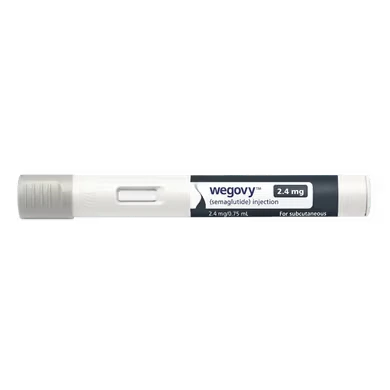
| Wegovy (semaglutide) | Yes5 | Same5 |
| Ozempic (semaglutide injection) | Yes6 | Same6 |
| Rybelsus, Ozempic tablets (oral semaglutide) | Yes8 | Same8 |
| Foundayo (orforglipron tablet) | Yes9 | Same9 |
| Compounded semaglutide or tirzepatide | No FDA label of its own | Same molecules as the brands above: tell the team, and name the molecule and dose |
What the 2024 guidance says
The October 2024 guidance comes from the ASA, the American Gastroenterological Association, the American Society for Metabolic and Bariatric Surgery, the International Society of Perioperative Care of Patients with Obesity and the Society of American Gastrointestinal and Endoscopic Surgeons. Its starting point is that "patients at low risk for delayed stomach emptying who are having elective surgery can continue to take their GLP-1 drugs".1 For the rest, it gives the team tools rather than a blanket stop date.
| Who | What the guidance suggests |
|---|---|
| Low risk: stable dose, no stomach symptoms | Continue the GLP-1 for elective surgery1 |
| In the escalation phase (dose still rising, which "typically lasts four to eight weeks") | Defer elective surgery until the escalation phase has passed and GI side effects have settled2 |
| Nausea, vomiting, abdominal pain, shortness of breath or constipation | Wait until the symptoms have gone before elective surgery2 |
| On a higher dose | A liquid diet for 24 hours before the procedure2 |
| Highest risk, any of the above | A liquid-only diet for 24 hours, an anesthesia plan adjusted for aspiration risk, and a point-of-care ultrasound of the stomach just before the procedure; in rare cases, delay1 |
The guidance also asks the team to weigh what a pause costs the patient: withholding the drug "may be resource intensive, cost or insurance-prohibitive, and risk other negative side effects such as impacting blood sugar levels."2 For someone taking a GLP-1 for type 2 diabetes, a week without it is not neutral.
Why you may still be told to stop a week before
The first ASA guidance, in June 2023, was simpler and stricter. It said to hold a daily GLP-1 "on the day of the procedure/surgery" and a weekly one "a week prior to the procedure/surgery", to consider delaying if there were symptoms such as "severe nausea/vomiting/retching, abdominal bloating or abdominal pain", and, if the drug was not held, to treat the patient as having a "full stomach" or check with ultrasound.3
| ASA, June 2023 | Five societies, October 2024 | |
|---|---|---|
| Default for a weekly shot | Hold it the week before3 | Most patients continue1 |
| Default for a daily pill | Hold it on the day3 | Most patients continue1 |
| Stomach symptoms on the day | Consider delaying3 | Wait until they have gone2 |
| Extra steps for higher risk | Full-stomach precautions or ultrasound if not held3 | 24-hour liquid diet, ultrasound, adjusted anesthesia plan, rarely delay1 |
Hospitals and surgery centers write their own pre-procedure instructions. If the ones you are given differ from what you read here, follow your team: they know the procedure, the sedation and your history.
What the evidence shows
The research so far is observational, and it points two ways. Food left in the stomach is clearly more common on a GLP-1. Whether that turns into more aspiration has not been shown.
| Study | Result | How sure |
|---|---|---|
| Anaesthesia 2025 meta-analysis, 28 observational studies | Residual stomach contents despite fasting: odds 5.96 times higher on a GLP-1. Aspiration: "not associated" (odds ratio 1.04, 185,414 patients, 471 aspirations)10 | Low certainty, as graded by the authors10 |
| Same meta-analysis, five studies on pausing | Withholding at least one dose before the procedure: lower odds of residual contents (odds ratio 0.51)10 | Very low certainty10 |
| Gastrointestinal Endoscopy 2025 meta-analysis, 23 studies, 262,018 patients | Residual contents and procedures stopped early: both 4.54 times the odds. Aspiration pneumonia: no significant difference (odds ratio 0.96)11 | Observational studies only11 |
| Canadian Journal of Anesthesia 2026, 337 patients having upper endoscopy | Residual contents in 8.4%. Fasting from solids for more than 15 hours: lower odds (adjusted odds ratio 0.33). Pausing the drug less than 7 days before: not a statistically significant factor12 | One health system, looking back at records12 |
Read together, the data support the direction the guidance took: the risk is real enough to plan around, and the planning is about the stomach on the day (symptoms, dose stage, how long since solid food) more than about a fixed number of days off the drug.
Endoscopy and colonoscopy
Upper endoscopy is where most of the evidence comes from, because the doctor can see whether food is still in the stomach. In the 2025 endoscopy meta-analysis, GLP-1 users had more procedures stopped early, and having the upper endoscopy on the same day as a colonoscopy came with much lower odds of residual contents than an upper endoscopy alone (odds ratio 0.28).11 The study reports the association, not the reason for it. The 2024 guidance covers endoscopy too, since a gastroenterology society and an endoscopic surgeons' society wrote it.1
If your procedure uses sedation, ask the endoscopy unit whether they want a longer clear-liquid period, and say which GLP-1 you take, its dose, and when you last increased it.
If your team pauses it: what happens to your dose
A pause is not free, because the labels treat missed doses in a specific way. Check with your prescriber before restarting.
| Medicine | What the label says about missed doses |
|---|---|
| Zepbound | Take a missed dose "as soon as possible within 4 days (96 hours)"; if more than 4 days have passed, skip it and take the next on the usual day4 |
| Wegovy injection | "If 2 or more consecutive doses of WEGOVY injection are missed, reinitiate dosage escalation at a lower dosage to reduce the risk of gastrointestinal adverse reactions"; the Medication Guide says to contact your provider "to talk about how to restart"5 |
One skipped weekly dose usually falls inside the ordinary missed-dose rules. A pause long enough to miss two Wegovy doses means restarting lower and stepping back up, which can mean weeks at a lower dose and, under the 2024 guidance, a new escalation phase during which further elective procedures may be deferred.25 Plan the dates with both the surgeon and the prescriber.
Questions to ask before your procedure
- Do you want me to keep taking my GLP-1, or hold a dose? Which one, exactly?13
- I increased my dose recently, or I still have nausea or bloating: does that change the plan or the date?2
- Should I follow a liquid diet for 24 hours beforehand?1
- Will you check my stomach with ultrasound on the day?1
- I take it for type 2 diabetes: who manages my blood sugar if I pause it?2
- When, and at what dose, do I restart afterwards?45
If your medicine comes through an online program, ask its clinician the same questions: a program that cannot tell you how to restart after a pause is selling the medicine, not the care around it. Our telehealth programs guide covers what a monthly price usually includes, and the nausea, constipation and diarrhea guide covers the stomach symptoms the guidance asks you to report.
What it costs to keep going
A surgery does not change the price of the medicine, but a pause that sends you back down the dose ladder means weeks at a lower dose before you are back where you were. A program that prices by dose charges less for those weeks; a flat-price program charges the same. On our board today the cheapest cash GLP-1 program is $69 a month, compounded semaglutide starts at $69, and the middle of the board is $158. A licensed clinician decides whether you qualify.
For one molecule, see cheapest semaglutide and cheapest tirzepatide, both checked against the sellers' own pages. For the full side-effect lists, see Ozempic side effects and Zepbound side effects.